Cozy
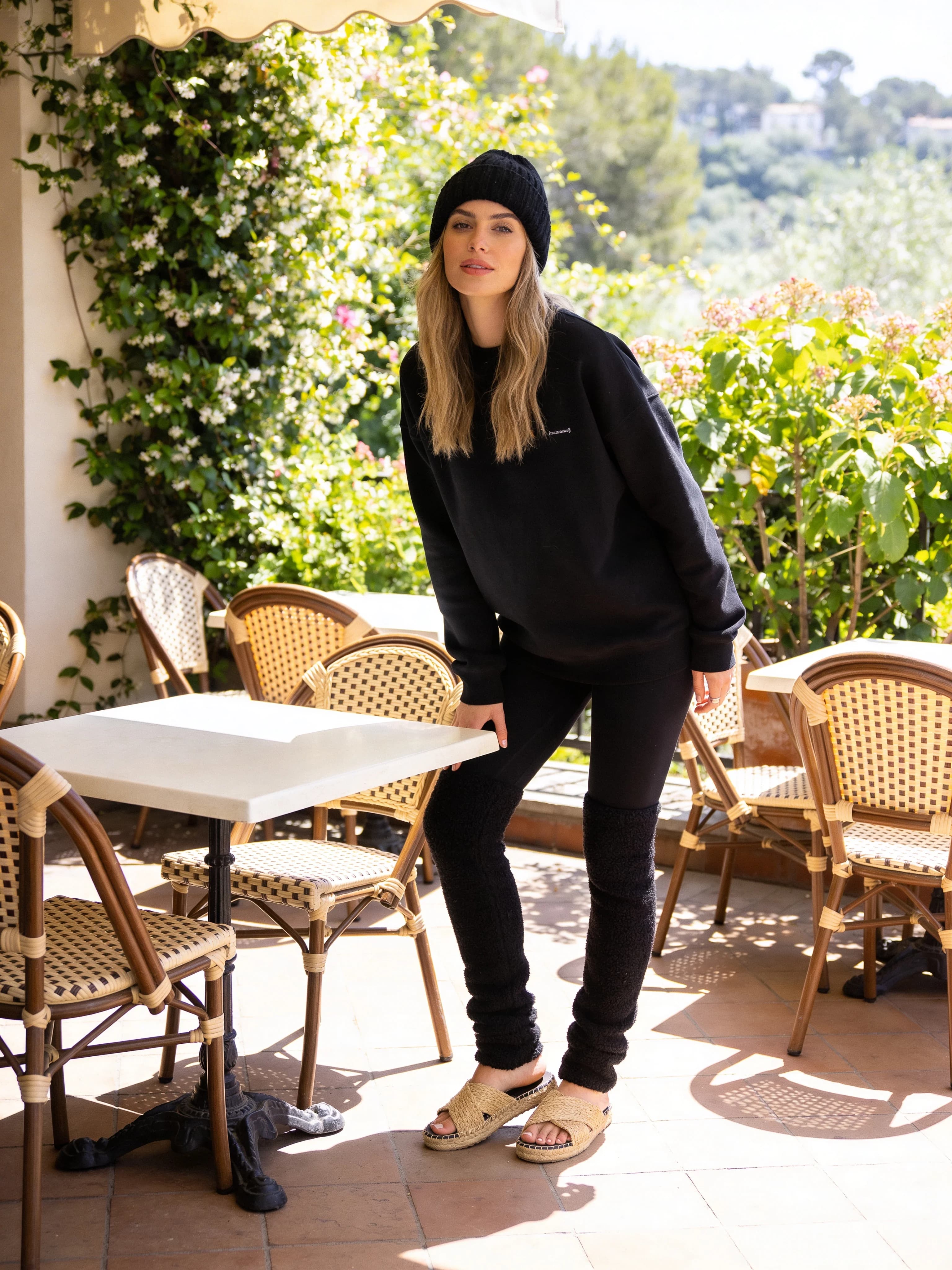
Crewneck and Espadrilles
A black crewneck and fleece leggings with espadrilles in the heat is the statement of someone who runs cold. The knit beanie seals the commitment.

What to Wear in Albuquerque
Friday, October 2
Albuquerque's high desert setting at 5,312 feet means dramatically warm days and chilly nights year-round, with temperatures swinging as much as 40°F from morning to evening. July brings monsoon storms that arrive fast and soak quickly, while January highs stay in the upper 40s. Layering is always the answer — the style here runs casual-western with earthy tones that match the landscape.
Compare rates across Booking.com, Agoda, Expedia, and Trip.com in one search.
Search hotels in AlbuquerqueBased on 75°F and clear sky

top / Short-Sleeve Top
classic tee

bottom / Jeans
straight-leg
chinos for a slightly smarter look

footwear / Sneakers
white sneakers
cushioned for all-day city walking
Albuquerque, nestled in New Mexico's high desert, boasts a unique climate that shapes its distinct local style. Expect clear, sunny skies for most of the year, with a dry atmosphere that makes even extreme temperatures feel different than humid climates. While the city experiences four distinct seasons, the most defining characteristic is the significant daily temperature fluctuation – warm, bright days often give way to surprisingly cool evenings, even in summer. Locals embrace a relaxed, practical style, heavily influenced by Southwestern aesthetics. Think comfortable denim, sturdy boots, and natural fabrics like cotton or linen that breathe well under the intense sun. Layering is paramount, allowing you to adapt seamlessly from morning chill to midday warmth and back again. Earthy tones, turquoise accents, and durable outerwear are common, reflecting a practical appreciation for the outdoors and the region's rich cultural heritage. Dressing for comfort and adaptability ensures you're ready for everything from exploring Old Town to hiking the Sandia Mountains.
A black crewneck and fleece leggings with espadrilles in the heat is the statement of someone who runs cold. The knit beanie seals the commitment.
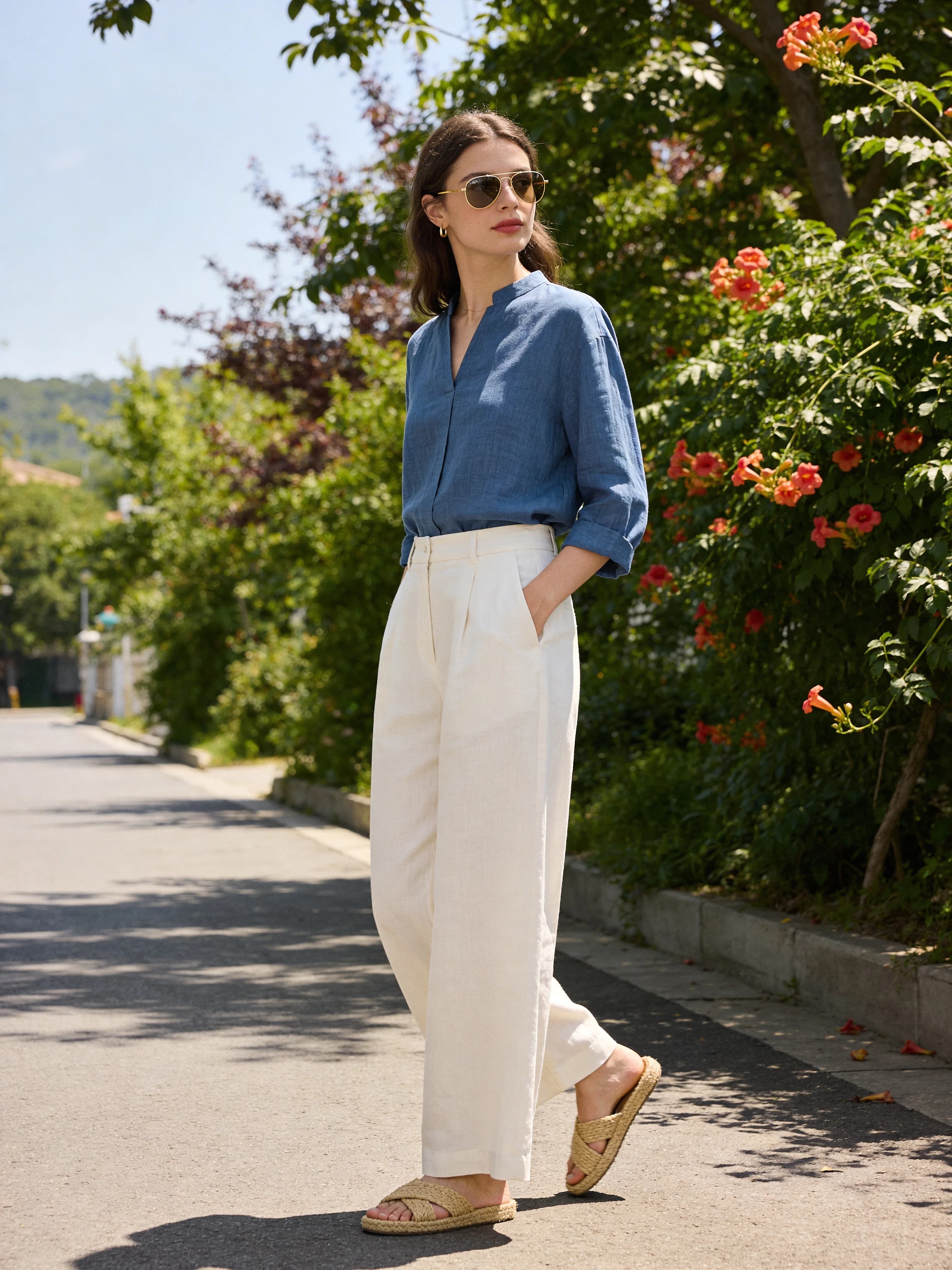
A blue linen collarless blouse over ivory wide-leg linen trousers in the heat is understated and intentional. Gold-frame aviators are the only thing needed to complete the picture.
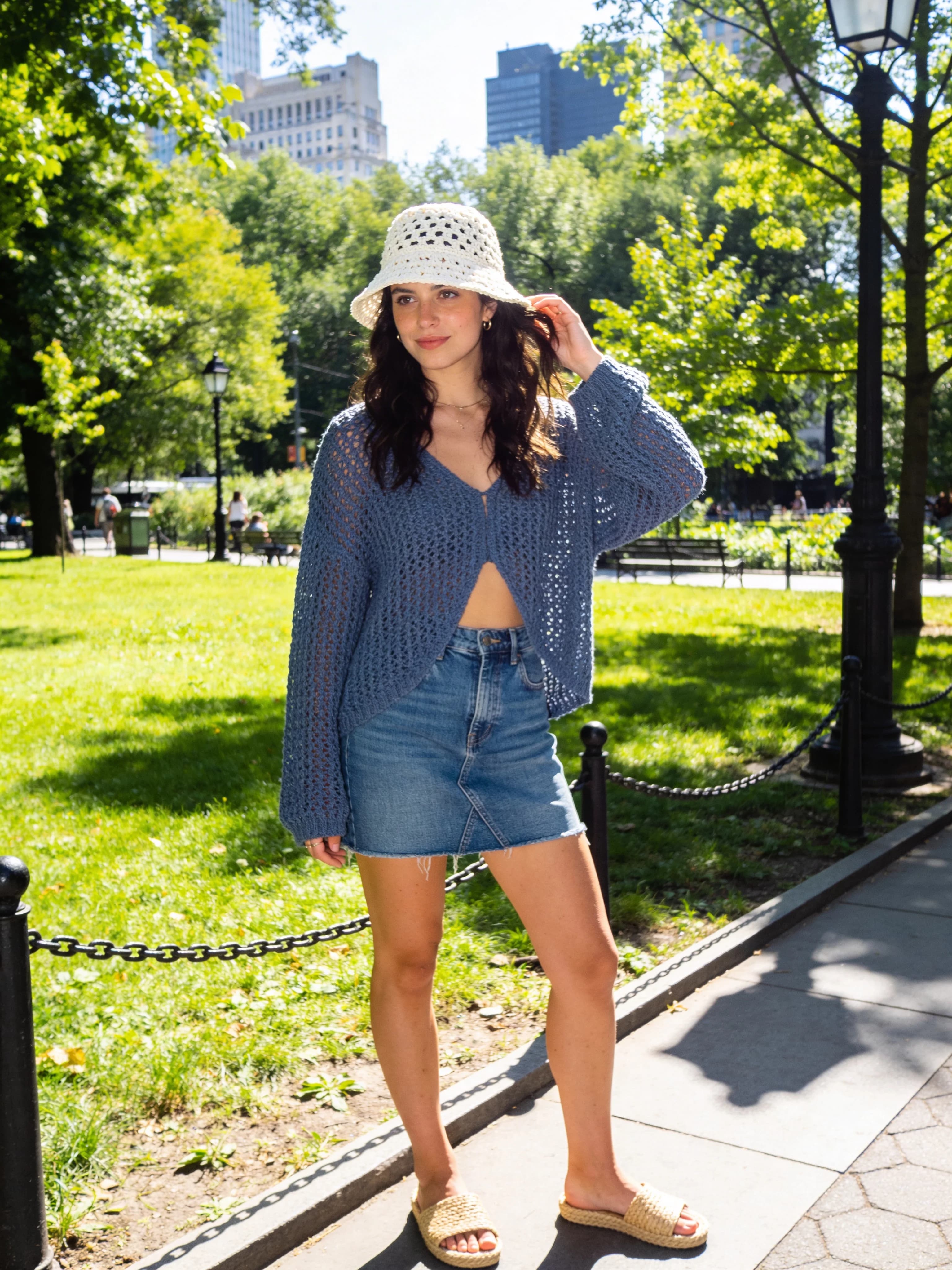
A dusty blue open-knit sweater worn loose over a denim mini skirt is the easy hot-day look. Espadrilles and a crochet hat keep it relaxed and summery.
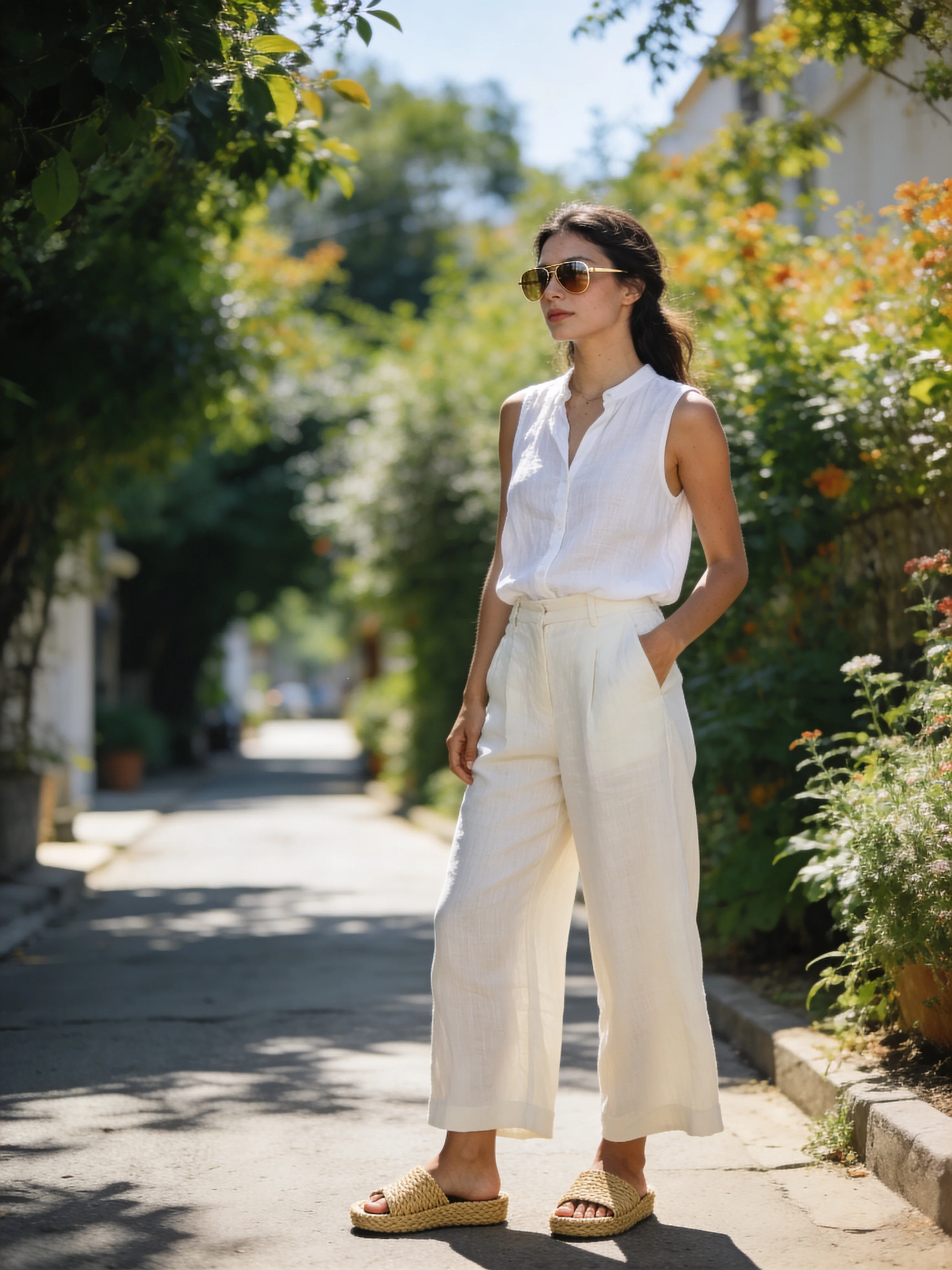
A white linen sleeveless blouse tucked into cream wide-leg linen trousers is the clean hot-weather business-casual answer. Espadrilles and gold aviators are all the styling it needs.
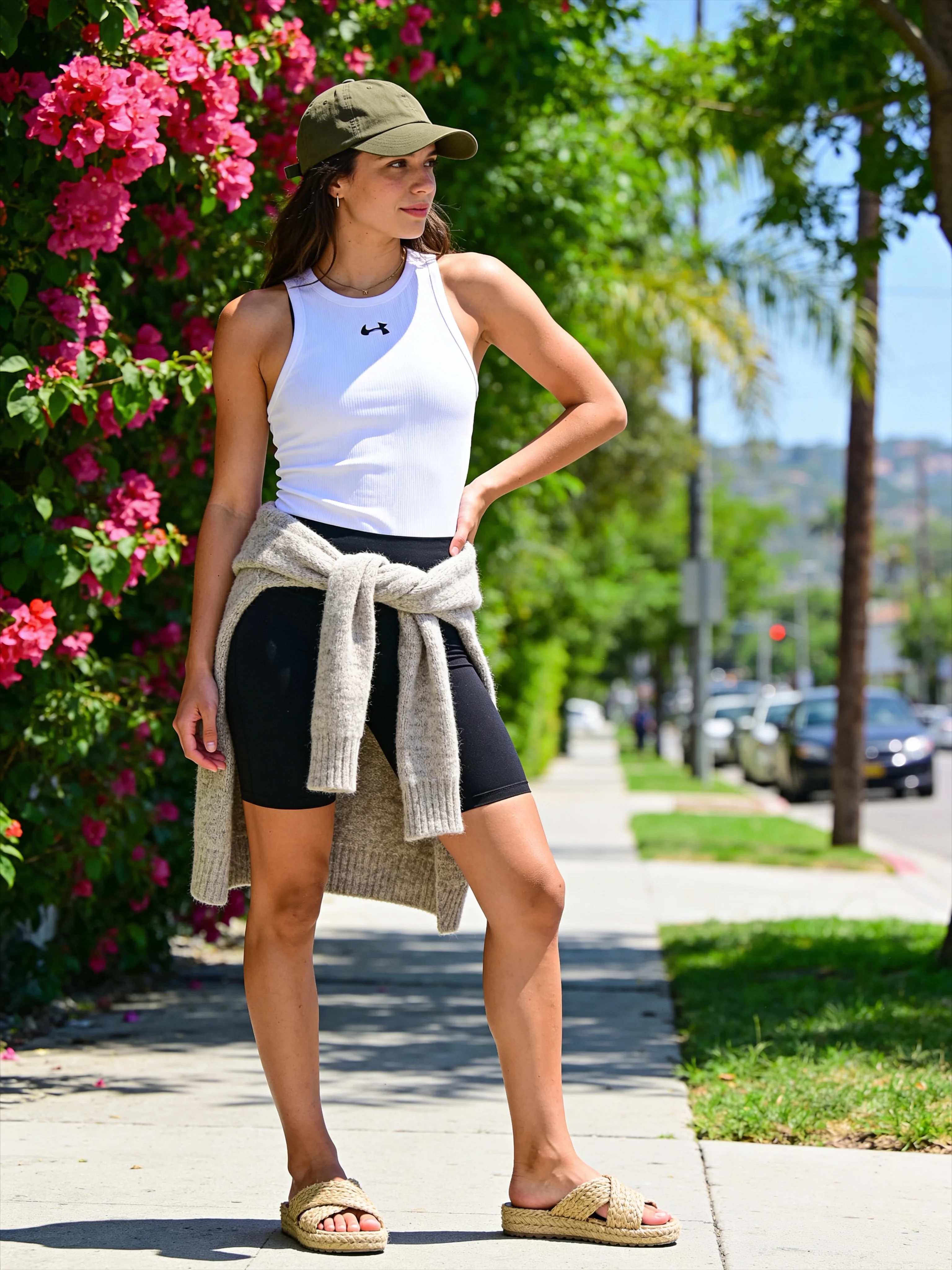
A white athletic tank with black biker shorts and espadrilles is the clean hot-day sporty look. An olive baseball cap is the functional accessory that pulls the palette.
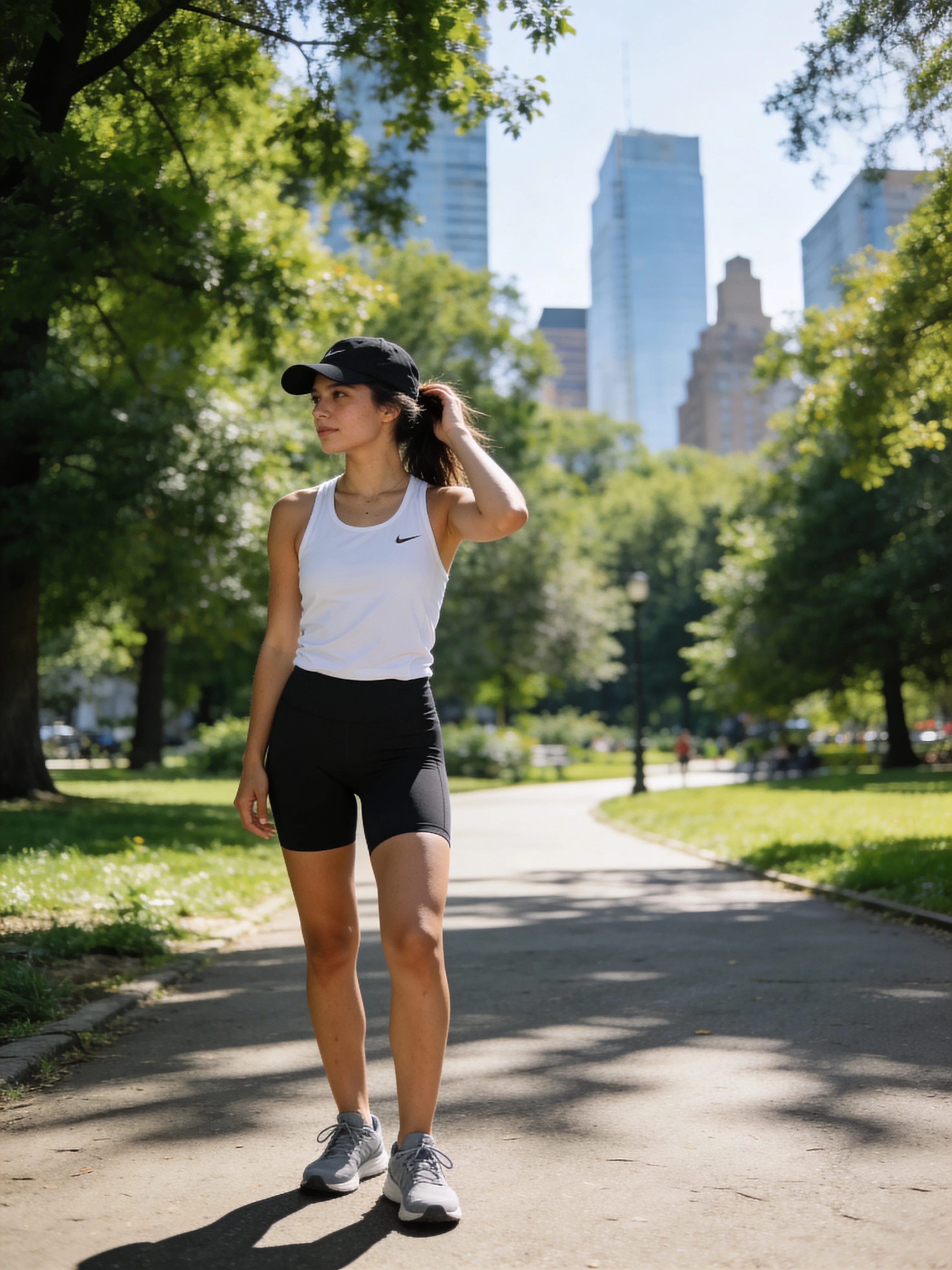
A white sleeveless athletic tank keeps things breathable at 80°F with black biker shorts holding the athletic silhouette. The baseball cap handles the sun.
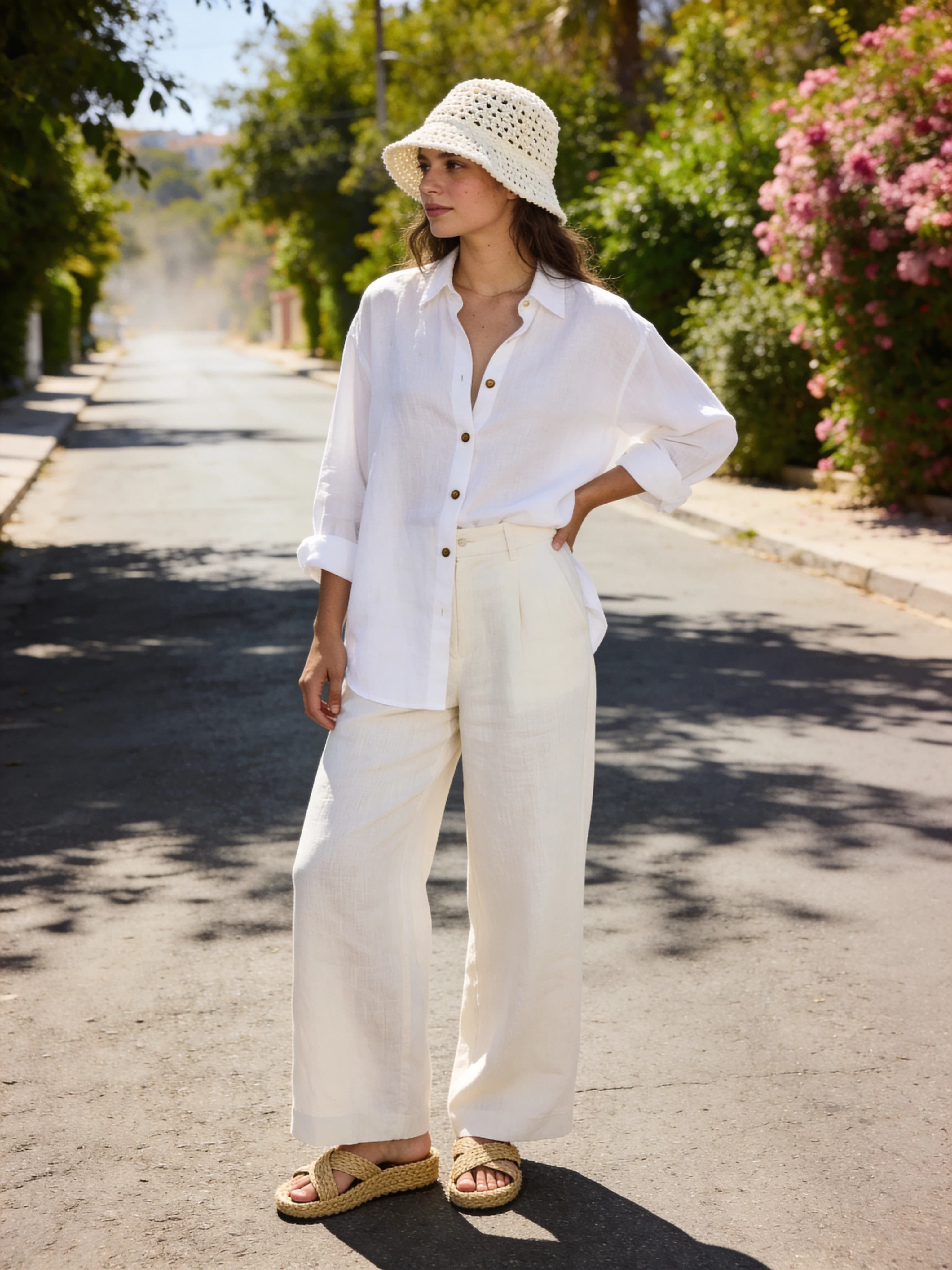
A white oversized button-down with ivory wide-leg linen trousers is the understated hot-day summer uniform. Espadrilles and a crochet bucket hat finish it without effort.
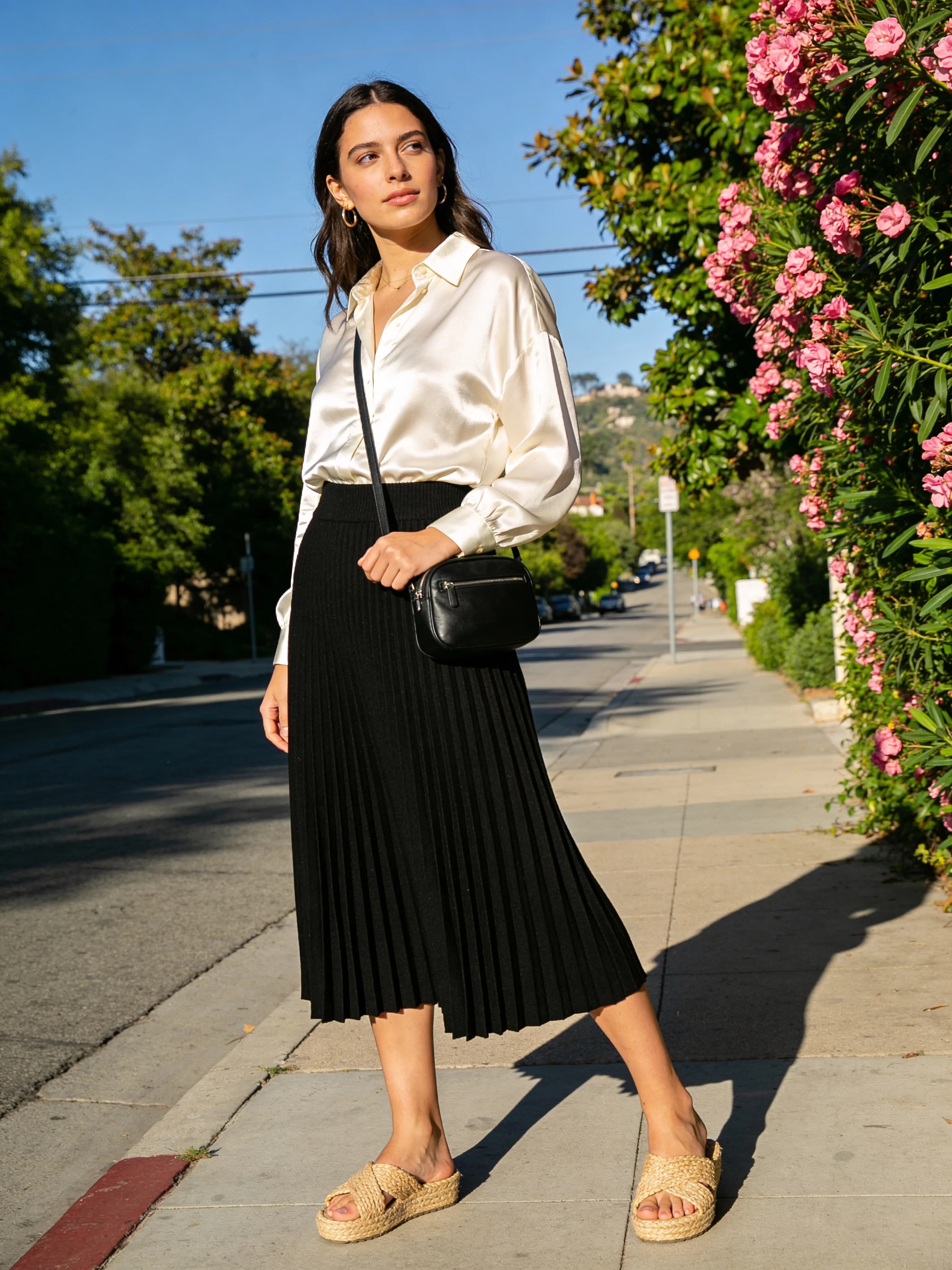
An ivory silk-look blouse and black pleated maxi skirt in the heat is the formal look that earns its occasion without adding weight. Espadrilles keep it grounded in the season.
Packing List
What to Pack for Albuquerque →
Best shoes
Best shoes for Albuquerque — by month →
Climate-matched walking shoes, waterproof boots, and sandals.
See typical weather and outfit ideas for Albuquerque in any month of the year.
Winter days in Albuquerque are often mild and sunny, but nights drop significantly below freezing. Layers are essential: think long-sleeved shirts, sweaters, a warm coat, and possibly a hat and gloves for early mornings or evenings. Comfortable, closed-toe shoes are recommended, and while snow is infrequent, it's wise to be prepared for the cold.
Summer days are hot and dry, often reaching into the 90s or 100s Fahrenheit. Opt for lightweight, breathable fabrics like cotton or linen, loose-fitting clothing, and good sun protection with a wide-brimmed hat and sunglasses. Evenings cool down considerably, so pack a light jacket or cardigan. Expect afternoon thunderstorms during the late July to August monsoon season.
Albuquerque experiences genuinely cold temperatures, particularly from late fall through early spring and during nights year-round. Winter lows often dip below freezing. However, the dry climate and abundant sunshine make the cold feel less penetrating than in humid areas, and daytime temperatures can often be pleasant, even in winter.
Albuquerque's weather is characterized by abundant sunshine, low humidity, and a high desert climate with distinct seasons. Expect significant daily temperature swings, with warm to hot days and cool to cold nights. Summers are hot and dry with occasional monsoons, while winters are mild with cold nights and infrequent light snow. Spring is often windy, and fall is typically pleasant and clear.
Packing tools
Free calculators — city and month pre-filled when we know them. No account required. Start with how many outfits, sudoku packing, or bag fees.
Trip
Planning a trip to one city?
One city → typical weather for your month, packing counts that fit your bags, and email your plan.
Outfits
How many outfits for this trip?
Trip length, bag size, and climate → exact tops, bottoms, layers, and outfit combinations.
Jacket
Not sure about a jacket?
City + month → base / mid / shell stack and pack-or-skip verdicts for rain jacket, coat, and thermals.
Shoes
Shoes for this climate?
Climate, activities, and bag size → pair count, primary/backup types, and climate-matched picks.
Bags
Will this trip cost bag fees?
Airline + fare bucket + bags you plan to bring → fit verdicts and typical carry-on / checked fee ranges.
Capsule
Try sudoku packing for this climate?
City + month → climate-ready 3 tops / 3 bottoms / 3 layers you can edit — up to 27 mix-and-match outfits.
Style Guide
Albuquerque Fall 2026 Packing Guide
Pack smart for a stylish, weather-proof trip to Albuquerque in fall