Casual

The Blue Striped Midi
Warm and dry conditions highlight the Blue striped linen midi dress as the hero item. White low-top sneakers sustain the relaxed feminine mood.

What to Wear in Knoxville
Friday, October 2
Knoxville sits in a valley surrounded by the Blue Ridge and Great Smoky Mountains, where summer humidity from the Tennessee River basin makes 89°F feel heavy and persistent. January highs hover around 48°F with occasional winter precipitation; spring storm season brings severe weather risk March through May. Visitors using Knoxville as a gateway to the Smokies should pack for both city and mountain — the elevation difference can mean a 20–30°F temperature gap.
Compare rates across Booking.com, Agoda, Expedia, and Trip.com in one search.
Search hotels in KnoxvilleBased on 88°F and partly cloudy

top / Tank & Cami
tank top
breathable — lets heat escape in warm weather

bottom / Shorts
denim shorts
breathable fabric for high-heat days
lightweight linen pants for more coverage

footwear / Sandals
flat sandals
let feet breathe in the heat
white sneakers if you walk a lot
Knoxville sits in a valley between the Blue Ridge Mountains and the Cumberland Plateau, and that geography shapes everything about how the city experiences weather. Summers are hot and humid, with temperatures regularly climbing into the upper 80s and low 90s°F, while winters are mild by Southern standards but unpredictable enough to catch visitors off guard — cold snaps, occasional snow, and ice storms are all part of the season. Spring and fall are genuinely beautiful here, but both come with significant rainfall and temperatures that can swing 20 to 30 degrees between morning and afternoon. Dressing in layers is less a cliché and more a practical necessity, especially during the shoulder seasons. The local style leans casual and outdoors-friendly — the University of Tennessee's strong presence means Tennessee Orange shows up constantly on game days, and proximity to the Smokies means hiking gear and trail shoes are entirely at home on Market Square. For everyday wear, residents tend toward relaxed Southern comfort: breathable fabrics in summer, sturdy boots and flannels in winter, and denim year-round. Whether you're exploring the Old City, catching a show at the Tennessee Theatre, or heading out toward the national park, functional clothing that handles humidity and temperature swings will serve you better than anything too precious.
Warm and dry conditions highlight the Blue striped linen midi dress as the hero item. White low-top sneakers sustain the relaxed feminine mood.

Hot and dry conditions highlight the White smocked sundress as the hero item. White low-top sneakers sustain the relaxed casual mood.

Hot and dry conditions highlight the Navy linen sundress as the hero item. Gold Layered Chain Necklace with white low-top sneakers sustains the relaxed casual mood.

White eyelet midi dress anchors cold, light snow and breezy conditions with crisp eyelet cotton. Tan straw sun hat and white low-top sneakers deliver cute relaxed ease.
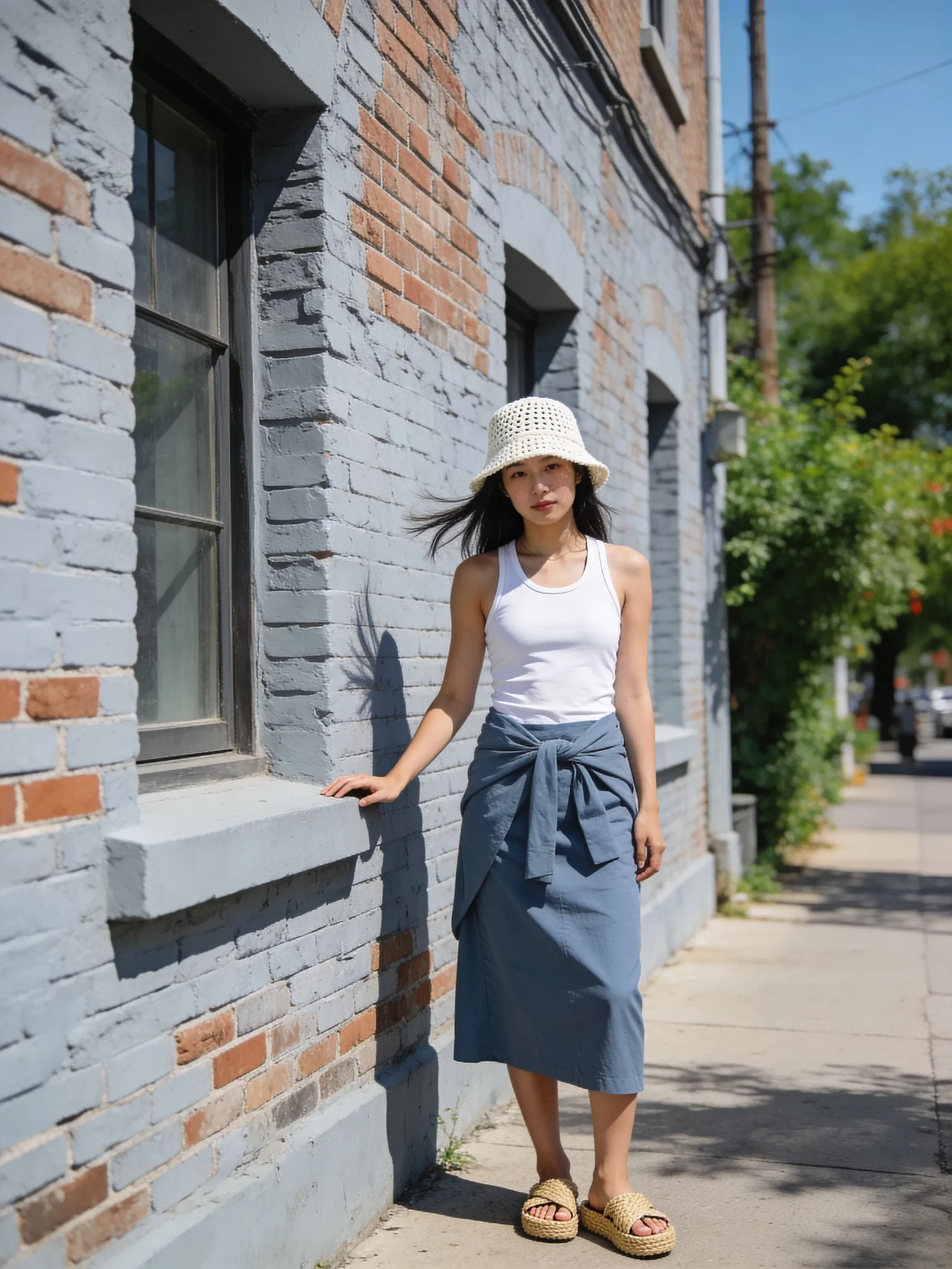
A white sleeveless tank keeps things cool when temperatures peak, anchoring a look that earns its charm through a dusty blue wrap midi skirt. Raffia espadrilles and an ivory crochet bucket hat make it feel like a destination outfit.

Black Satin Spaghetti Strap Slip Dress anchors cold, light snow and breezy conditions with satin spaghetti-strap slip. Woven Huarache Slide Sandal and Gold Layered Dainty Necklace deliver cute relaxed ease.
Packing List
What to Pack for Knoxville →
Best shoes
Best shoes for Knoxville — by month →
Climate-matched walking shoes, waterproof boots, and sandals.
See typical weather and outfit ideas for Knoxville in any month of the year.
Knoxville summers are hot and humid, so lightweight, breathable fabrics like cotton and linen are your best options. Shorts, t-shirts, sundresses, and sandals are standard from June through August. Keep a light layer handy for heavily air-conditioned restaurants and indoor venues, and wear sunscreen — the heat index can make 90°F feel significantly hotter.
Winters in Knoxville are mild compared to much of the country, but temperatures can dip into the 20s°F during cold snaps, and freezing rain or light snow is possible from December through February. A medium-weight coat, warm layers, and waterproof boots are practical choices. You won't need extreme cold-weather gear most days, but dressing in flexible layers lets you adjust as temperatures fluctuate throughout the day.
Knoxville has a temperate climate and is not particularly cold by national standards. Average winter highs hover around the mid-40s to low 50s°F, though nighttime lows can fall below freezing. Snow accumulation is relatively rare, but ice storms do occur and can be disruptive. The city experiences more rain and grey skies in winter than prolonged deep cold.
Knoxville has a humid subtropical climate with four distinct seasons. Summers are hot and muggy, winters are cool with occasional ice or light snow, and spring and fall bring pleasant temperatures alongside frequent rain showers. The city averages around 47 inches of rainfall per year, spread fairly evenly across the seasons, so a compact umbrella or waterproof jacket is worth carrying regardless of when you visit.
Packing tools
Free calculators — city and month pre-filled when we know them. No account required. Start with how many outfits, sudoku packing, or bag fees.
Trip
Planning a trip to one city?
One city → typical weather for your month, packing counts that fit your bags, and email your plan.
Outfits
How many outfits for this trip?
Trip length, bag size, and climate → exact tops, bottoms, layers, and outfit combinations.
Jacket
Not sure about a jacket?
City + month → base / mid / shell stack and pack-or-skip verdicts for rain jacket, coat, and thermals.
Shoes
Shoes for this climate?
Climate, activities, and bag size → pair count, primary/backup types, and climate-matched picks.
Bags
Will this trip cost bag fees?
Airline + fare bucket + bags you plan to bring → fit verdicts and typical carry-on / checked fee ranges.
Capsule
Try sudoku packing for this climate?
City + month → climate-ready 3 tops / 3 bottoms / 3 layers you can edit — up to 27 mix-and-match outfits.