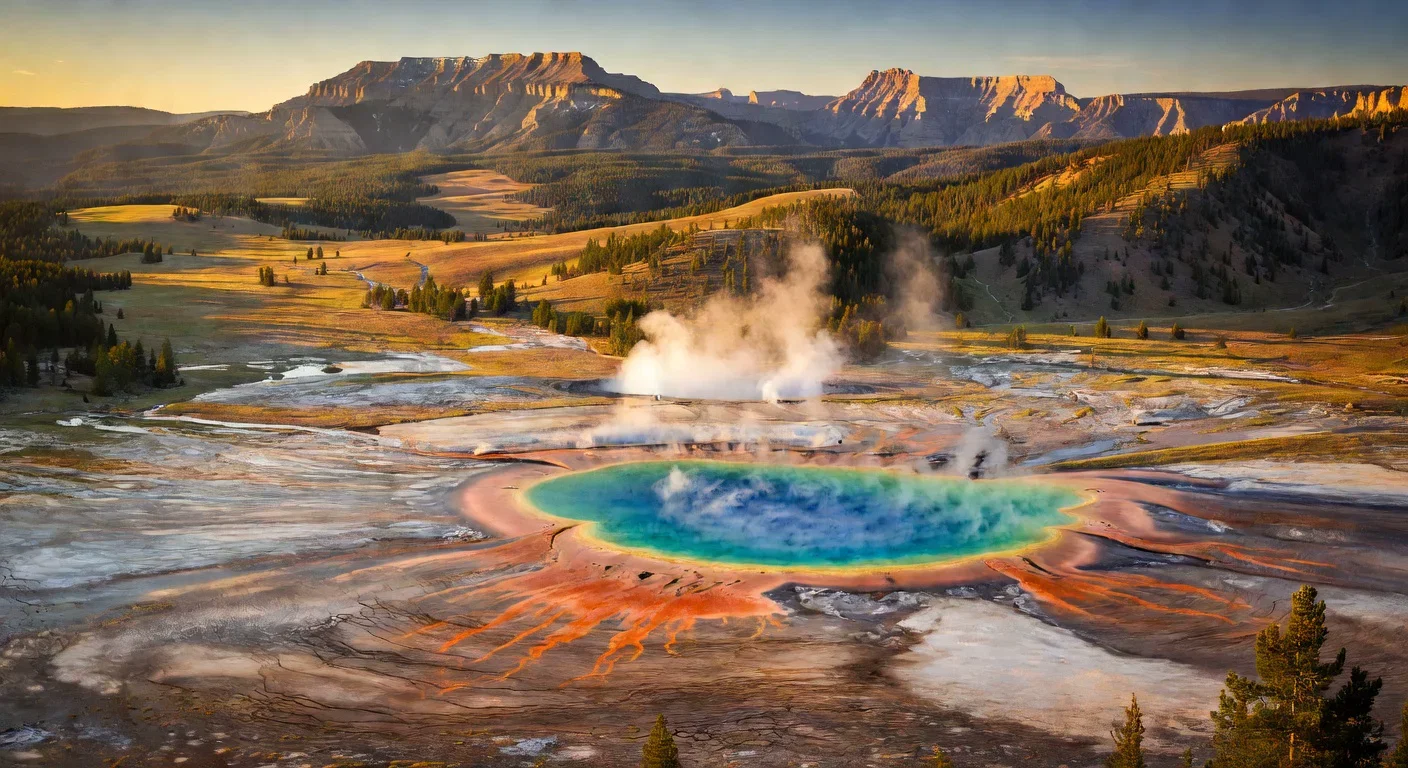
What to Wear To
What to Wear to Yellowstone in Spring
“Spring at Yellowstone (March–May) is the most technically demanding season — roads open progressively from late April through May, morning temperatures can be below freezing through mid-May, and snowmelt makes trails muddy and unstable. May brings exceptional wildlife viewing: bison calves, bear cubs, and wolf activity peak. This season requires full cold-weather layering. Cotton is never appropriate. Prepare for winter conditions on any given day.”
Weather Reality — Spring
Spring at Yellowstone (March–May) is the most technically demanding season — roads open progressively from late April through May, morning temperatures can be below freezing through mid-May, and snowmelt makes trails muddy and unstable. May brings exceptional wildlife viewing: bison calves, bear cubs, and wolf activity peak. This season requires full cold-weather layering. Cotton is never appropriate. Prepare for winter conditions on any given day.
What to Pack for Yellowstone National Park in Spring
Footwear
Boardwalk trails near hot springs can be wet; ankle support on rocky terrain
Wool regulates temperature across the 30°F daily swing
Tops
Mornings are 35–40°F; you'll want it for the first 3 hours
Afternoons reach 65–70°F — you will peel off layers midday
Bottoms
Trails can be wet, muddy, or near geyser spray
↔ swap: nylon zip-off shorts (afternoon temps allow shorts)
Layers
Afternoon rain is routine June–August; cotton holds water and chills fast
Cotton fails when wet; merino insulates even damp
↔ swap: synthetic fleece (cheaper; dries faster)
Accessories
UV is 25% stronger at 7,700 ft — burn time is dramatically shorter
↔ swap: neck gaiter for wind days
High elevation amplifies UV; reapply every 2 hours
Mosquitoes are heavy near water and geysers June–July
Outfit Ideas for Yellowstone National Park in Spring

Business Casual
Tonal Camel Edit
“Low 50s and crisp — the camel wool-blend coat worn over a matching V-neck sweater and grey midi skirt. Black knee-high boots anchor the tonal palette.”
Formal
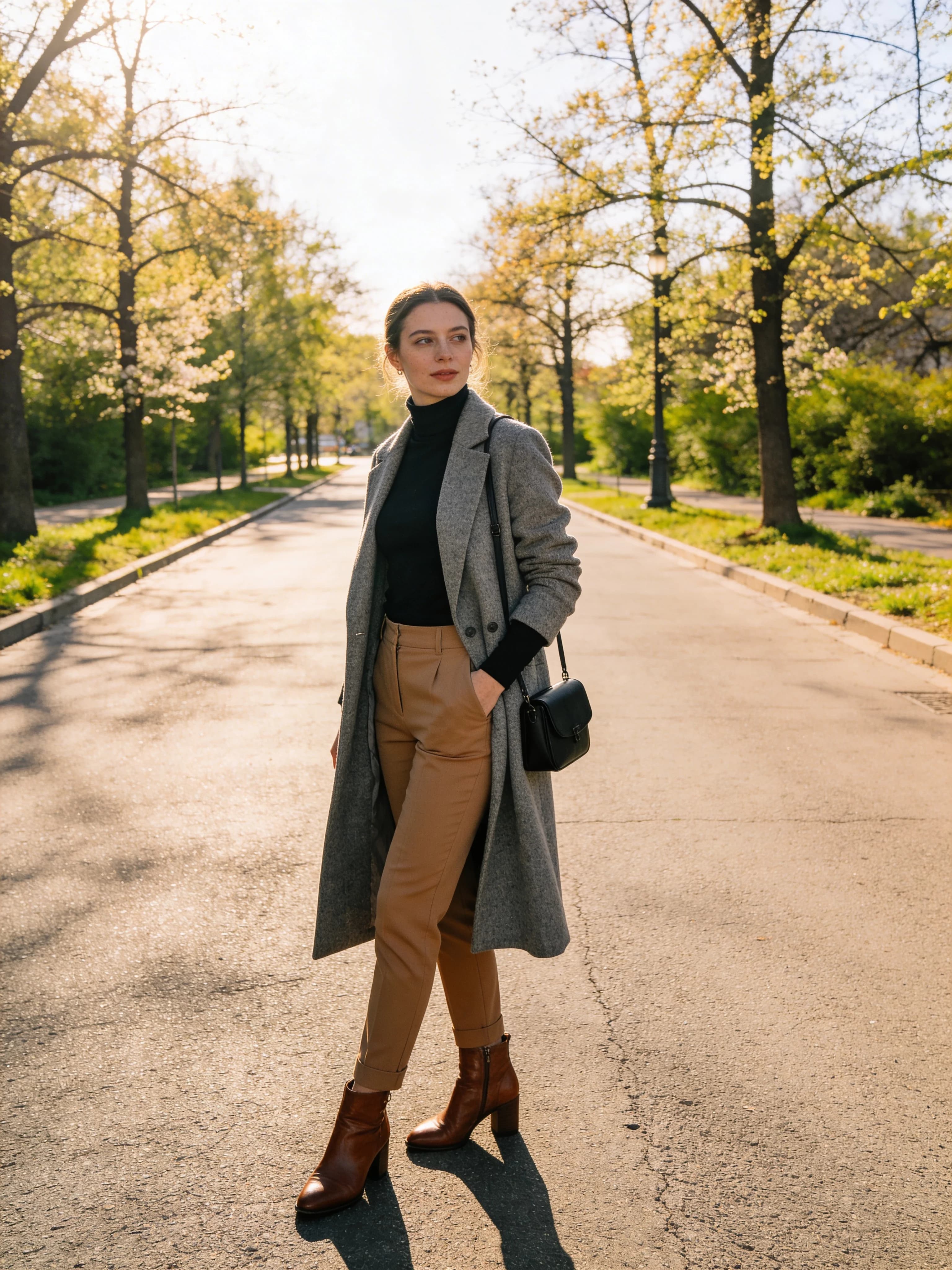
Grey Coat Brown Formal
“A grey longline coat worn over camel trousers and a black turtleneck on a cool clear day earns its occasion. Brown leather ankle boots add warmth without disrupting the clean lines.”
Cozy
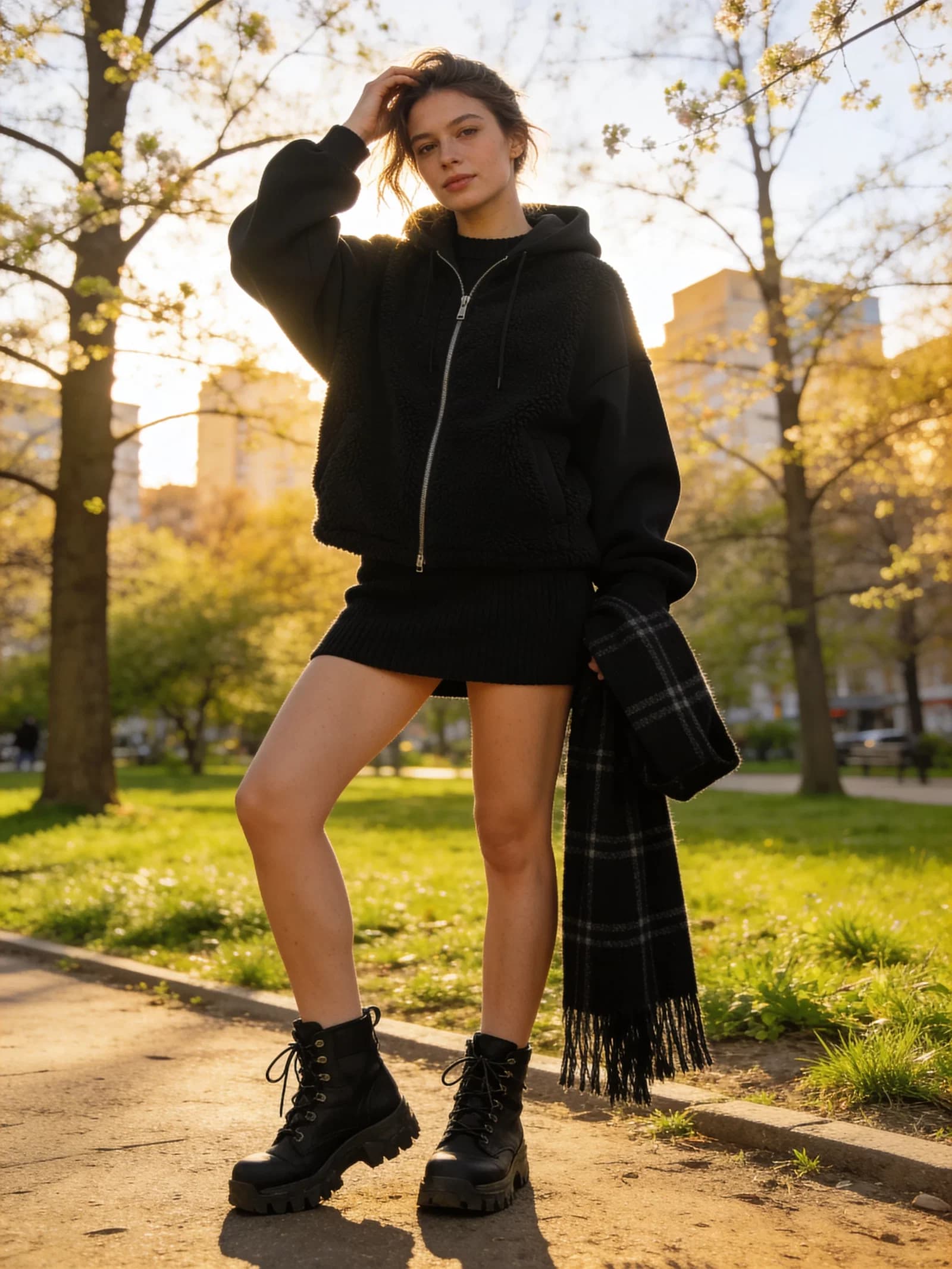
Fleece & Hoodie Stack
“Crisp low 50s — the black fleece zip-up worn over a black oversized hoodie and sweater mini skirt for a full monochromatic stack. Black lace-up hiking boots ground it solidly.”
Cute
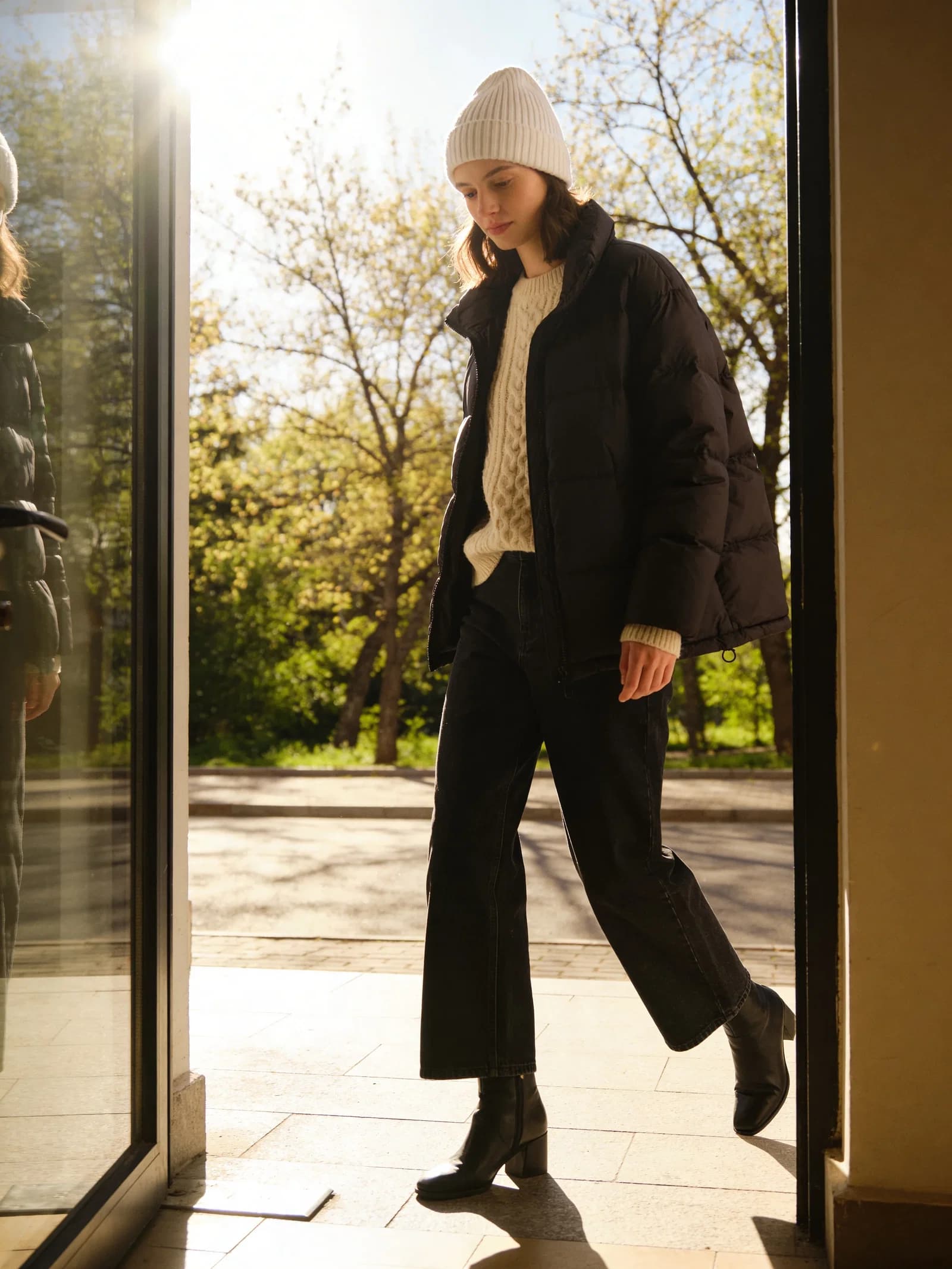
Cozy Noir Autumn Stroll
“A cream chunky knit anchors the look with warmth while sleek black wide-legs and a puffer jacket keep things sharp and cool-weather ready. Ankle boots ground the silhouette with an effortless edge, and a white ribbed beanie adds a soft, playful contrast when the chill creeps in.”
Casual
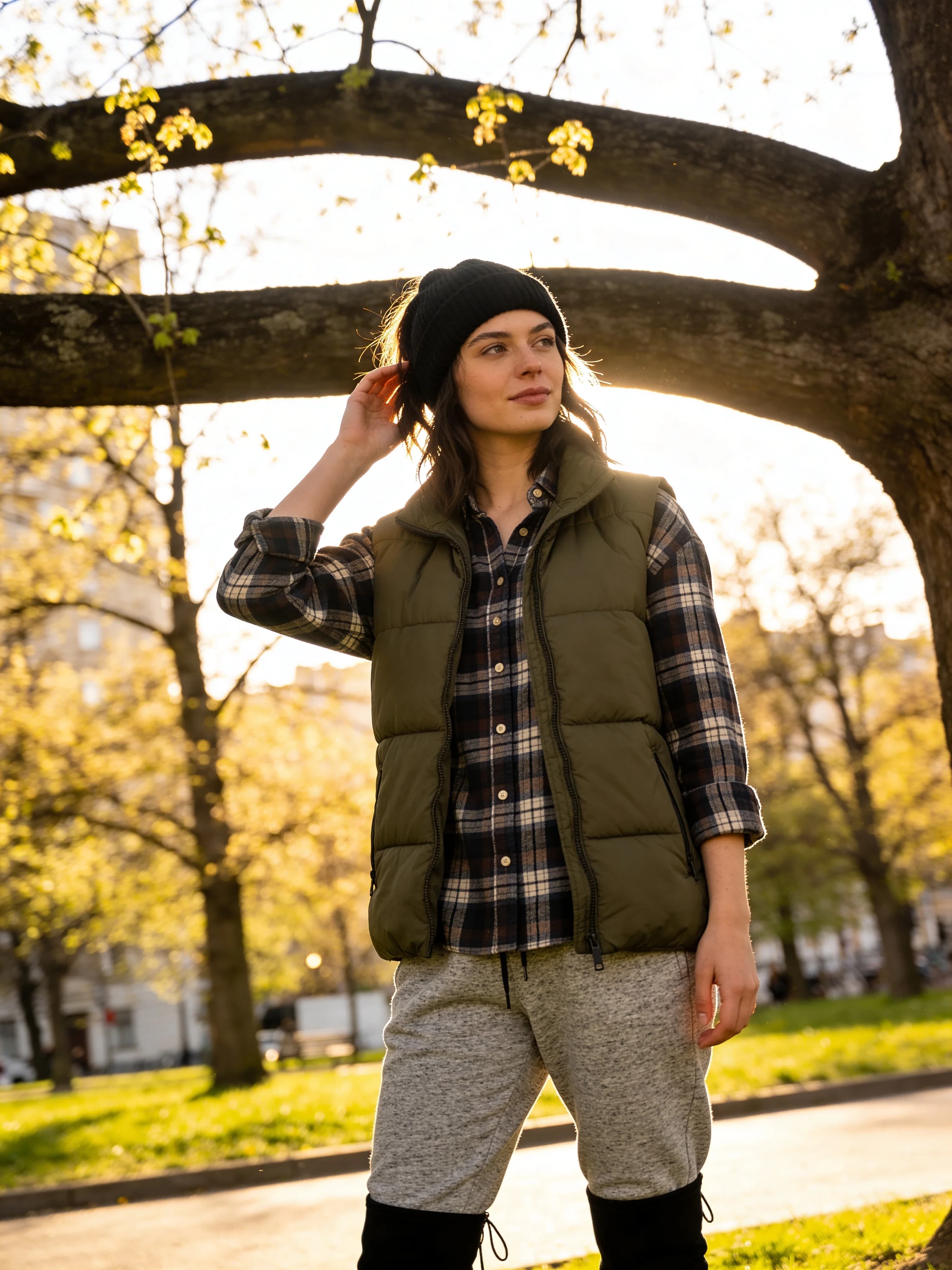
Vest and Joggers
“An olive puffer vest over a plaid flannel and grey joggers is the cool-clear casual combination that still looks considered. Black knee-high boots with joggers is the part that shouldn't work — but does.”
Chic
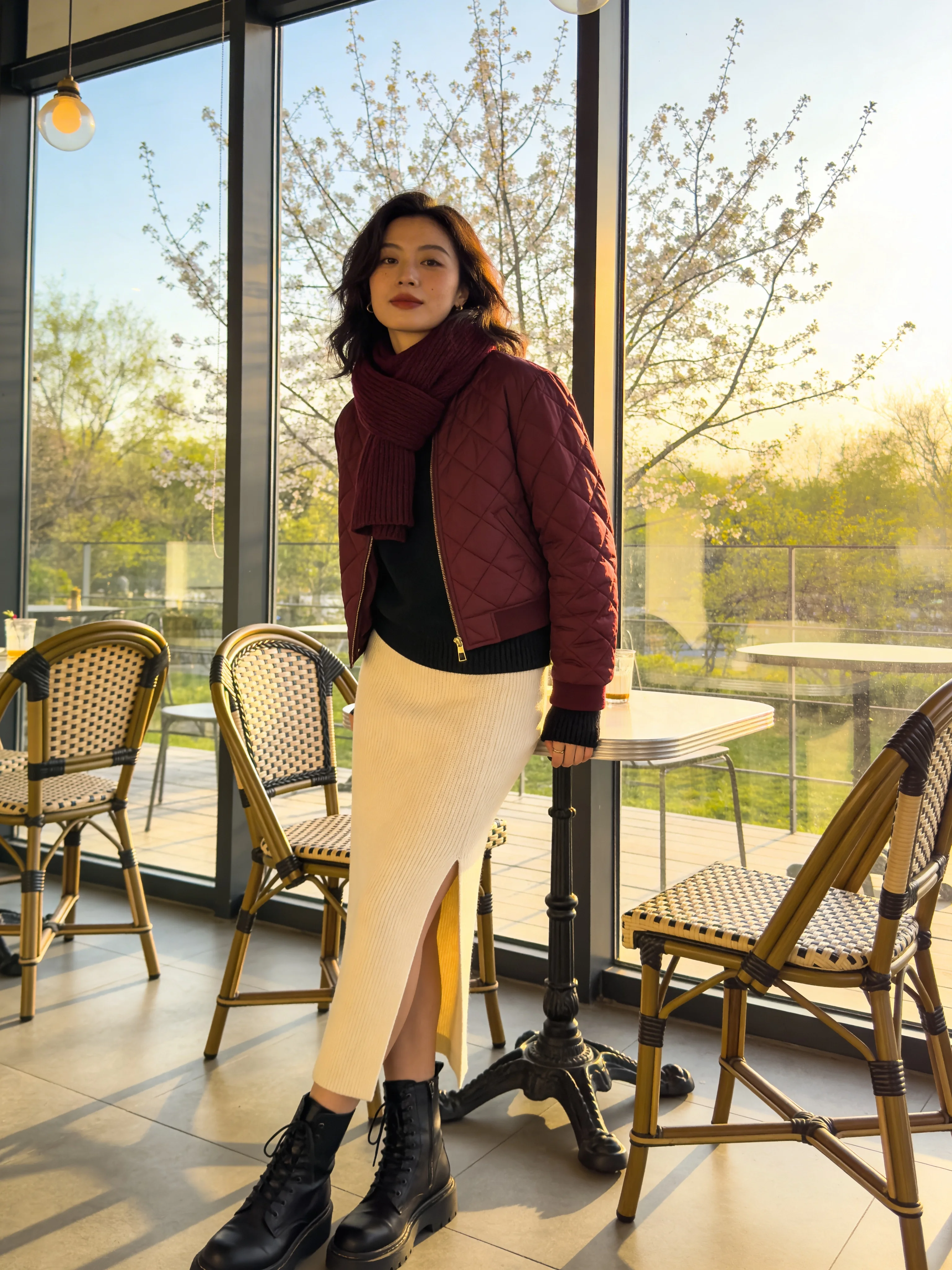
Burgundy Quilted Combat
“A burgundy quilted jacket over a black crewneck and cream maxi skirt is sharper than the forecast demands on a cool clear day. Black combat boots and a burgundy scarf land the look.”
Sporty
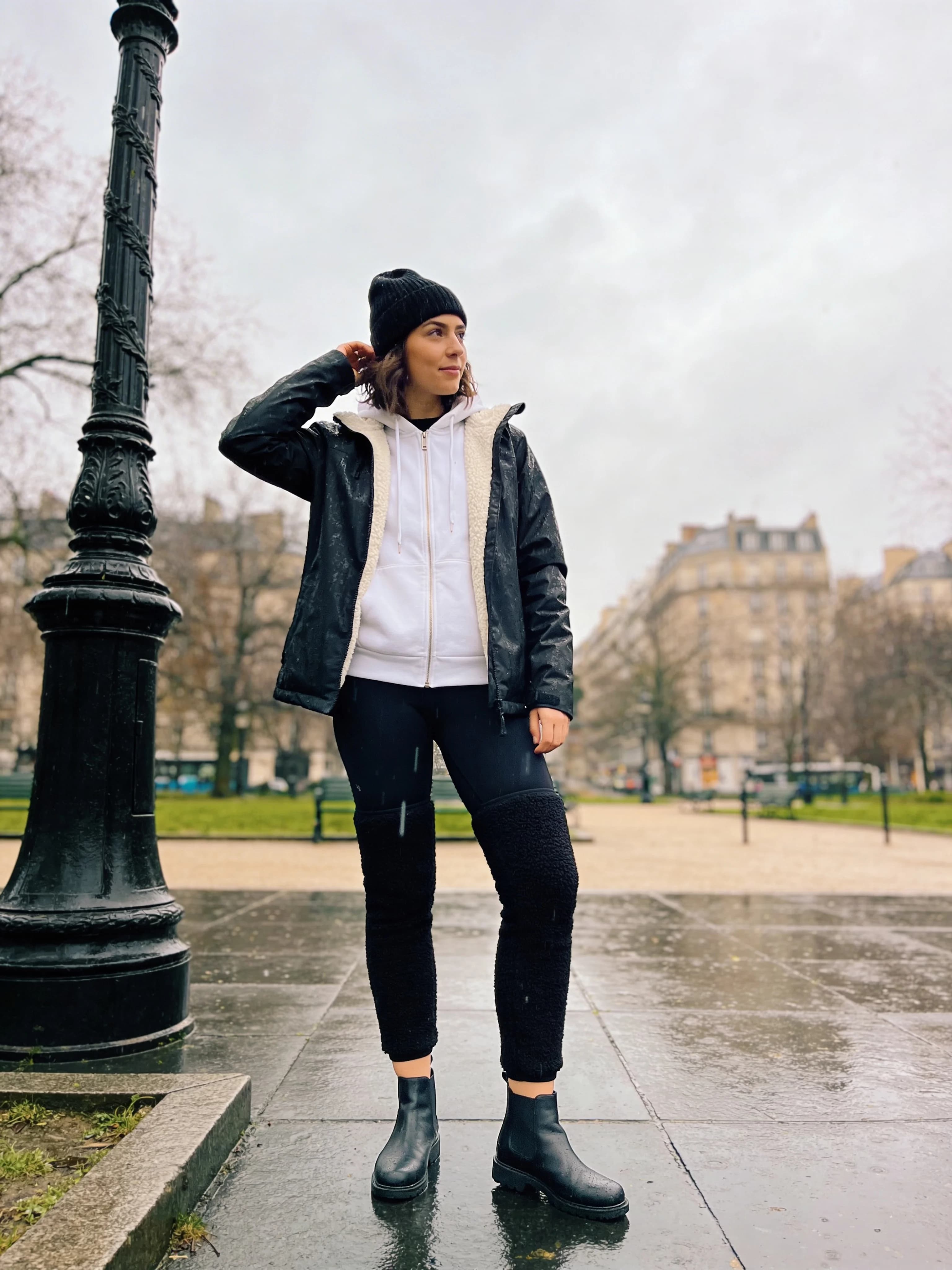
Rain Jacket Zip Layer
“A black rain jacket over a white zip-up hoodie is the light-rain sporty combination that stays clean in colour. Fleece leggings and Chelsea boots handle the rest.”
Casual
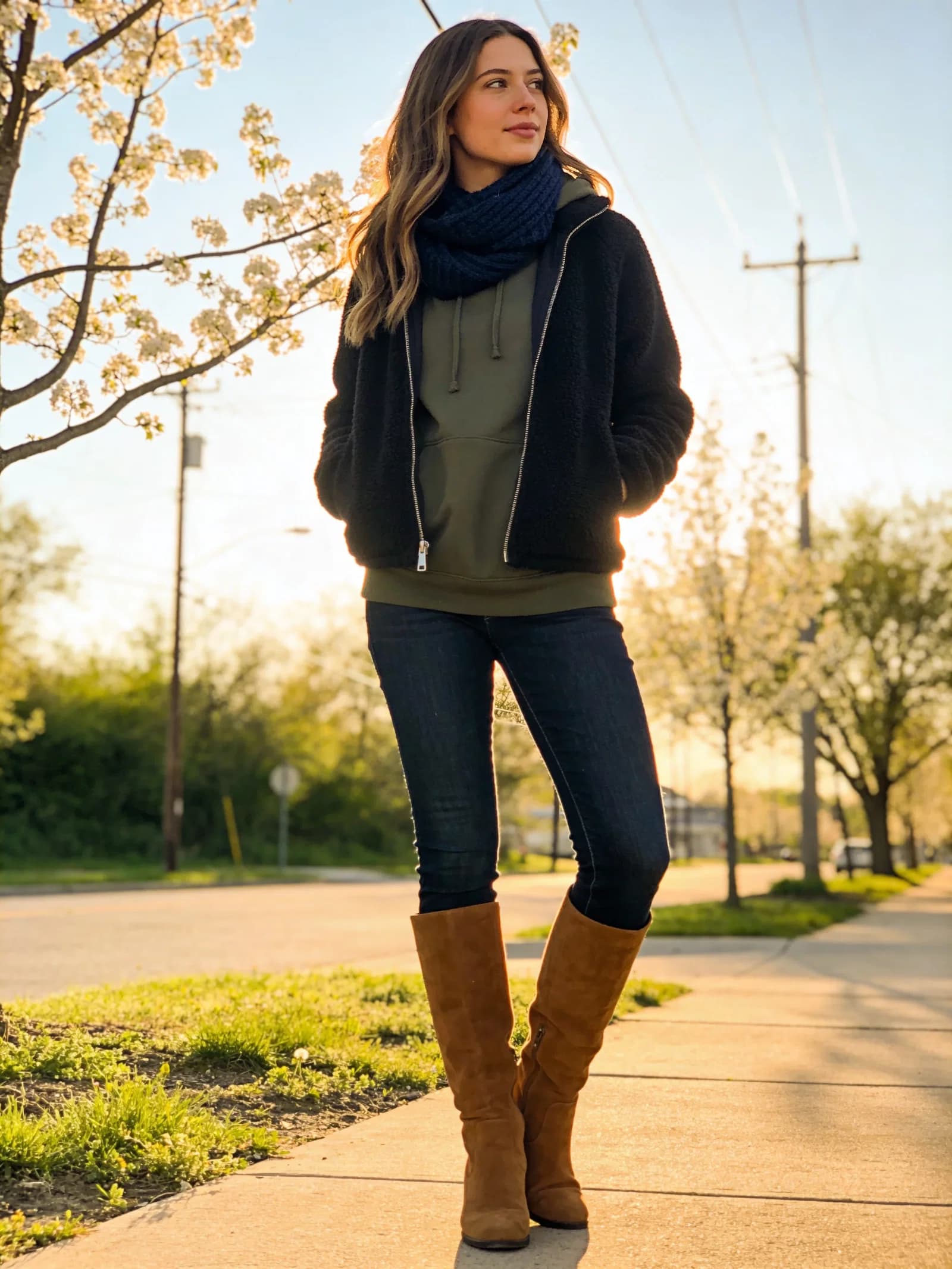
The Fleece Stack
“Crisp 40s and 50s — the black fleece zip-up worn over a forest green hoodie for easy double-layer warmth. Dark indigo jeans and suede knee-high boots land the casual part.”

Cozy
The Polished Pleated Trouser
“Bright and mild conditions call for the quiet luxury of a Grey Crewneck Cashmere Sweater. Pleated wide-leg black trousers create a fluid silhouette, grounded by black ankle boots.”
Get the Yellowstone Packing PDF
What to wear at elevation: a printable list covering the morning-to-evening temperature swing and what cotton kills.
Free. No spam. Unsubscribe any time.
What Most People Get Wrong
“Visitors wear cotton — t-shirts, cotton hoodies, cotton jeans. Cotton holds moisture from sweat, rain, and morning dew, then stops insulating when wet. At 7,700 feet elevation with afternoon wind gusts, a wet cotton layer is a hypothermia risk even in June. Merino wool or synthetic base layers are not optional.”
Frequently Asked Questions
When does Yellowstone open in spring?+
The North Entrance (Gardiner, MT) stays open year-round. Other entrances and roads open progressively from late April through late May depending on snowpack. The Beartooth Highway typically opens in late May. Check the NPS Yellowstone road status page before your visit — road openings vary by up to 2–3 weeks depending on the year.
What should I wear to Yellowstone in spring?+
Full cold-weather layering: merino or synthetic base layer top and bottom, fleece mid layer, insulated waterproof shell, waterproof hiking boots, wool gloves, and a warm hat. By May afternoon you may peel to a fleece — you will not be in just a t-shirt at any point in spring. No cotton in any layer.
Is Yellowstone muddy in spring?+
Yes, extensively. Snowmelt saturates open trails from April through early June. Many backcountry trails are impassable in spring mud. Even boardwalk-adjacent areas can be muddy at trailheads and parking lots. Waterproof boots and gaiters are the right call for any off-boardwalk walking.
Is spring a good time to visit Yellowstone?+
May is excellent for wildlife — newborn bison calves, bear cubs with mothers, and migrating birds create some of the best photography opportunities of the year. Crowds are minimal compared to summer. The trade-off is cold mornings, mud, and some road closures. Pack well and you will have large sections of the park to yourself.
What not to wear to Yellowstone in spring?+
Cotton in any layer. Trail runners without waterproofing. Light spring jackets — morning temperatures are below freezing and snow is possible through mid-May. Anything you are not comfortable getting muddy — spring trails are relentlessly wet.