Formal
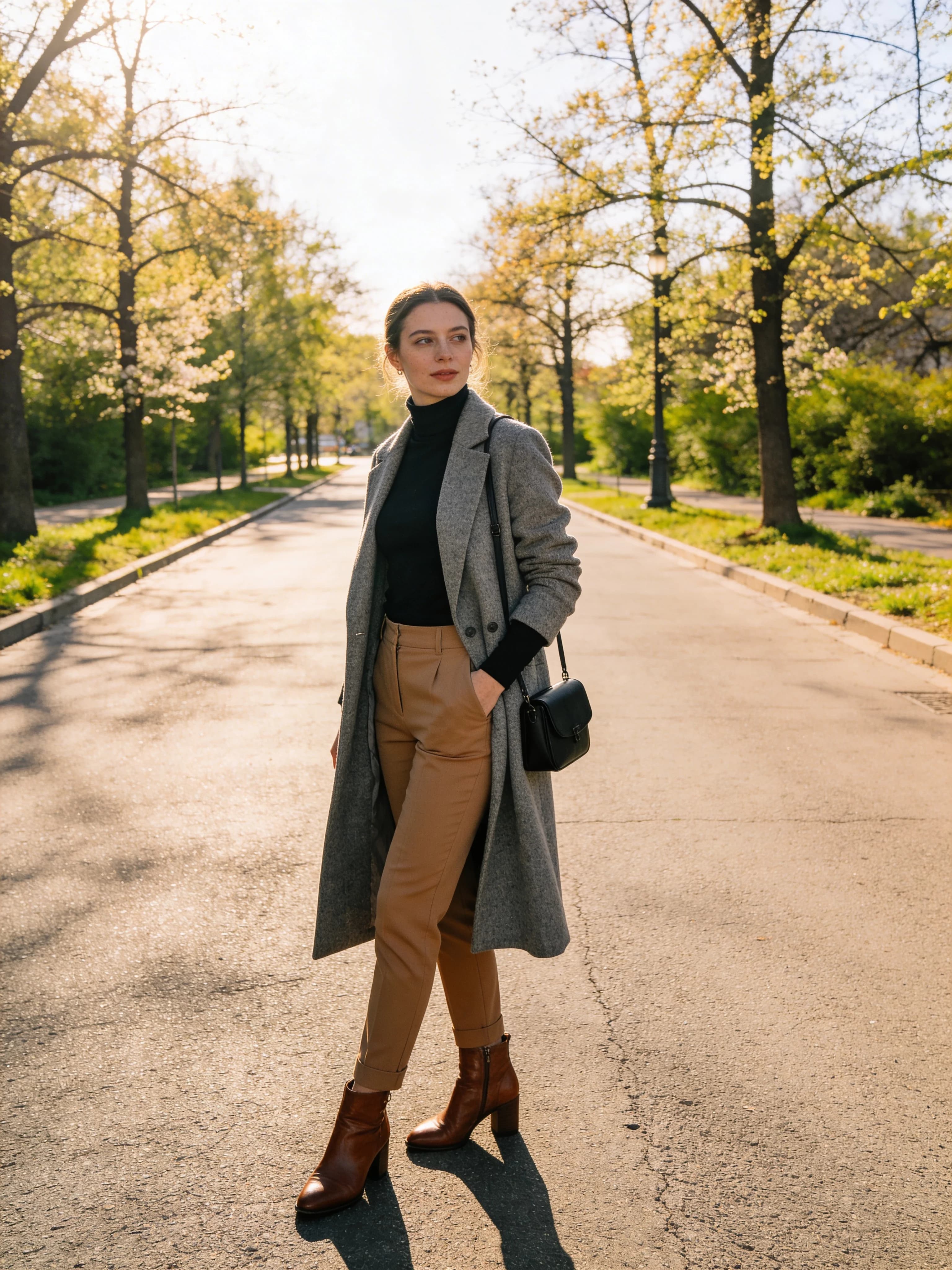
Grey Coat Brown Formal
A grey longline coat worn over camel trousers and a black turtleneck on a cool clear day earns its occasion. Brown leather ankle boots add warmth without disrupting the clean lines.

In December, Baltimore averages 29–45°F with about 10 rainy days and the raw, damp cold that Chesapeake Bay winters are known for. The Inner Harbor wind amplifies the chill significantly — a 38°F day on the waterfront promenade feels several degrees colder than the same temperature inland. Fell's Point cobblestone streets become genuinely treacherous in wet-weather icing, making waterproof boots with grip the essential December footwear.
Also packing for this trip?
Full December packing list for Baltimore →
Checklist of clothes, shoes, and gear — separate from these outfit ideas.
Compare prices across top booking sites for Dec 1–4.
Powered by Hotellook · prices from Booking.com, Agoda, and more

top / Long-Sleeve Top
fitted long-sleeve

bottom / Jeans
straight-leg
chinos for a slightly smarter look

footwear / Waterproof Boots
ankle boots
rubber sole for traction — keep feet dry all day

outerwear / Light Jacket
bomber
wind-resistant for crisp mornings that warm up later

top / Hoodie
pullover hoodie
adds warmth without overheating
zip-up hoodie for more flexibility
Based on typical December conditions in Baltimore. Weather varies year to year — check the live forecast when you're within two weeks of your trip.
December in Baltimore is genuine Mid-Atlantic winter — 45°F highs that feel colder at the Inner Harbor waterfront, 29°F lows that frost the Fell's Point cobblestones, and the damp Chesapeake Bay air that makes the cold feel more penetrating than dry climates at similar temperatures. The Inner Harbor promenade transforms into a holiday destination in December with ice skating and lights, but the waterfront wind makes proper cold-weather layering non-negotiable for outdoor time there. Fell's Point's historic cobblestone streets develop their most challenging character in December. Rain at 35°F coats the uneven stone with a thin ice layer that's nearly invisible and extremely slippery — the combination of wet historic paving and near-freezing temperatures demands waterproof boots with genuine traction. The neighborhood's bar and restaurant scene remains active through winter, but the footwear requirement becomes more urgent than in other seasons. Baltimore's East Coast preppy-casual aesthetic transitions naturally to winter layers — peacoats over sweaters, knee-high boots, and the nautical-influenced layering that suits a harbor city's cold-season character. The 10 rainy December days keep a compact umbrella relevant alongside waterproof outerwear. The Chesapeake Bay's thermal mass moderates extreme cold somewhat — Baltimore rarely reaches the single-digit temperatures that Chicago or Minneapolis see — but the damp air makes every degree feel significant. The Inner Harbor's holiday season is one of Baltimore's most festive, with the National Aquarium and surrounding waterfront restaurants creating a compelling December destination. The wind corridor along the water requires more insulation than the temperature forecast suggests for comfortable waterfront time.
A grey longline coat worn over camel trousers and a black turtleneck on a cool clear day earns its occasion. Brown leather ankle boots add warmth without disrupting the clean lines.
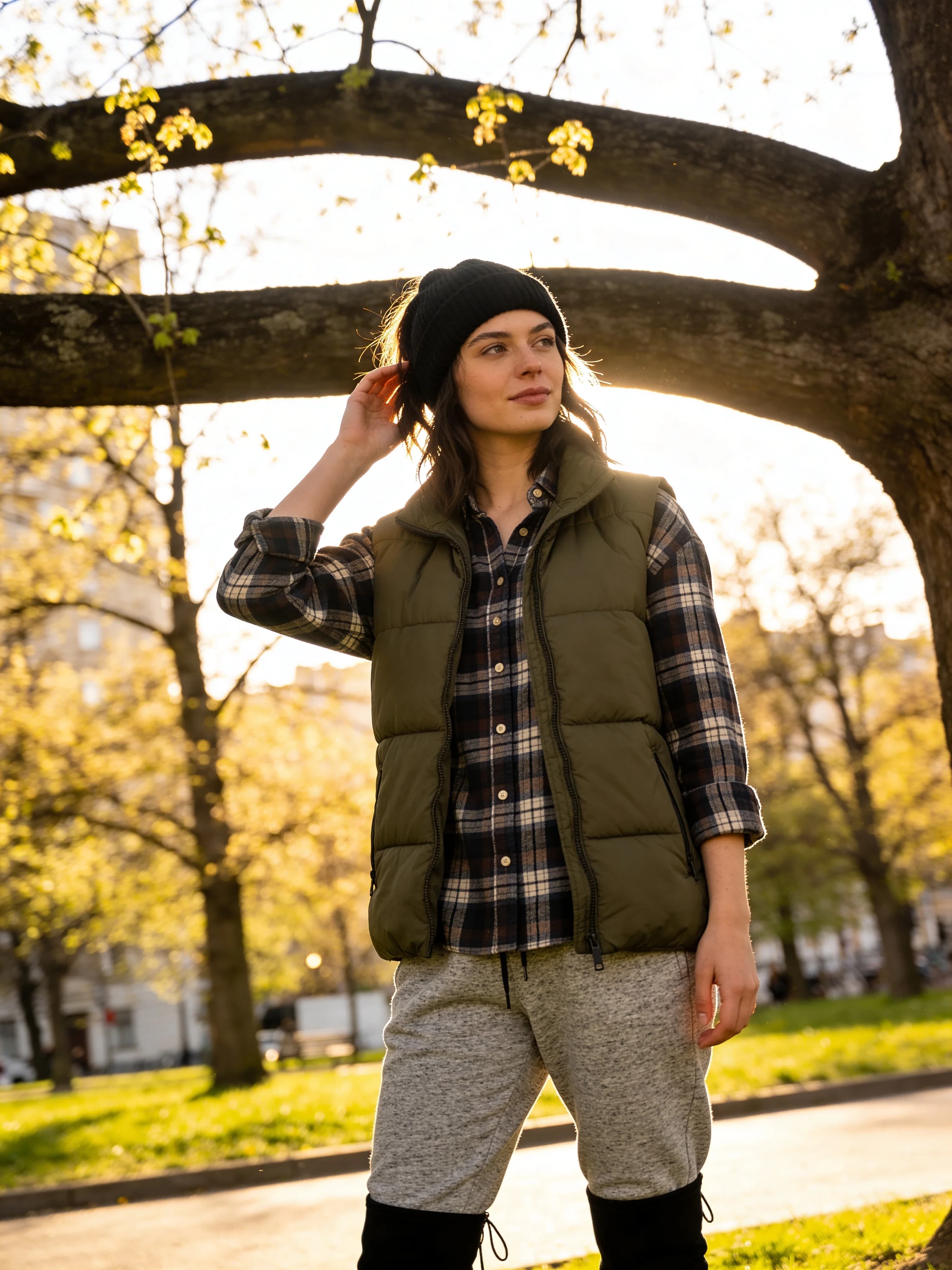
An olive puffer vest over a plaid flannel and grey joggers is the cool-clear casual combination that still looks considered. Black knee-high boots with joggers is the part that shouldn't work — but does.
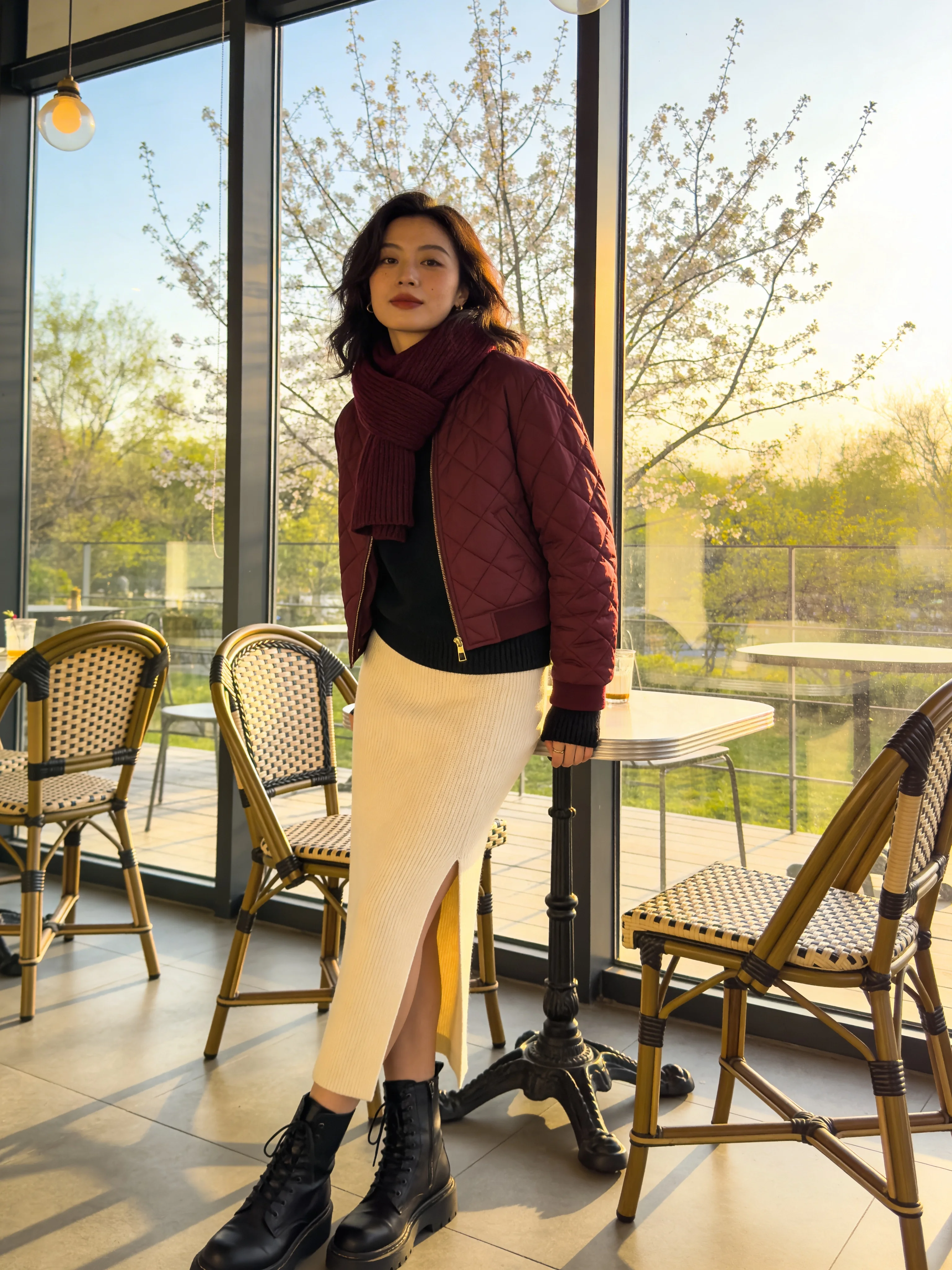
A burgundy quilted jacket over a black crewneck and cream maxi skirt is sharper than the forecast demands on a cool clear day. Black combat boots and a burgundy scarf land the look.
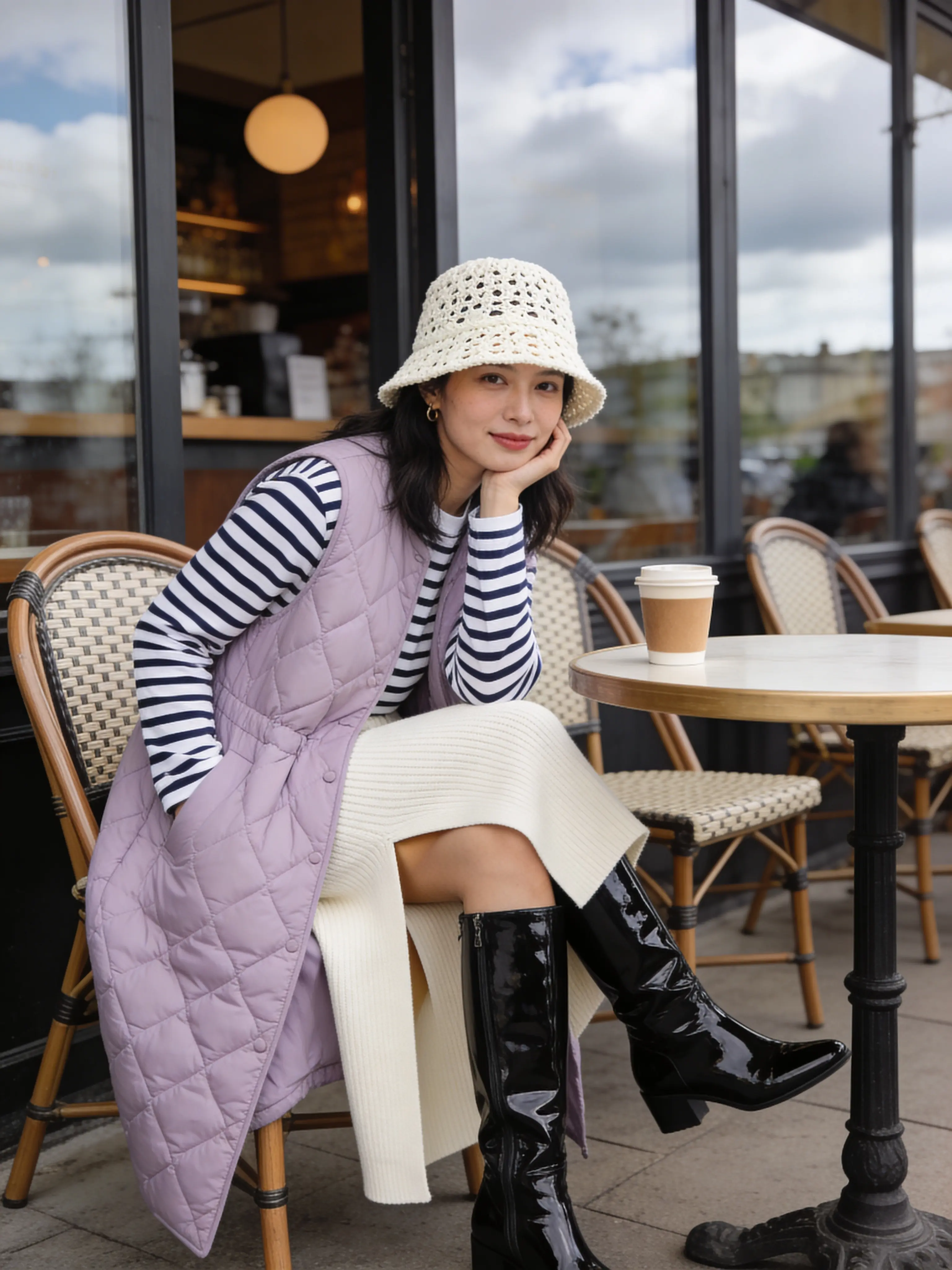
Clear skies at 45–54°F let the quilted lilac vest take the lead over a Breton stripe and cream maxi. Patent thigh-high boots make the whole thing slightly more interesting than expected.
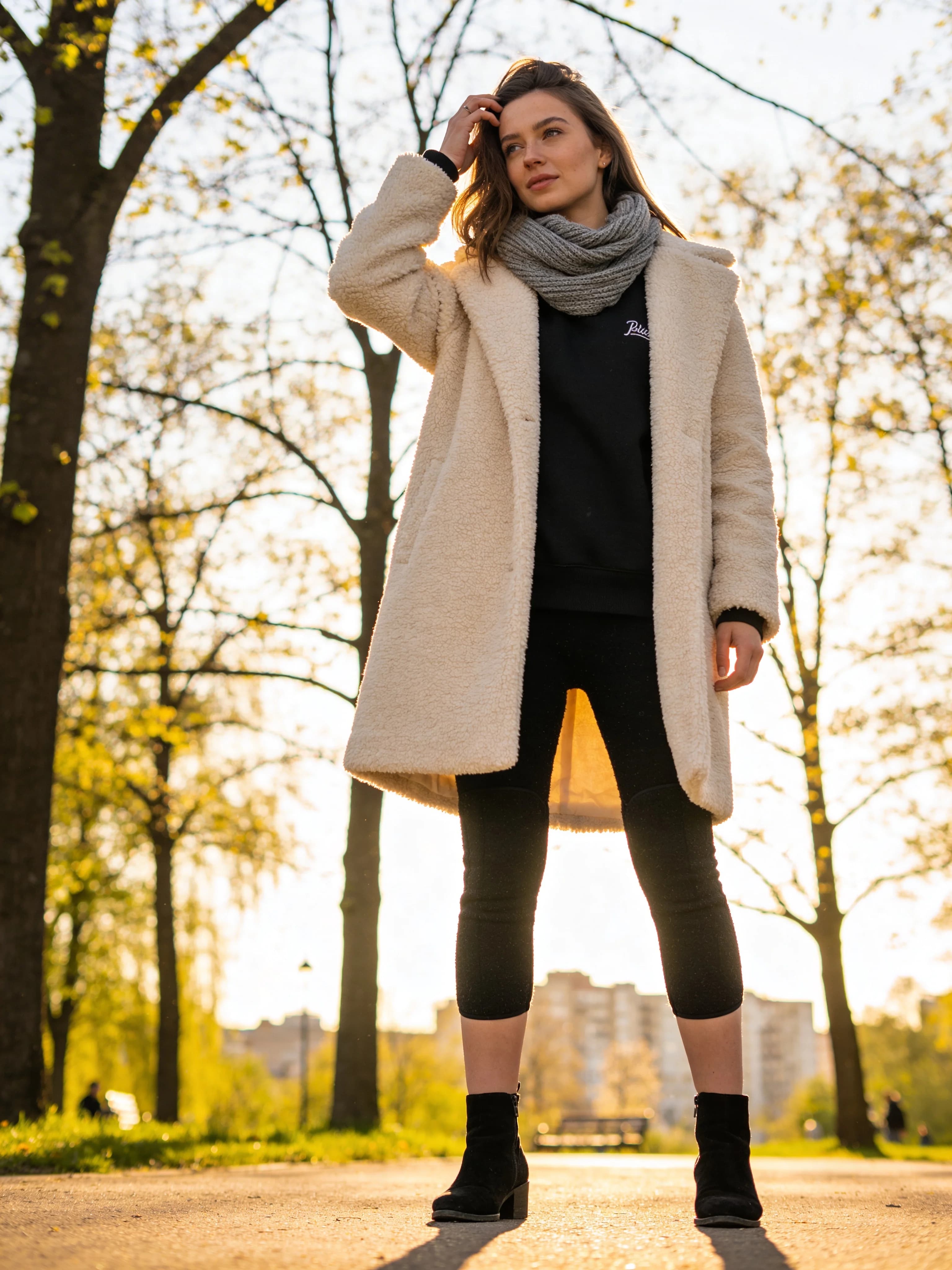
A cream teddy coat over a black crewneck and fleece-lined leggings is warm without being heavy. A grey knit scarf worn loose over the coat is the only accessory it needs.
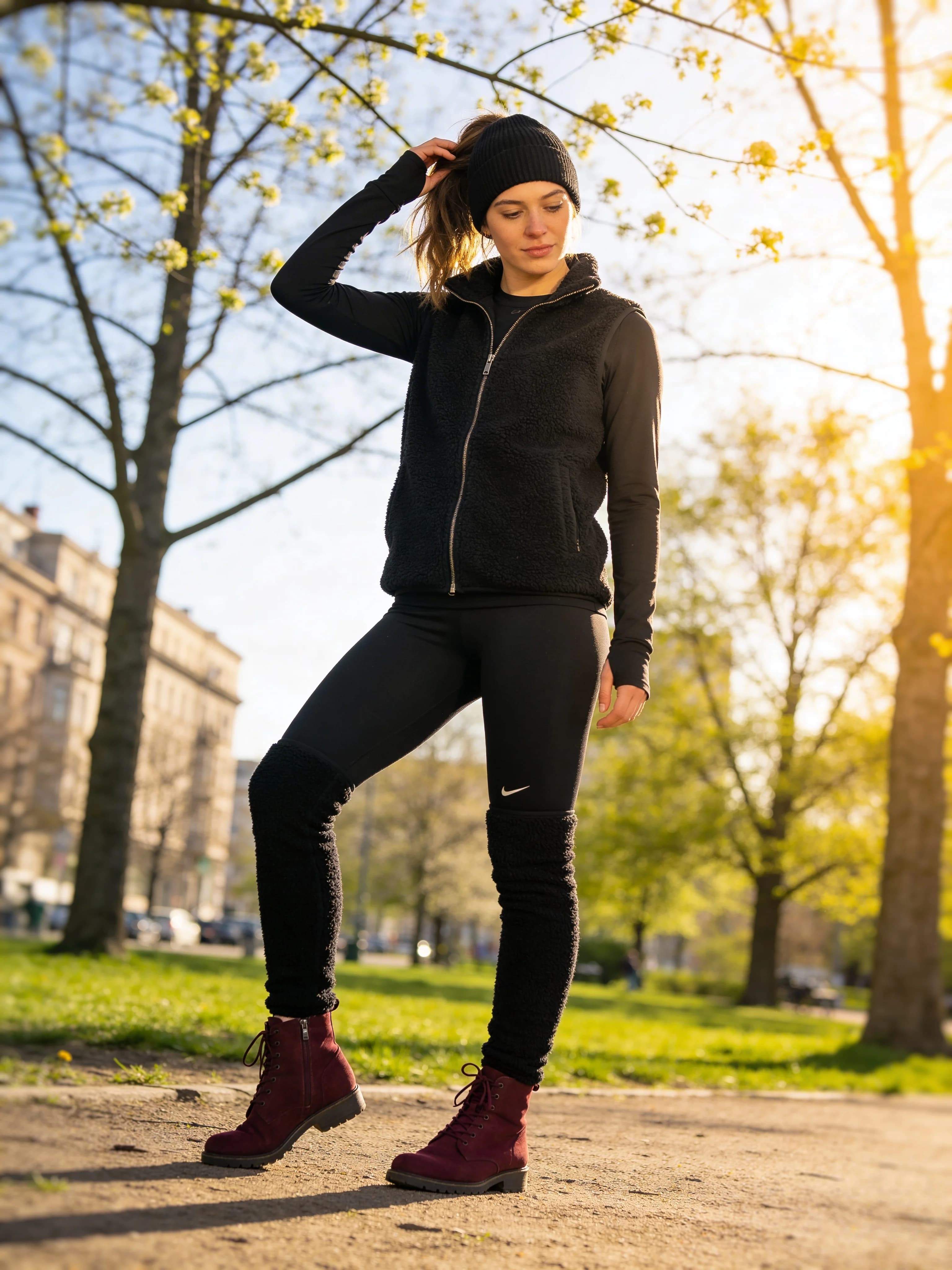
A black fleece zip-up over a long-sleeve athletic top and fleece leggings on a cool clear day is the sporty base that works. Burgundy ankle boots break the monochrome with one precise hit of colour.
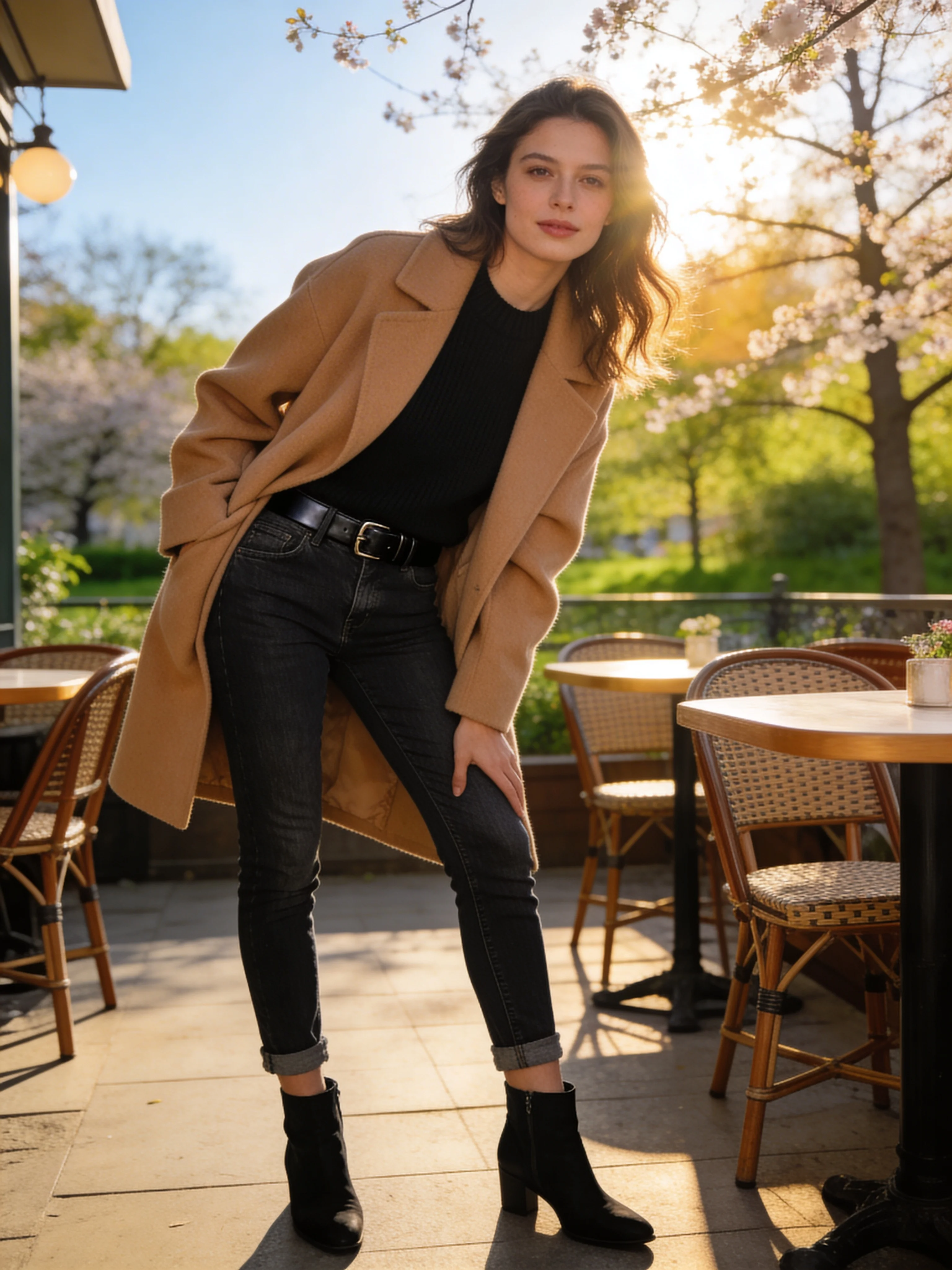
A camel coat over dark indigo jeans cinched with a black leather belt gives structure on a cool clear day. Black ankle boots are the straightforward finish.
Wear a warm, waterproof coat with good insulation and waterproof boots with grip in Baltimore in December — temperatures range from 29°F to 45°F with damp Chesapeake Bay air that makes the cold feel penetrating. The Inner Harbor waterfront wind amplifies the chill significantly. Fell's Point cobblestone streets can ice over, making traction footwear essential for any winter night out in the neighborhood.
December in Baltimore is festive and walkable — the Inner Harbor holiday lights, ice skating, and waterfront restaurants make it a compelling winter destination. The cold and damp are real: the Chesapeake Bay air is more penetrating than dry-climate cold at the same temperature, and the Inner Harbor wind makes proper outerwear essential. Fell's Point's historic character is beautiful in winter if you're dressed for it.
Waterproof insulated boots with strong traction are the essential footwear for Baltimore in December. Fell's Point cobblestones in wet near-freezing conditions are among the most slippery urban terrain in the Mid-Atlantic — grip matters more here than in most neighborhoods. The Inner Harbor promenade is flat and manageable in most waterproof boots, but thin-soled fashion footwear becomes a liability in wet Baltimore winter.
Baltimore averages a high of 45°F and a low of 29°F in December, with about 10 rainy days. Chesapeake Bay humidity makes the cold feel more penetrating than the thermometer suggests, and the Inner Harbor wind amplifies chill on the waterfront. January is the coldest month, but December is when the damp Mid-Atlantic winter fully arrives.
Pack a warm waterproof insulated coat, layered sweaters or fleece for underneath, waterproof boots with grip, and a compact umbrella for the frequent rain. Baltimore's nautical preppy-casual winter aesthetic rewards peacoats, knee-high boots, and layered cold-weather pieces. Wind protection at the Inner Harbor requires more insulation than the raw temperature suggests — the waterfront is always colder than the inland forecast.
Packing tools
Free calculators — city and month pre-filled when we know them. No account required. Start with how many outfits, sudoku packing, or bag fees.
Trip
Planning a trip to one city?
One city → typical weather for your month, packing counts that fit your bags, and email your plan.
Outfits
How many outfits for this trip?
Trip length, bag size, and climate → exact tops, bottoms, layers, and outfit combinations.
Jacket
Not sure about a jacket?
City + month → base / mid / shell stack and pack-or-skip verdicts for rain jacket, coat, and thermals.
Shoes
Shoes for this climate?
Climate, activities, and bag size → pair count, primary/backup types, and climate-matched picks.
Bags
Will this trip cost bag fees?
Airline + fare bucket + bags you plan to bring → fit verdicts and typical carry-on / checked fee ranges.
Capsule
Try sudoku packing for this climate?
City + month → climate-ready 3 tops / 3 bottoms / 3 layers you can edit — up to 27 mix-and-match outfits.