White Linen Blazer Day
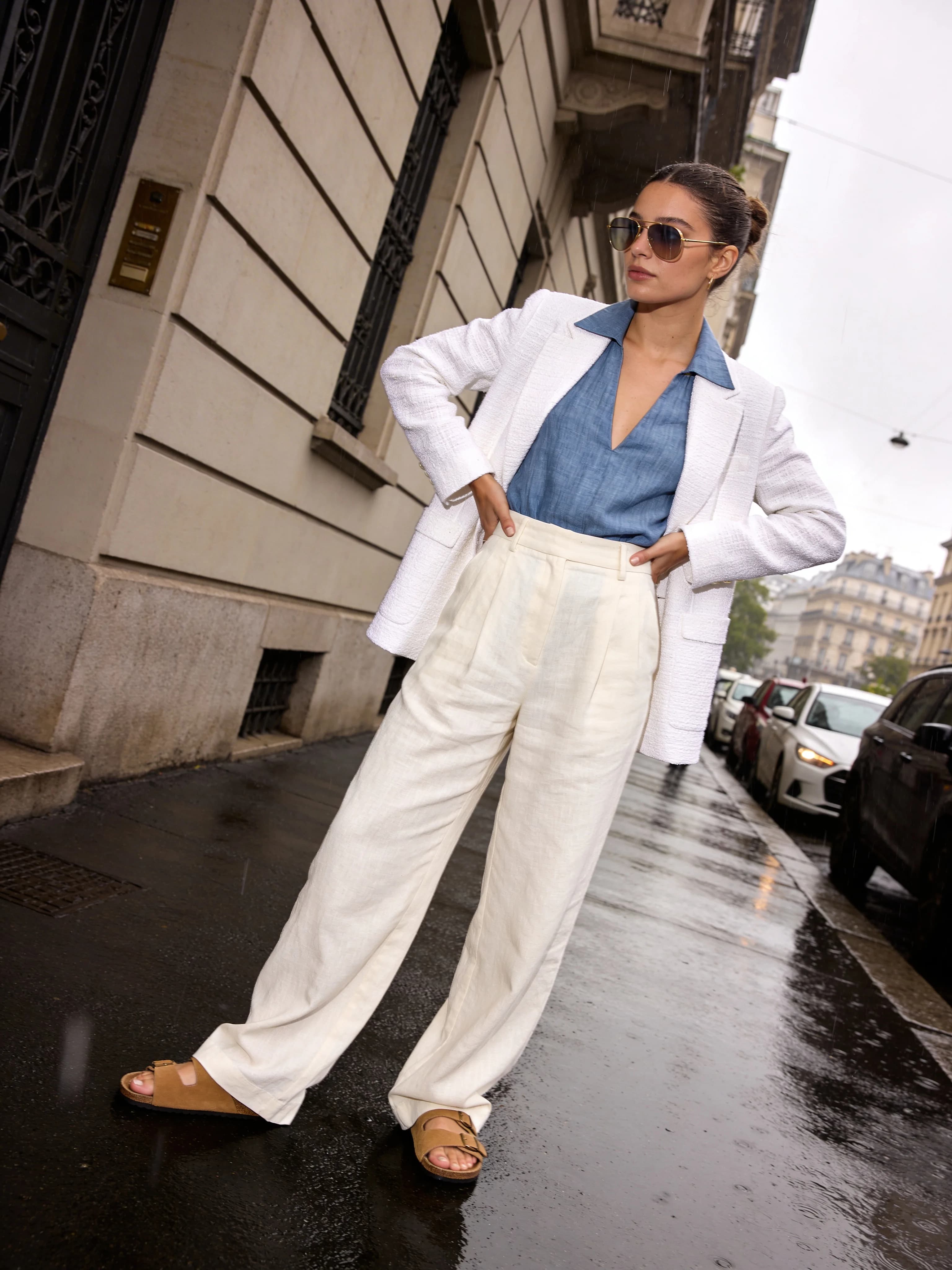
A white linen blazer over matching wide-leg linen trousers and a blue collarless blouse stays entirely polished through warm rain. Slide sandals and gold aviators make it feel like summer despite the drizzle.

January in Los Angeles averages 48–66°F — the city's mild winter with cool, marine-influenced mornings and pleasant afternoons that make Griffith Park, the Venice Boardwalk, and the Getty Center's outdoor terraces all viable without summer's tourist crush. A light-to-medium jacket handles the daily range; about 6 days bring rain from Pacific systems, and the micro-climate variation between the coast (cooler) and the San Fernando Valley (warmer) remains pronounced even in winter.
top / Short-Sleeve Top
classic tee
bottom / Jeans
straight-leg
chinos for a slightly smarter look
footwear / Waterproof Boots
ankle boots
rubber sole for traction — keep feet dry all day
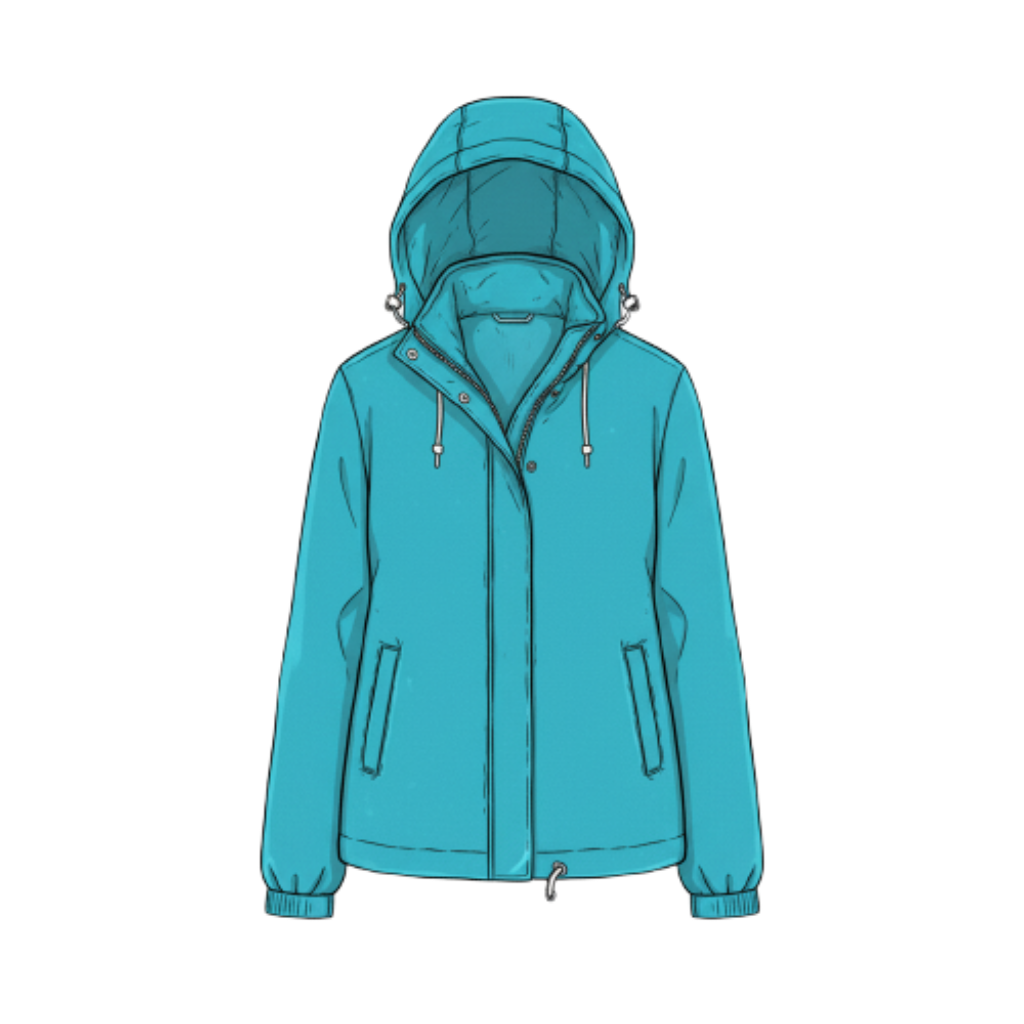
outerwear / Rain Jacket
shell jacket
waterproof or DWR-treated — keep it packable
Based on typical January conditions in Los Angeles. Weather varies year to year — check the live forecast when you're within two weeks of your trip.
Los Angeles's January is mild, occasionally rainy, and defined by the micro-climate variation that makes the city's weather a constant conversation topic. Coastal neighborhoods like Venice and Santa Monica average 48°F mornings with highs near 65°F; the San Fernando Valley and the Inland Empire run 5–8°F warmer by afternoon. Pacific storm systems arrive roughly every 10–14 days from November through March, depositing meaningful rain before clearing to the spectacular clear skies that follow a Pacific front in winter. About 6 rainy days fall in January — the heart of the wet season. Los Angeles's effortlessly cool, trend-forward style tendency handles January with the layering fluency the city's micro-climate variation demands year-round — lightweight trench coats over relaxed knit sets, denim jackets over long-sleeve basics, ankle boots replacing summer's slides. The Hollywood Hills, Griffith Park's observatory trail, and the Silver Lake Reservoir path are all atmospheric in January and significantly quieter than summer. A light waterproof layer is worth adding to the standard LA rotation for the Pacific rain days.

A white linen blazer over matching wide-leg linen trousers and a blue collarless blouse stays entirely polished through warm rain. Slide sandals and gold aviators make it feel like summer despite the drizzle.

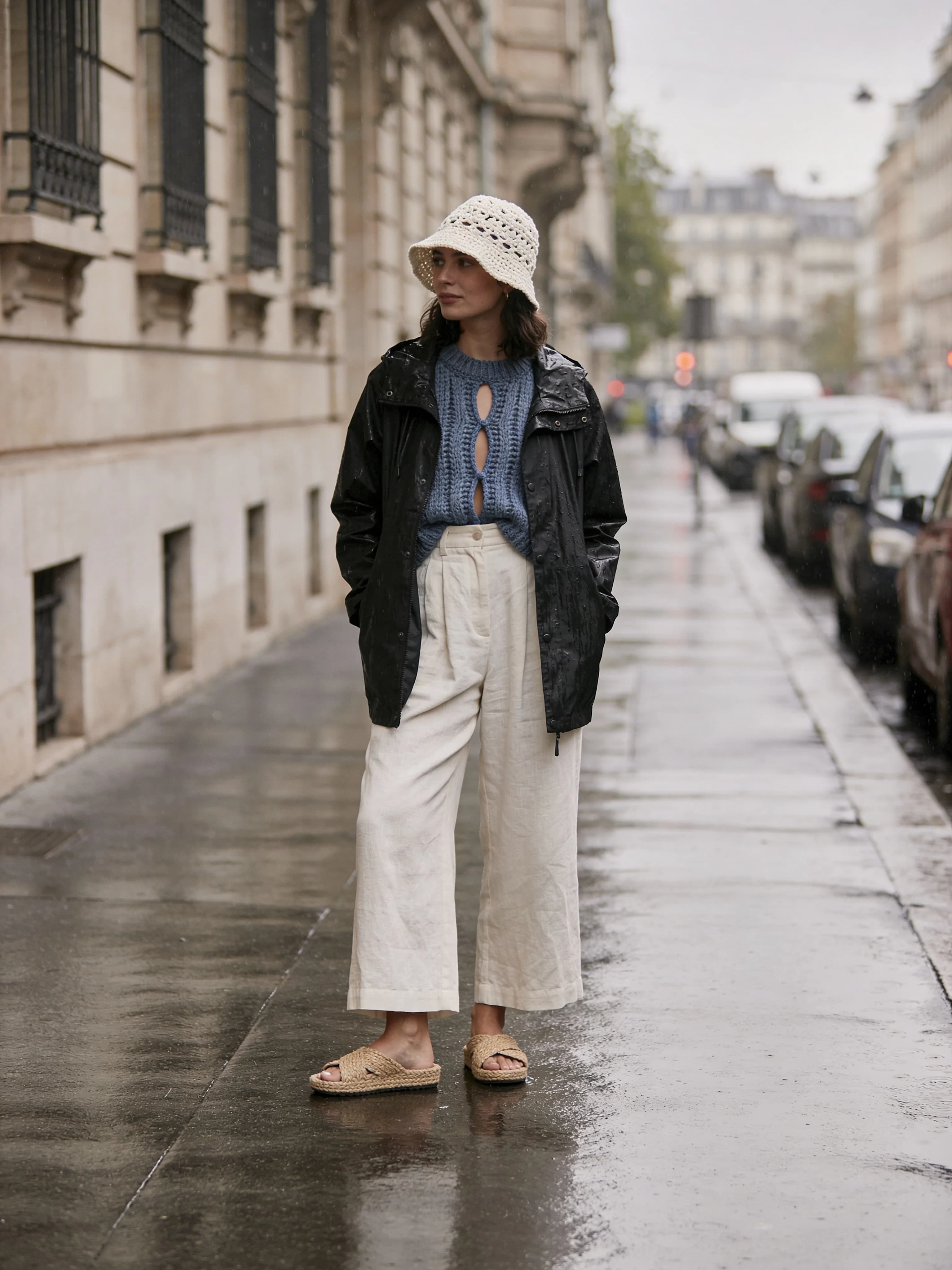
A black rain jacket over ivory linen trousers refuses to look sloppy in warm rain. Espadrilles and a crochet bucket hat keep the warm-weather mood alive below the waterline.

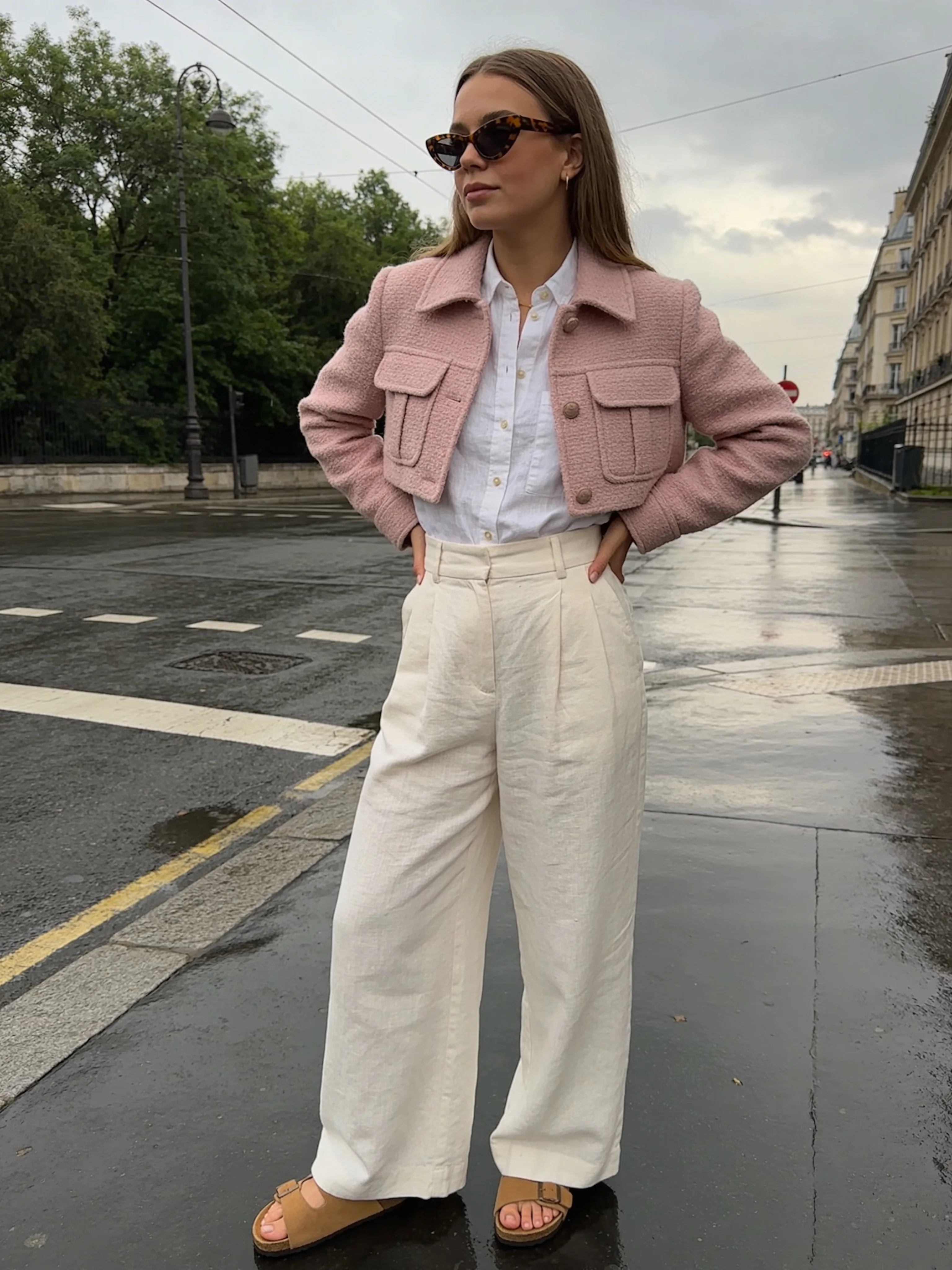
A blush cropped jacket over a white linen blouse and ivory wide-leg trousers refuses to look heavy in warm rain. Tortoiseshell cat-eye sunglasses are the editorial punctuation.

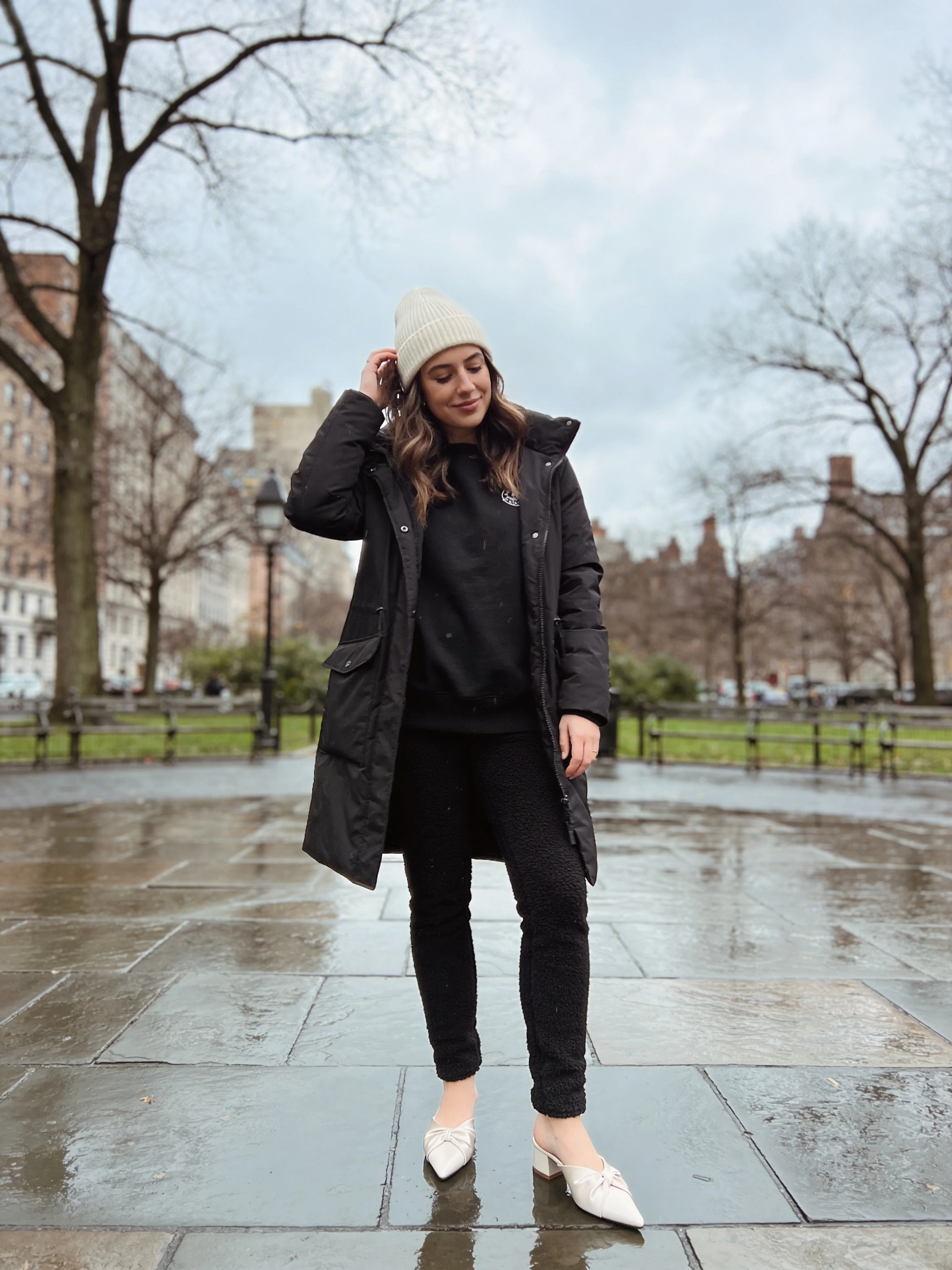
A black longline parka over a crewneck sweatshirt in warm rain has a deliberateness that works. Ivory satin mules and a cream beanie are the contrasts that make it.

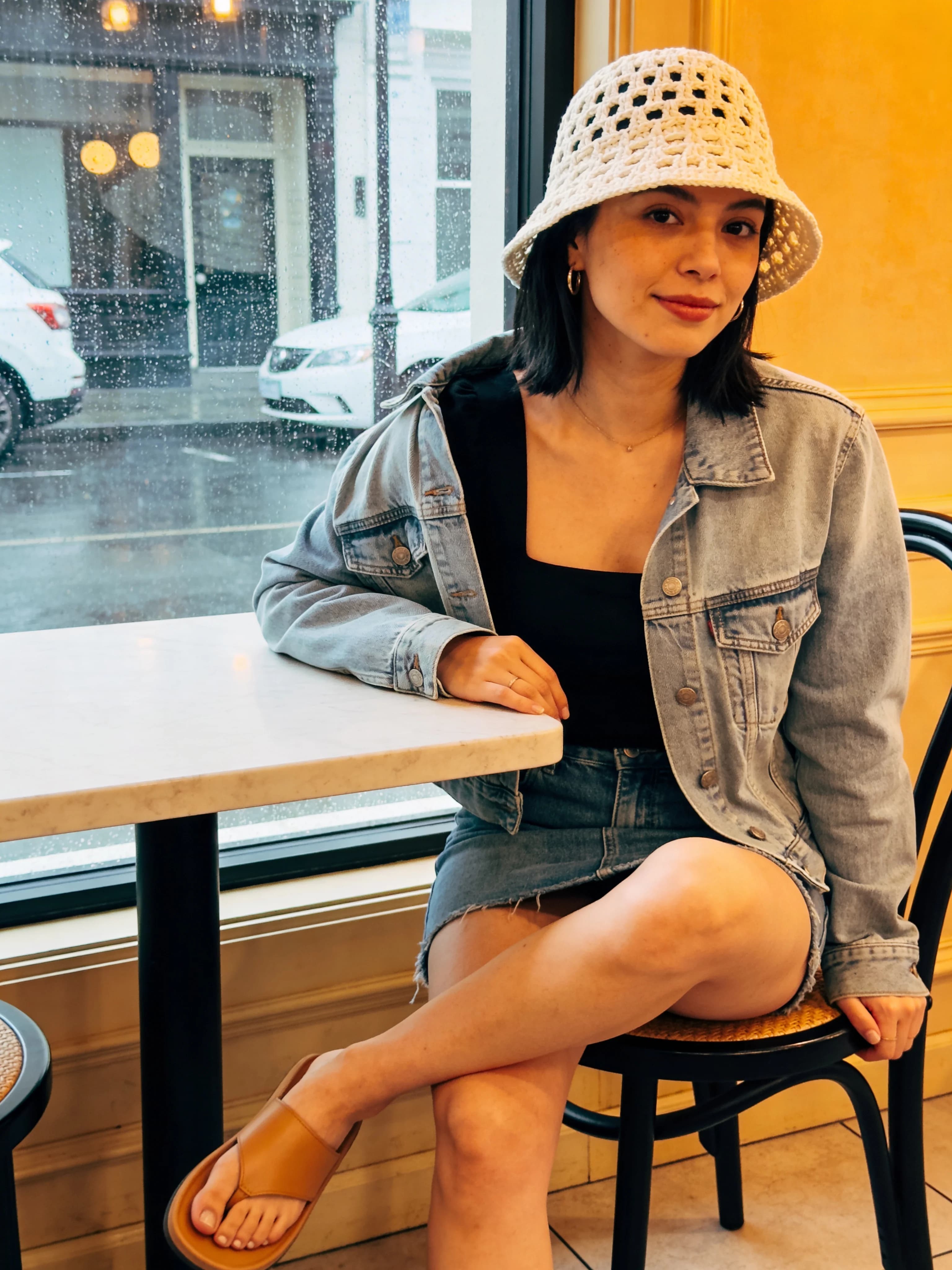
A light wash denim jacket over a denim mini skirt makes a strong case for double denim in warm rain. The black square neck top underneath adds structure.

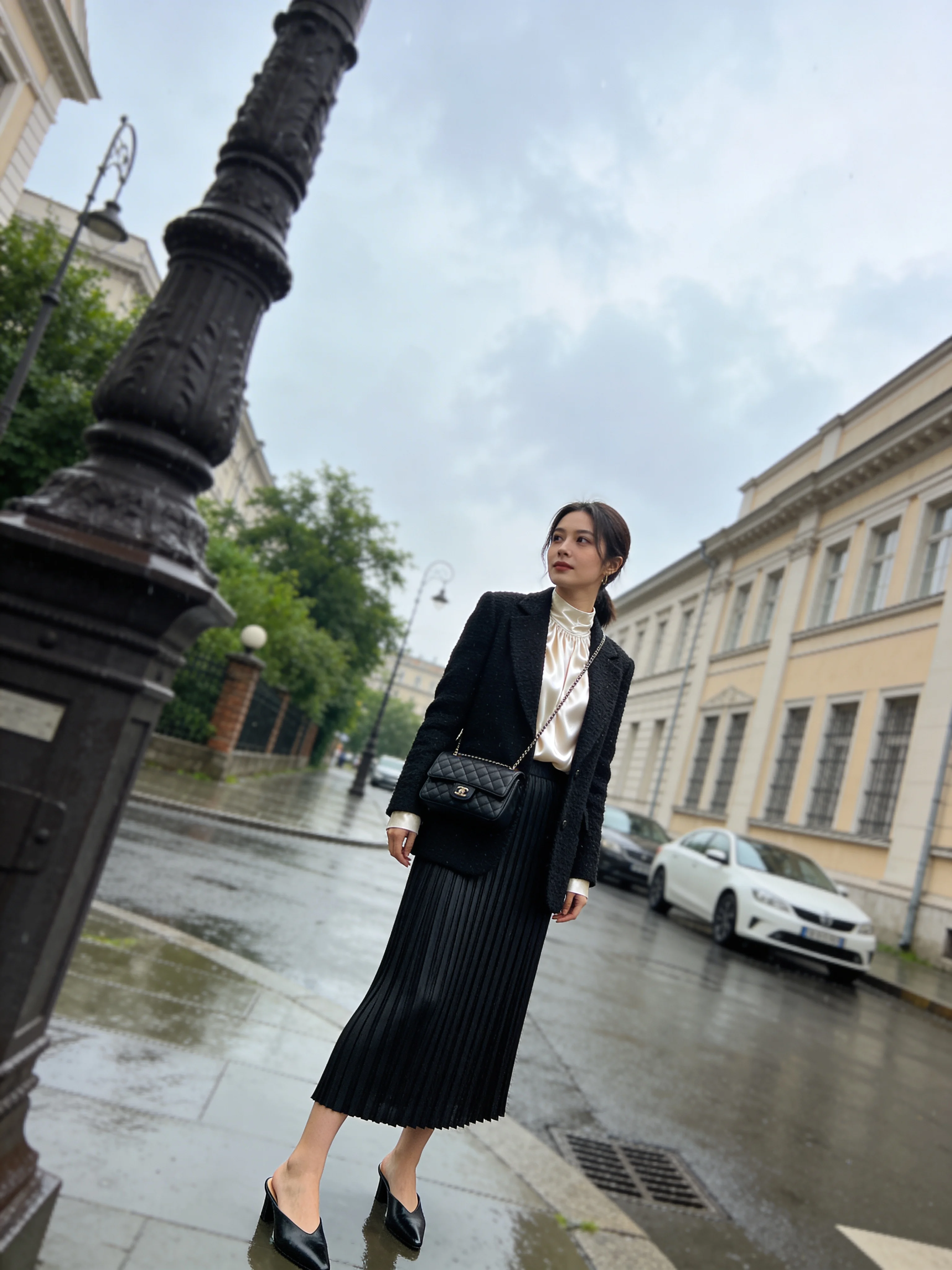
A black blazer over an ivory blouse and pleated maxi skirt in warm rain is complete formal coverage. Black mule heels are the practical formal choice when espadrilles are off the table.
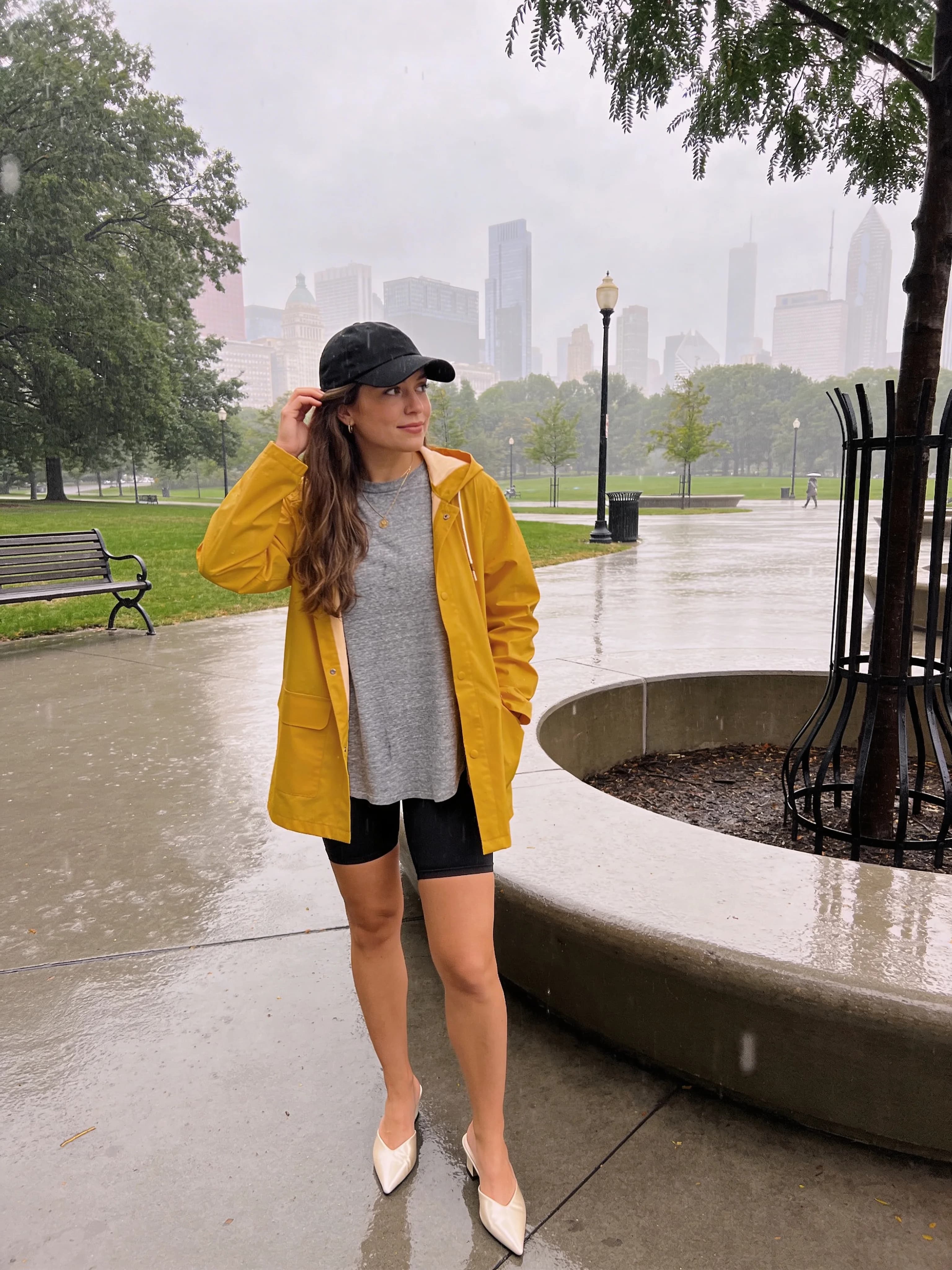
A yellow hooded rain jacket over biker shorts and a longline tee handles warm rain with high-visibility attitude. Ivory pointed-toe mules are the surprising finishing note.
Packing List
What to Pack for Los Angeles in January →
Light-to-medium layers handle the full LA January range. A lightweight trench coat or medium jacket over a long-sleeve top or light sweater covers the 48°F coastal mornings and the 66°F sunny Valley afternoons. Ankle boots or clean sneakers work for Griffith Park's trails, the Venice Boardwalk, and the Getty Center's outdoor terraces. A packable rain jacket or treated outer layer covers the 6 Pacific rain days.
January is one of LA's most pleasant months for visitors — crowds are significantly lower than summer, hotel rates are at seasonal lows (outside of the Golden Globes week and award season events), and the post-Pacific-storm clear days produce the brilliant blue-sky views of the Santa Monica Mountains and downtown skyline that define the city at its best. Griffith Observatory, the Getty Center, and the Getty Villa in Malibu are all accessible without peak-season waits.
Ankle boots or clean sneakers handle the full range of LA January terrain — the Hollywood Hills' Runyon Canyon trails, the Venice Boardwalk's flat promenade, and the Silver Lake Reservoir path all suit versatile footwear. A waterproof or treated leather ankle boot covers Pacific rain days without sacrificing the sleek aesthetic that LA's fashion-forward culture expects even in winter. Trail runners are practical for Griffith Park's hillside paths, which can be muddy after rain.
Coastal morning lows average 48°F with afternoon highs near 66°F inland. Pacific storm systems deposit meaningful rain — January's 6 rain days represent genuine multi-hour events rather than brief showers. The storms typically arrive every 10–14 days, separated by clear, spectacular post-frontal conditions. The micro-climate variation between the Westside (cooler, marine-influenced) and the San Fernando Valley or Pasadena (warmer, drier) is as pronounced in January as in any other month.
Pack light-to-medium layers: a medium jacket or trench coat, light jeans, long-sleeve tops, a sweater or light knit, ankle boots or sneakers, and a packable rain jacket or water-resistant outer layer for Pacific storm days. LA's layering culture is genuinely functional — the micro-climate variation between neighborhoods means what you wear at the beach in the morning may feel insufficient in the Pasadena afternoon. Sunscreen is still relevant on the clear post-storm days.