Chic
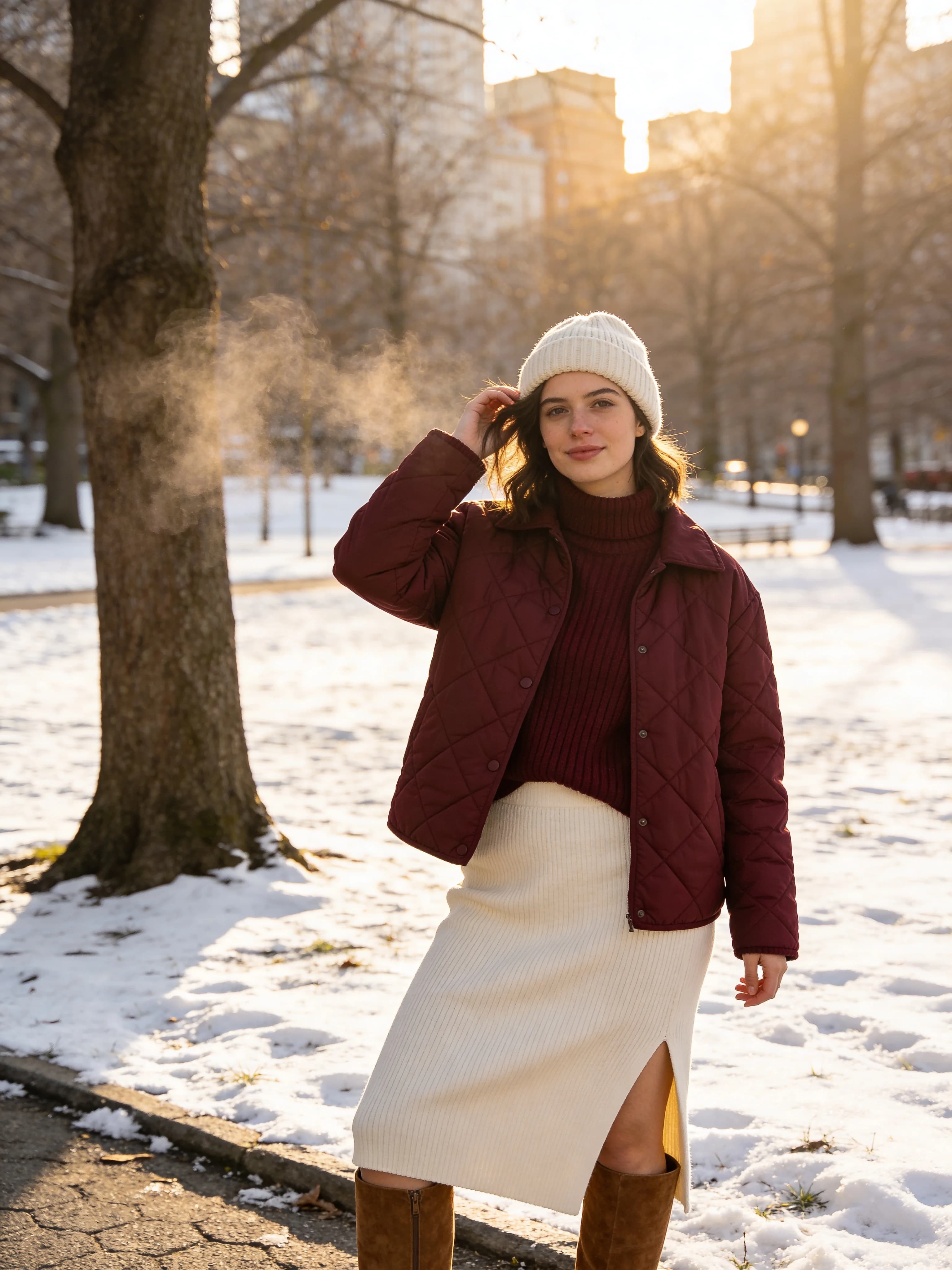
Burgundy and Suede Boots
Flatters smaller busts
A burgundy quilted jacket and matching turtleneck over a cream maxi skirt in light snow is a considered tonal look. Brown suede knee-high boots under the skirt add the textural detail.

January in New York is the coldest month, averaging 26–38°F with about 11 days of precipitation — a heavy parka, waterproof insulated boots, and full cold-weather kit are essential for navigating the Midtown canyon winds, the Brooklyn Bridge walkway, and Central Park's open meadows. Snow is a regular January event, and the wind channeling between Manhattan's towers drives wind chills well below 0°F on the most exposed stretches. A waterproof outer layer matters as much as insulation on cold rain and sleet days.
Also packing for this trip?
Full January packing list for New York →
Checklist of clothes, shoes, and gear — separate from these outfit ideas.
Compare prices across top booking sites for Jan 1–4.
Powered by Hotellook · prices from Booking.com, Agoda, and more

top / Long-Sleeve Top
fitted long-sleeve

bottom / Jeans
straight-leg
chinos for a slightly smarter look

footwear / Waterproof Boots
ankle boots
rubber sole for traction — keep feet dry all day

outerwear / Heavy Coat
puffer coat
insulated for sub-freezing temps

top / Sweater
crew neck
mid-layer warmth between base and outer coat
fleece zip-up if it gets colder
Based on typical January conditions in New York. Weather varies year to year — check the live forecast when you're within two weeks of your trip.
New York's January is the city's coldest and one of its most memorable — 26°F overnight lows, 38°F highs, and 11 days of precipitation that arrive as snow, sleet, and cold rain depending on the storm track. The Midtown canyon wind, the Brooklyn Bridge's exposed quarter-mile span, and Central Park's open Great Lawn area are among the most wind-amplified pedestrian environments in the city; a 30 mph north wind in Midtown can push apparent temperatures to -10°F. The subway is the practical lifeline — surface time between stations should be minimized on the coldest days. New York's fashion-forward, dark-neutrals-in-winter aesthetic reaches its operational peak in January — wool coats in camel and charcoal over turtlenecks and wide-leg trousers, insulated Chelsea boots, and statement scarves are the Midtown and West Village January standard. The practical reality is that waterproofing matters as much as aesthetics: cold rain is more common than romantic snow, and a beautiful unprotected wool overcoat soaks through on a long walk from the subway to a Far West Side restaurant.
A burgundy quilted jacket and matching turtleneck over a cream maxi skirt in light snow is a considered tonal look. Brown suede knee-high boots under the skirt add the textural detail.
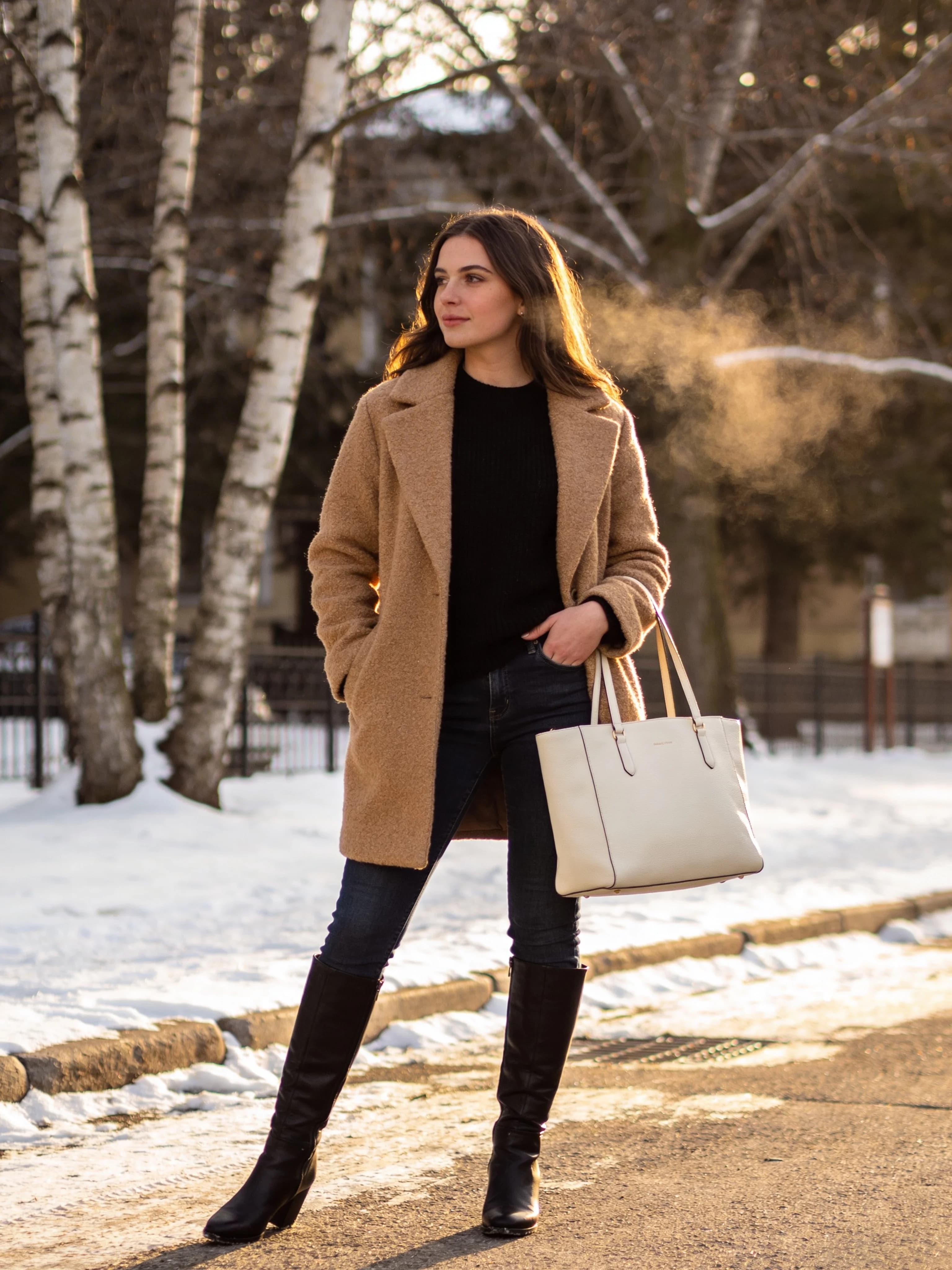
A camel coat over dark indigo ankle jeans with black knee-high boots adds coverage in light snow. The cream leather tote keeps it office-ready.
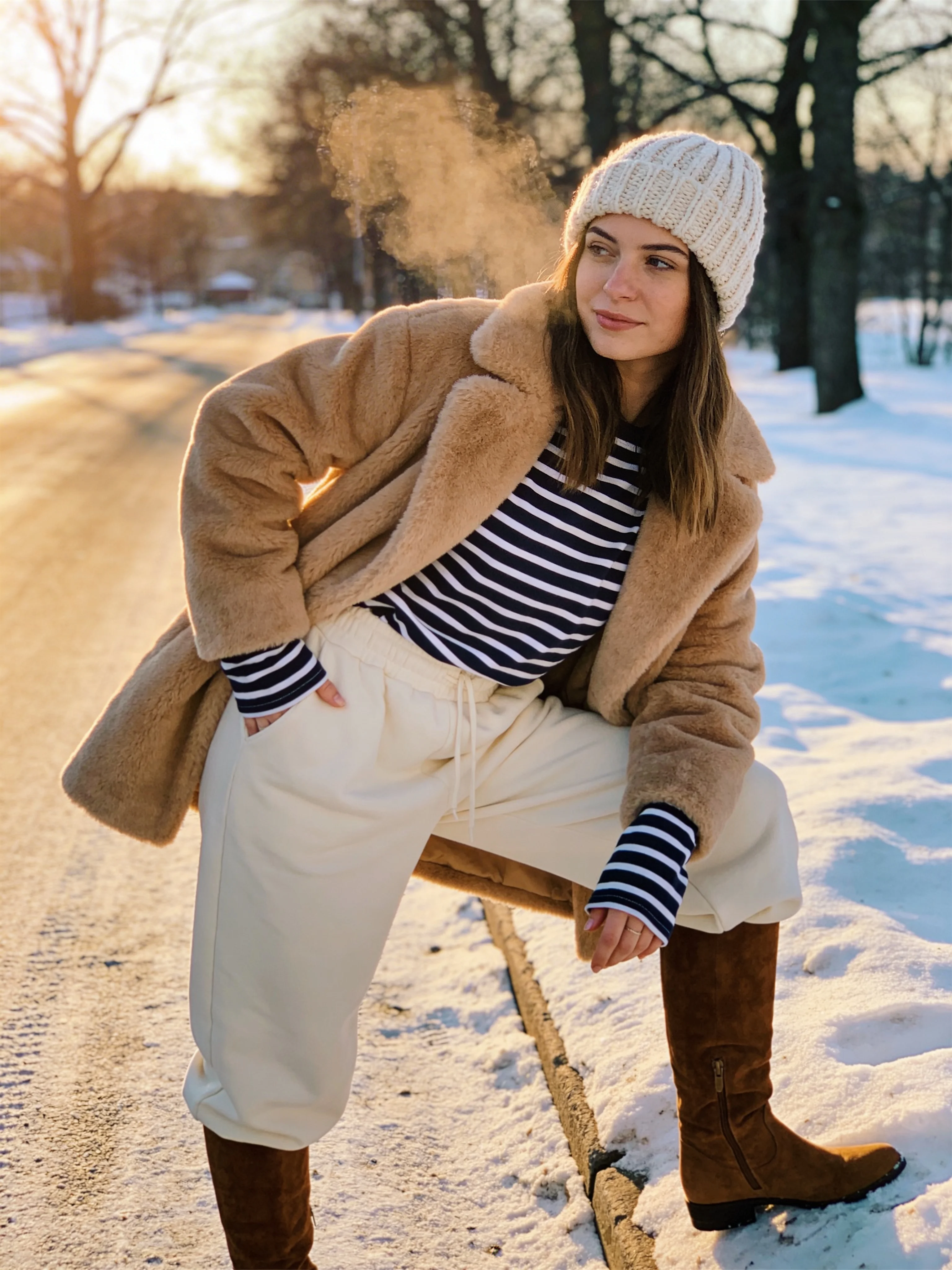
A camel faux fur coat over a striped long-sleeve and cream wide-leg sweatpants makes light snow feel considered. Suede knee-high boots make the casual bottom half look deliberate.
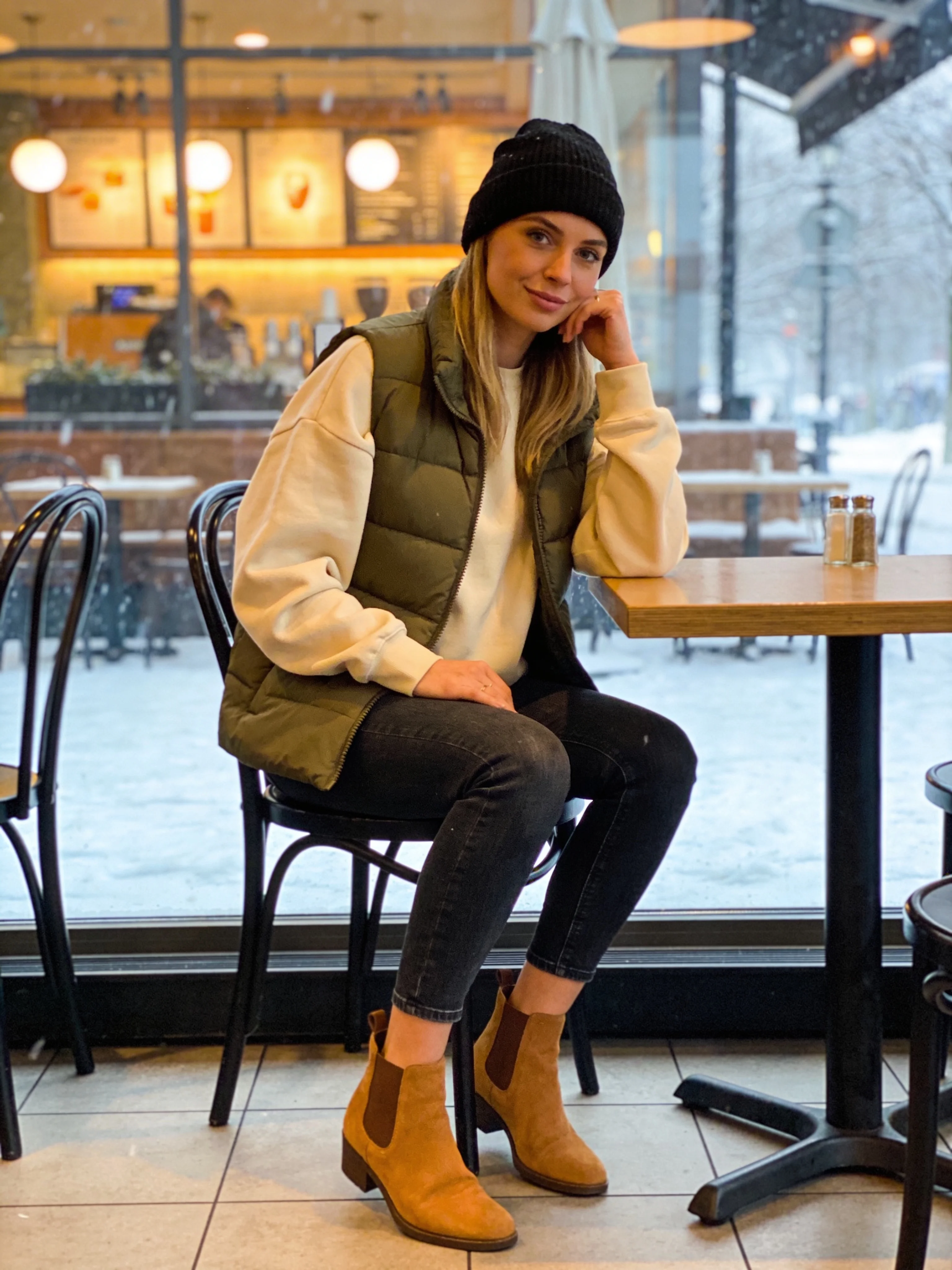
An olive puffer vest over a cream sweatshirt covers light snow with just enough layering. Dark indigo jeans and Chelsea boots keep the bottom half clean.
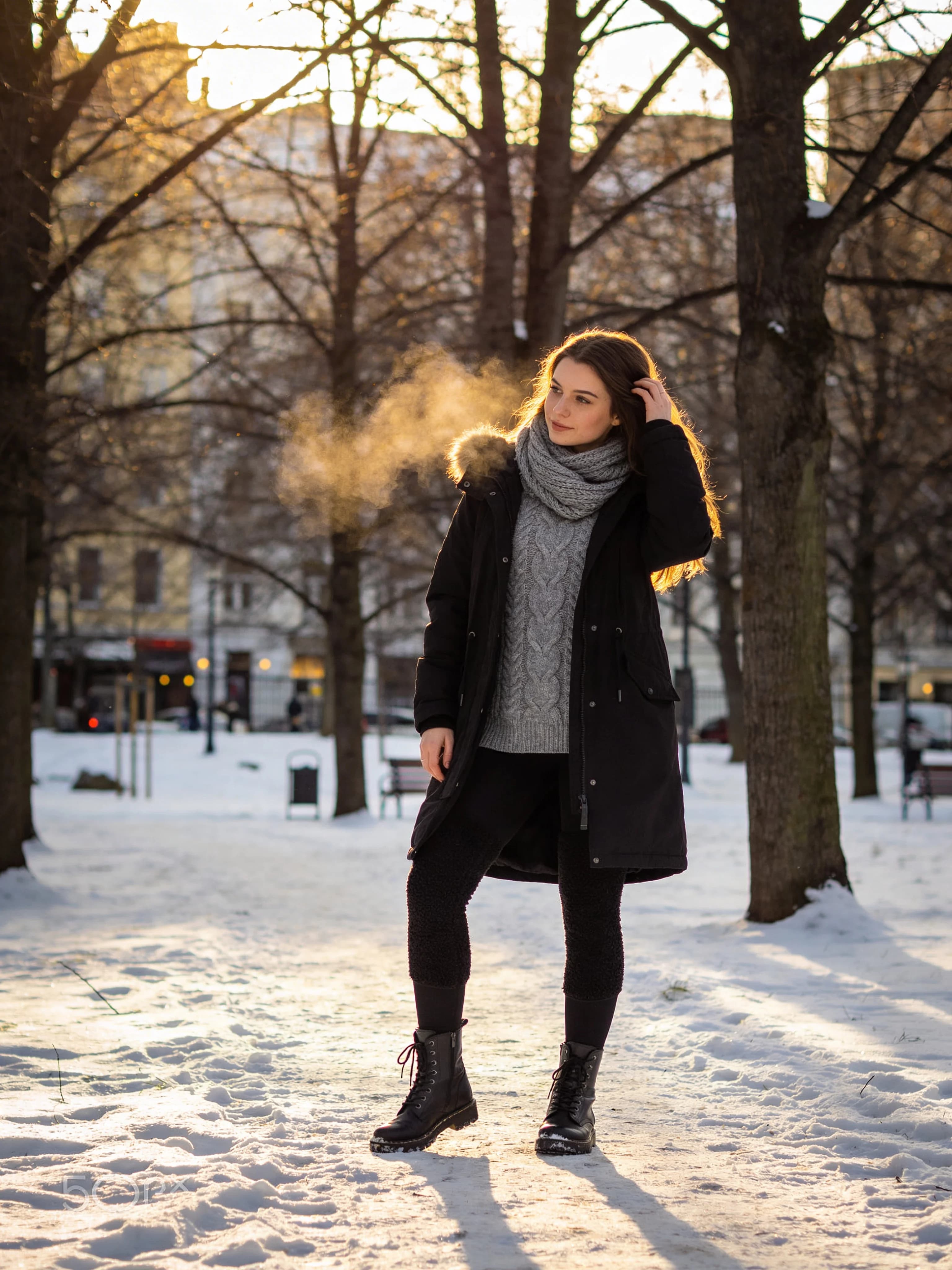
A black longline parka with a grey cable knit sweater for light snow — cozy layering that doesn't look shapeless. Combat boots and a grey scarf are the finishing details.
A heavy parka or insulated wool coat rated for wind chills below 0°F is the foundation. Layer a heavyweight thermal base, a wool turtleneck or mid-layer sweater, and the coat on top. Waterproof insulated ankle boots handle the slush at Midtown crosswalks and the icy patches on Central Park's paths. Add a wool hat, neck gaiter or scarf, and insulated mittens — the Midtown and Brooklyn Bridge winds are relentless.
New York in January is the quietest and most affordable time to visit — post-holiday crowds dissipate, hotel rates drop significantly, and the Metropolitan Museum, MoMA, and the Guggenheim are accessible without the summer or holiday rush. The city is fully operational in any weather; the subway, indoor food halls at Grand Central, and Chelsea Market provide warm infrastructure regardless of what's happening outside. A fresh snowfall on Central Park is one of the city's most photogenic moments.
Waterproof insulated ankle boots with a grip lug sole handle the full range of January conditions — slush at Midtown crosswalks, icy patches on Brooklyn Bridge, and the compacted snow on Central Park's paths that persists for days between clearings. LL Bean duck boots or similar insulated waterproof boots are a New York January institution. Avoid any smooth leather sole in January — the combination of slush, salt-brined sidewalks, and ice creates a genuinely hazardous surface.
Average lows are 26°F with highs at 38°F. The Midtown canyon wind and the Brooklyn Bridge's exposed span drive wind chills significantly below 0°F on the most exposed days. About 11 days bring precipitation — snow is the most famous, but cold rain and sleet are equally likely depending on the storm track. January is statistically New York's snowiest month; major snowstorms (6+ inches) occur roughly once or twice per average January.
Pack a heavy parka or insulated wool coat, heavyweight thermal base layers, a wool turtleneck or mid-layer sweater, waterproof insulated ankle boots, wool socks, a warm hat, scarf, and insulated mittens or gloves. A packable rain layer is useful when your main coat isn't fully waterproof. The subway is the key to a comfortable January New York visit — plan your routes to minimize surface wind exposure.
Packing tools
Free calculators — city and month pre-filled when we know them. No account required. Start with how many outfits, sudoku packing, or bag fees.
Trip
Planning a trip to one city?
One city → typical weather for your month, packing counts that fit your bags, and email your plan.
Outfits
How many outfits for this trip?
Trip length, bag size, and climate → exact tops, bottoms, layers, and outfit combinations.
Jacket
Not sure about a jacket?
City + month → base / mid / shell stack and pack-or-skip verdicts for rain jacket, coat, and thermals.
Shoes
Shoes for this climate?
Climate, activities, and bag size → pair count, primary/backup types, and climate-matched picks.
Bags
Will this trip cost bag fees?
Airline + fare bucket + bags you plan to bring → fit verdicts and typical carry-on / checked fee ranges.
Capsule
Try sudoku packing for this climate?
City + month → climate-ready 3 tops / 3 bottoms / 3 layers you can edit — up to 27 mix-and-match outfits.