Sporty
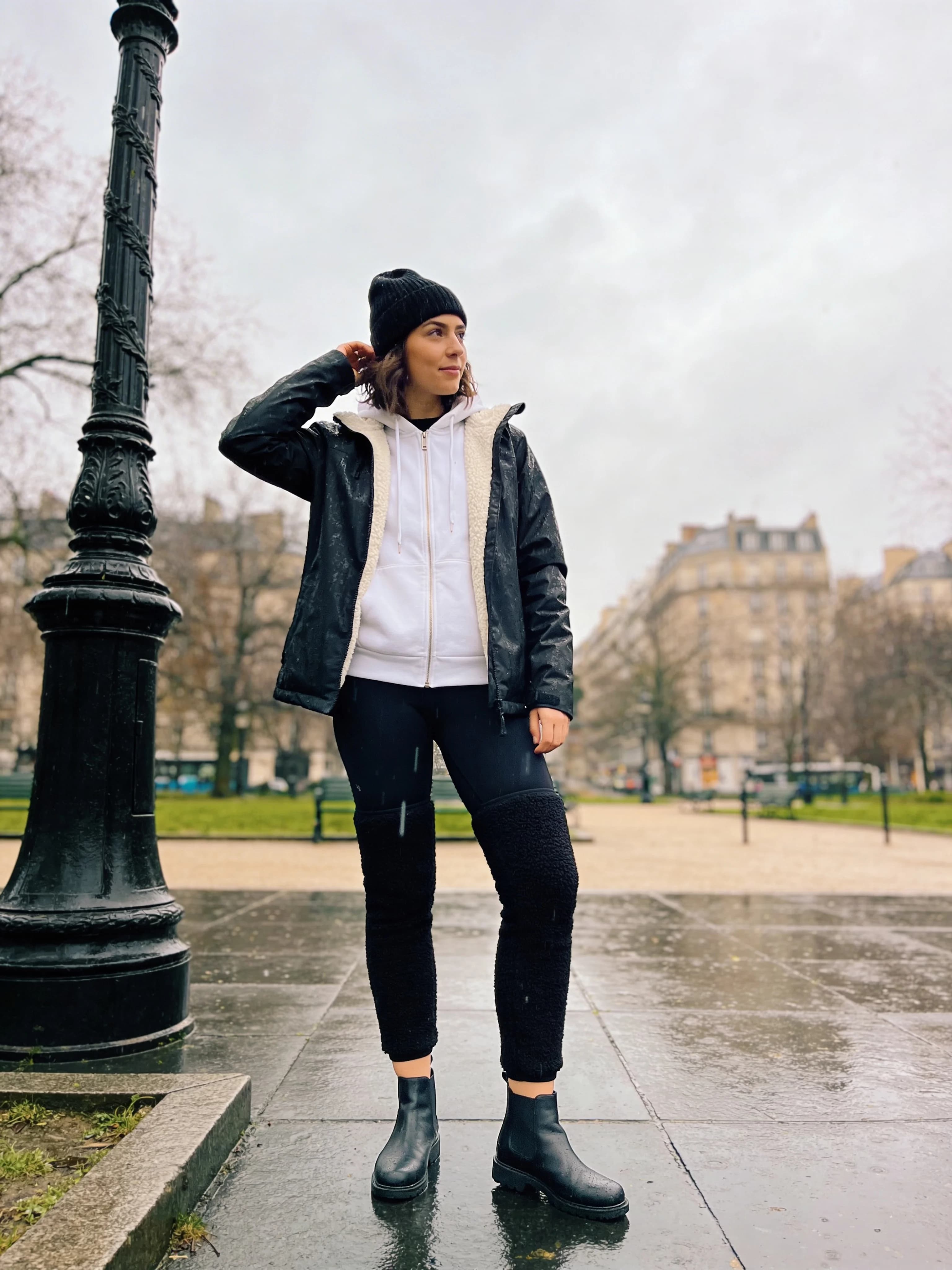
Rain Jacket Zip Layer
A black rain jacket over a white zip-up hoodie is the light-rain sporty combination that stays clean in colour. Fleece leggings and Chelsea boots handle the rest.
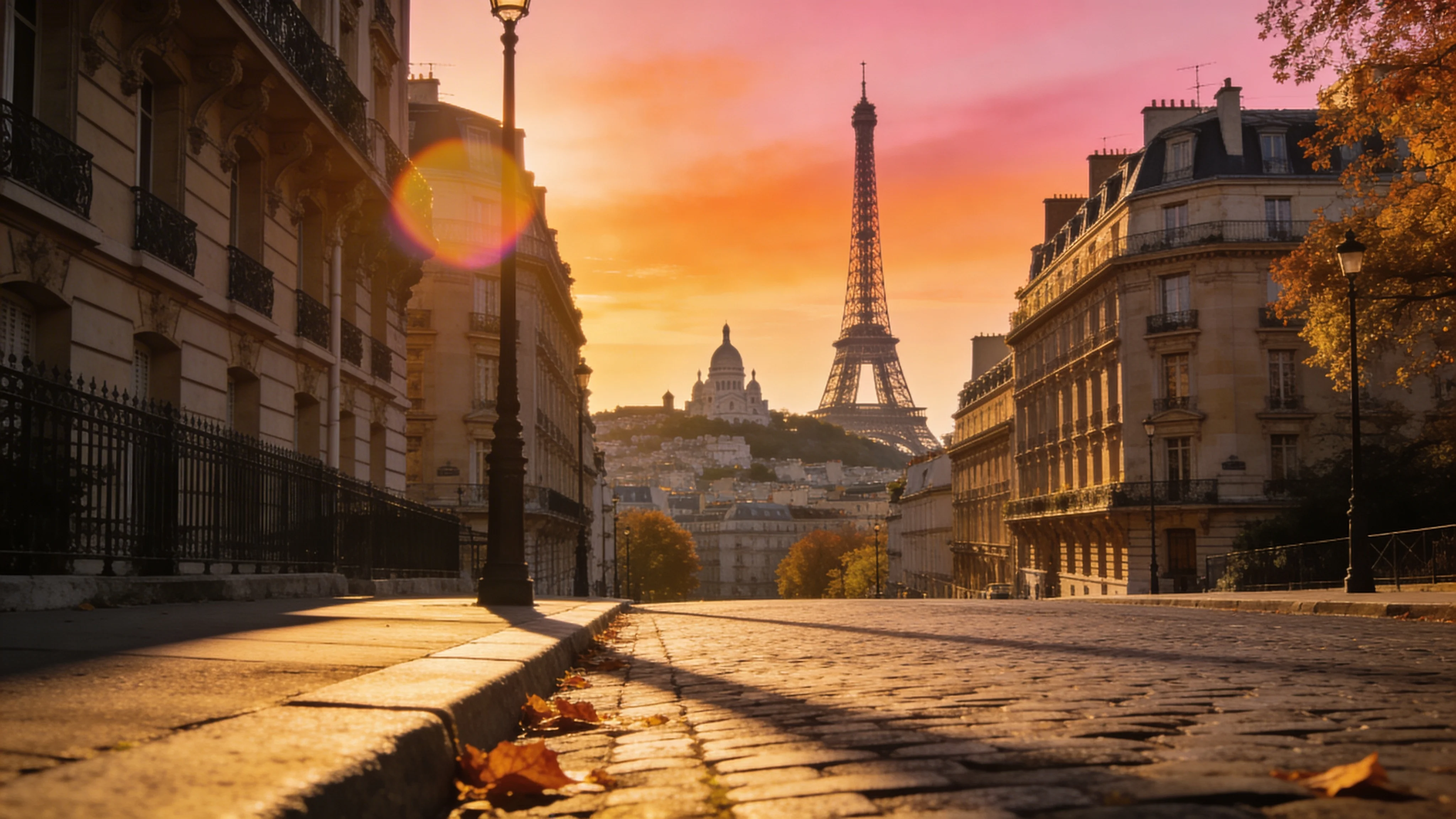
To stay comfortable in Paris during January, you should wear a heavy wool coat, thermal base layers, and waterproof boots to handle the humid 38–47°F chill. The high winter humidity makes the air feel significantly colder than the temperature suggests, particularly when the wind whips off the Seine quays.
Also packing for this trip?
Full January packing list for Paris →
Checklist of clothes, shoes, and gear — separate from these outfit ideas.
Compare prices across top booking sites for Jan 1–4.
Powered by Hotellook · prices from Booking.com, Agoda, and more

top / Long-Sleeve Top
fitted long-sleeve

bottom / Jeans
straight-leg
chinos for a slightly smarter look

footwear / Waterproof Boots
ankle boots
rubber sole for traction — keep feet dry all day
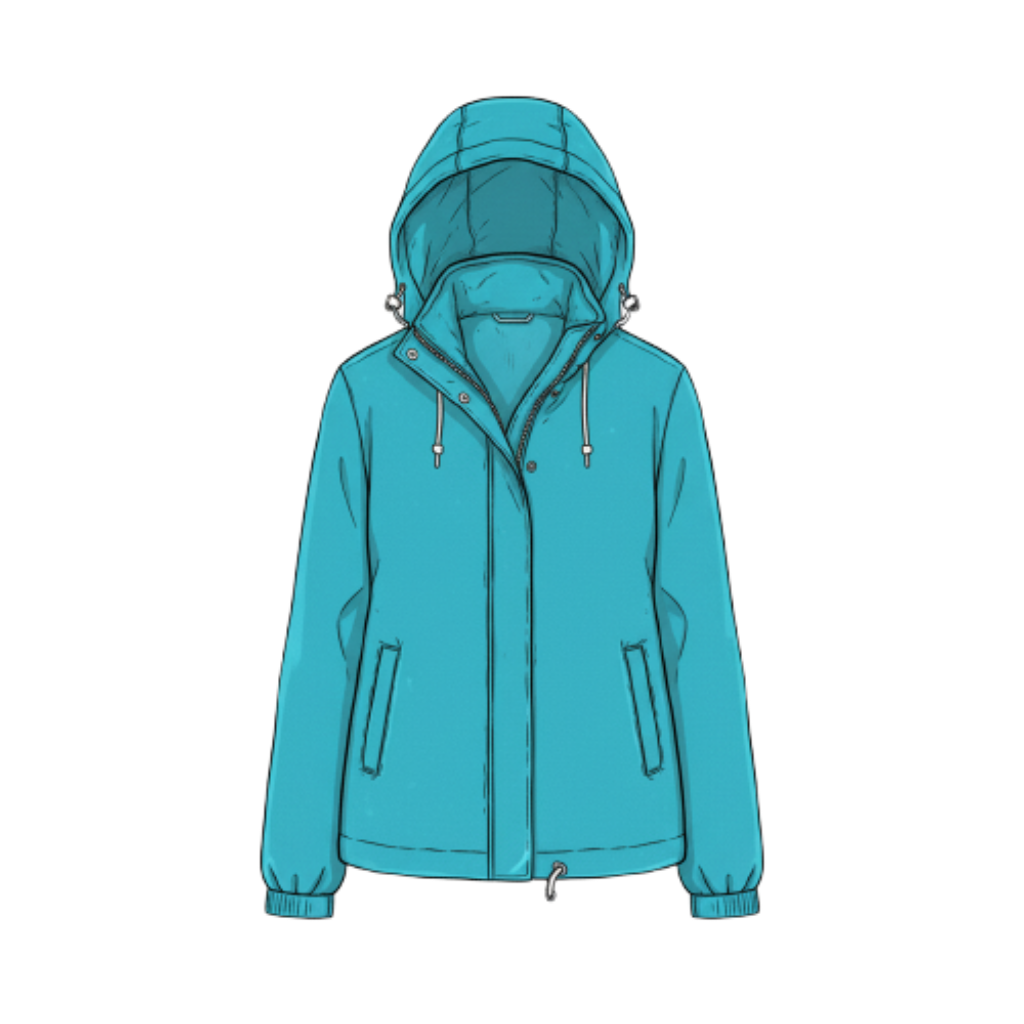
outerwear / Rain Jacket
shell jacket
waterproof or DWR-treated — keep it packable
Based on typical January conditions in Paris. Weather varies year to year — check the live forecast when you're within two weeks of your trip.
January in Paris is defined by a hushed, silvery atmosphere and the biting dampness of the maritime winter. The city's famous light turns cool over the Latin Quarter and the Eiffel Tower, while the occasional dusting of frost makes the cobblestones of Le Marais feel particularly sharp and slippery for the unprepared traveler. The primary challenge of a Parisian January is the 38–47°F temperature range combined with high humidity, which can make even short walks between museums feel bone-chilling. Visitors often struggle with the transition from the heated interiors of the Louvre or local bistros to the cold, windy corridors of the Seine quays, making high-quality wool layers and thermal basics absolutely essential for a comfortable stay.
A black rain jacket over a white zip-up hoodie is the light-rain sporty combination that stays clean in colour. Fleece leggings and Chelsea boots handle the rest.
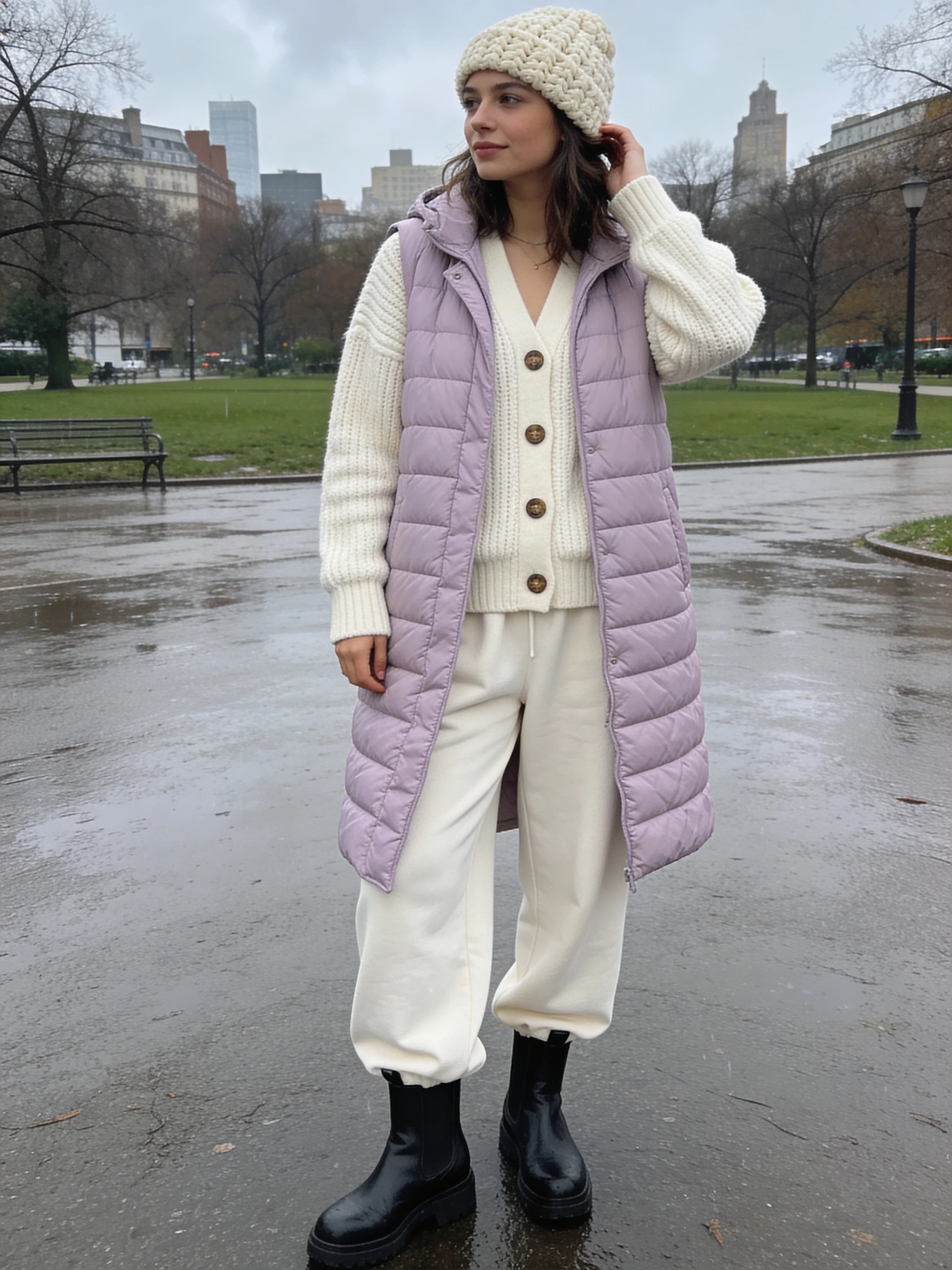
A pastel lilac vest over a cream cardigan and wide-leg sweatpants reads softly in light rain. Black Chelsea boots are the only contrast in this muted palette.
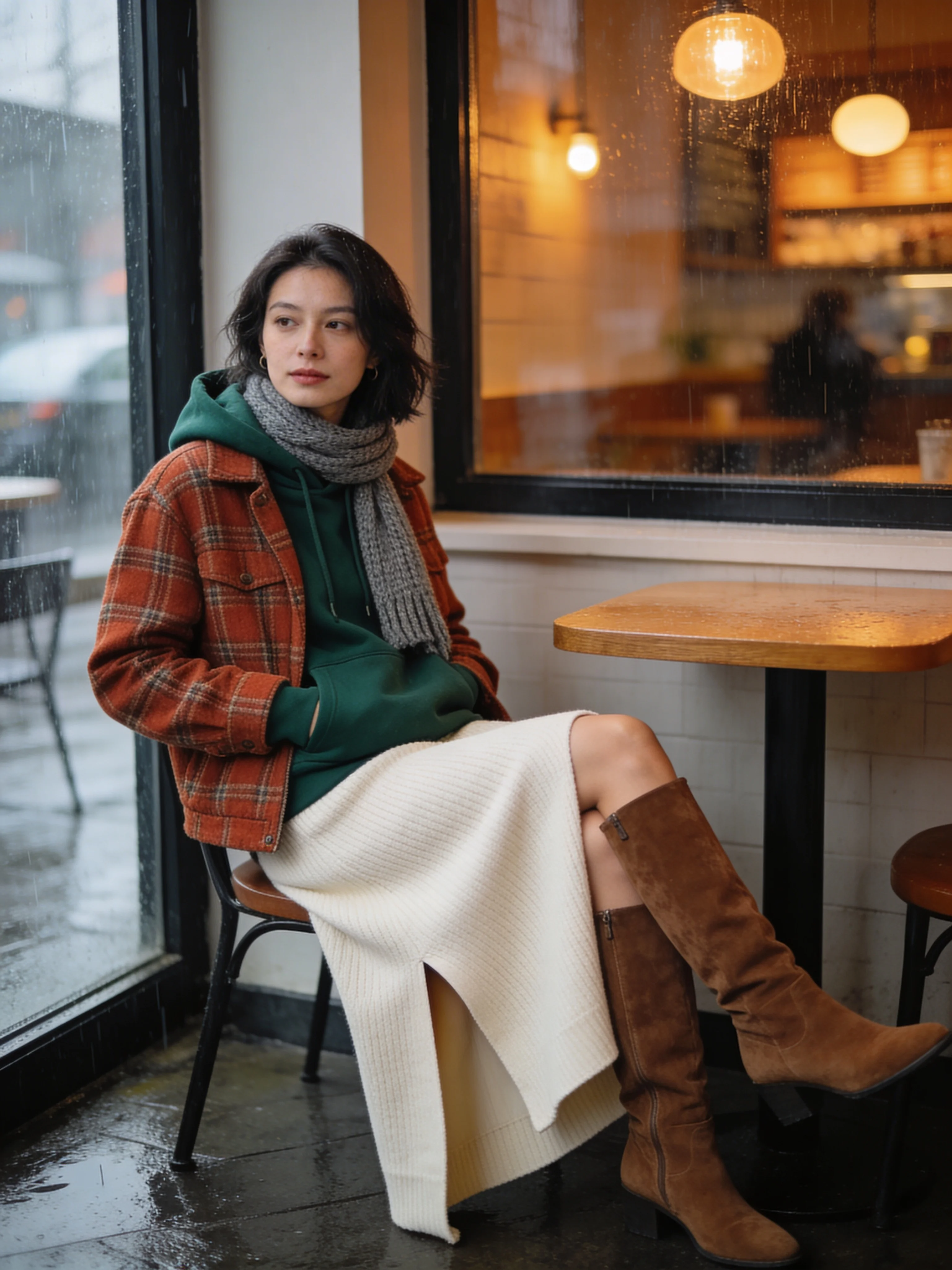
A rust plaid shacket works as jacket and top layer in light rain. Suede knee-high boots and a cream maxi skirt carry the look when the weather clears.
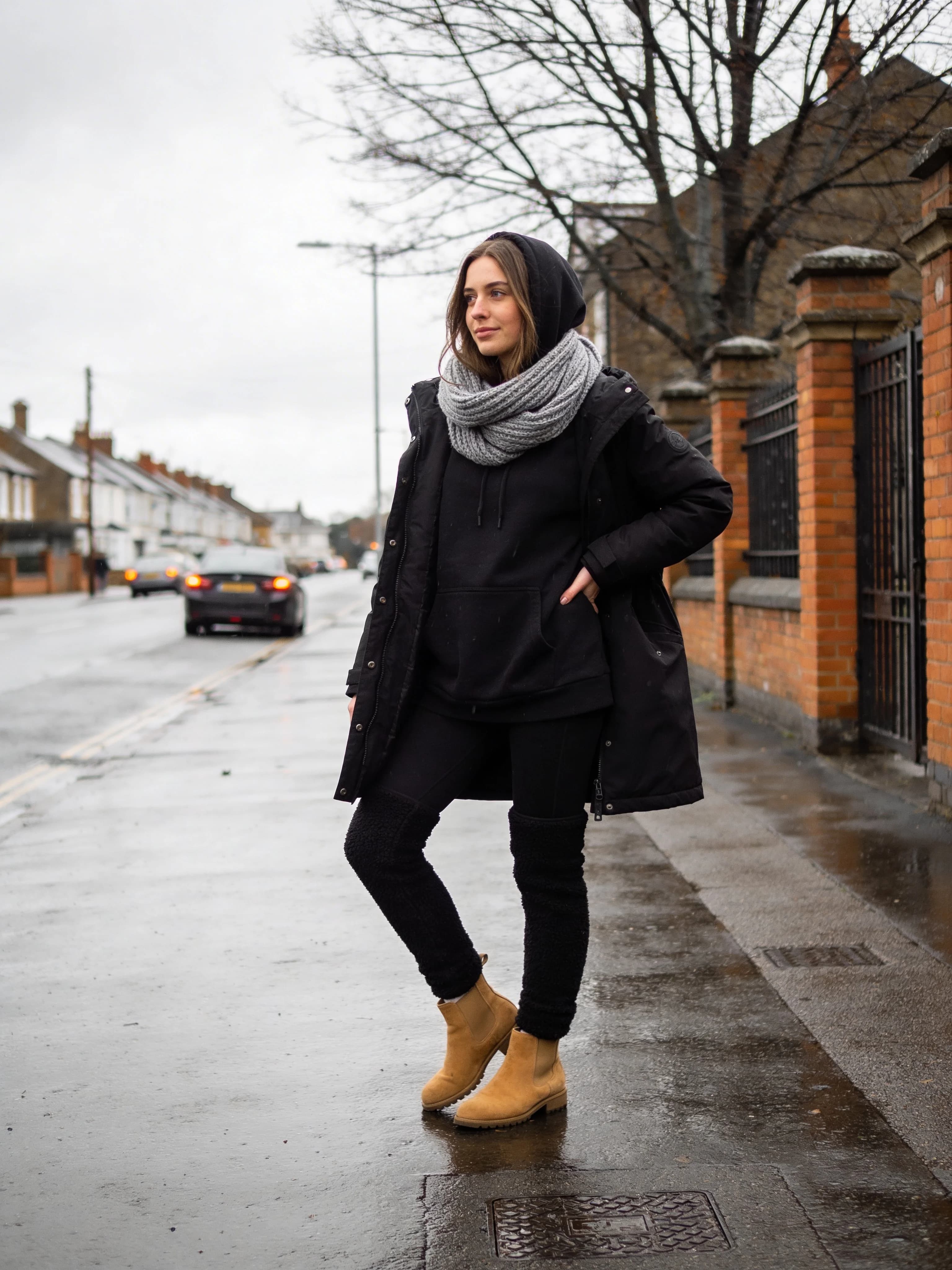
A black longline parka over an oversized hoodie and fleece-lined leggings handles everything light rain brings. Tan Chelsea boots and a grey scarf soften the all-black stack.
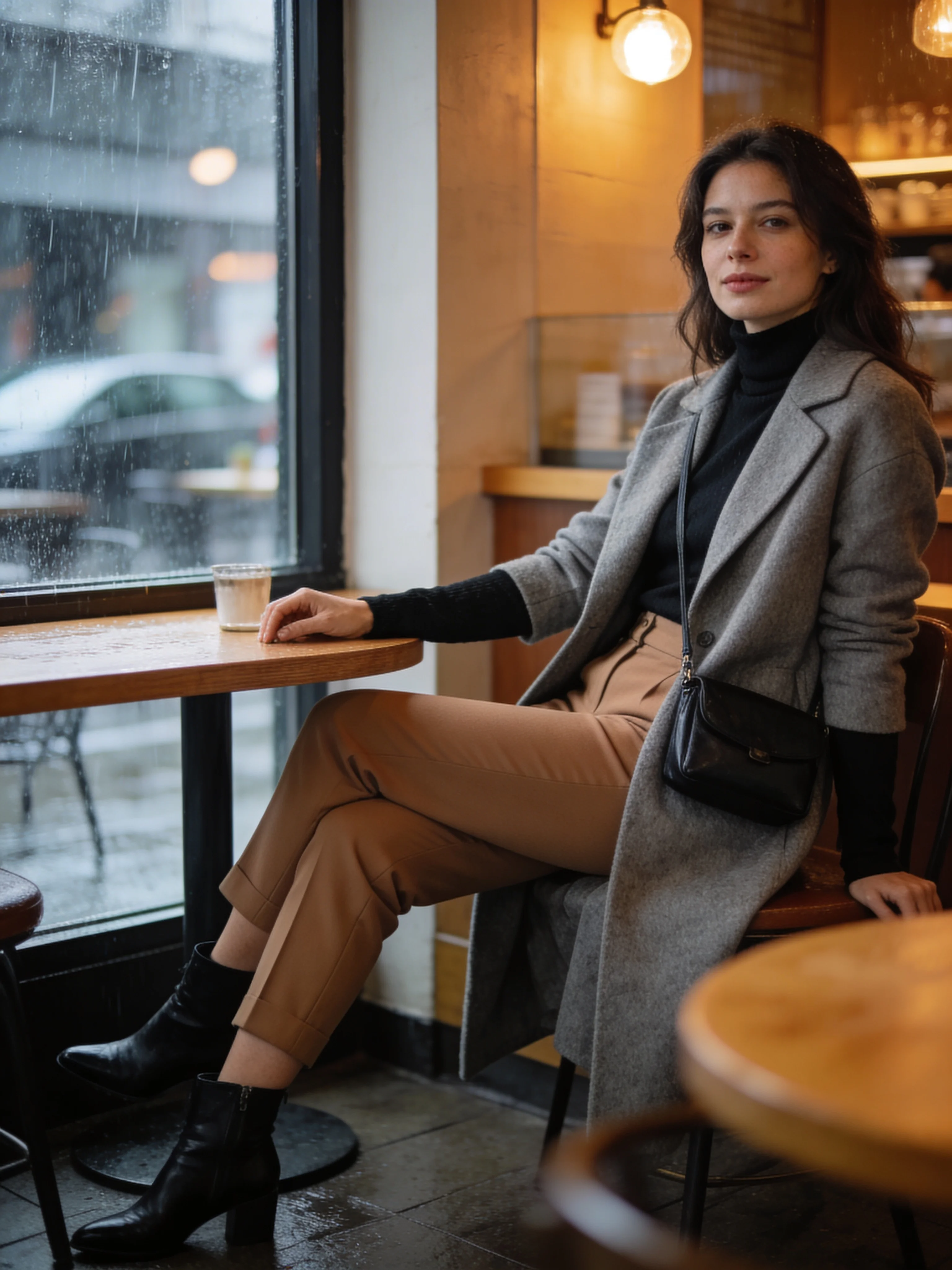
A grey longline coat over camel trousers and a black turtleneck holds formal presence through light rain. The black mini shoulder bag keeps what needs carrying close.
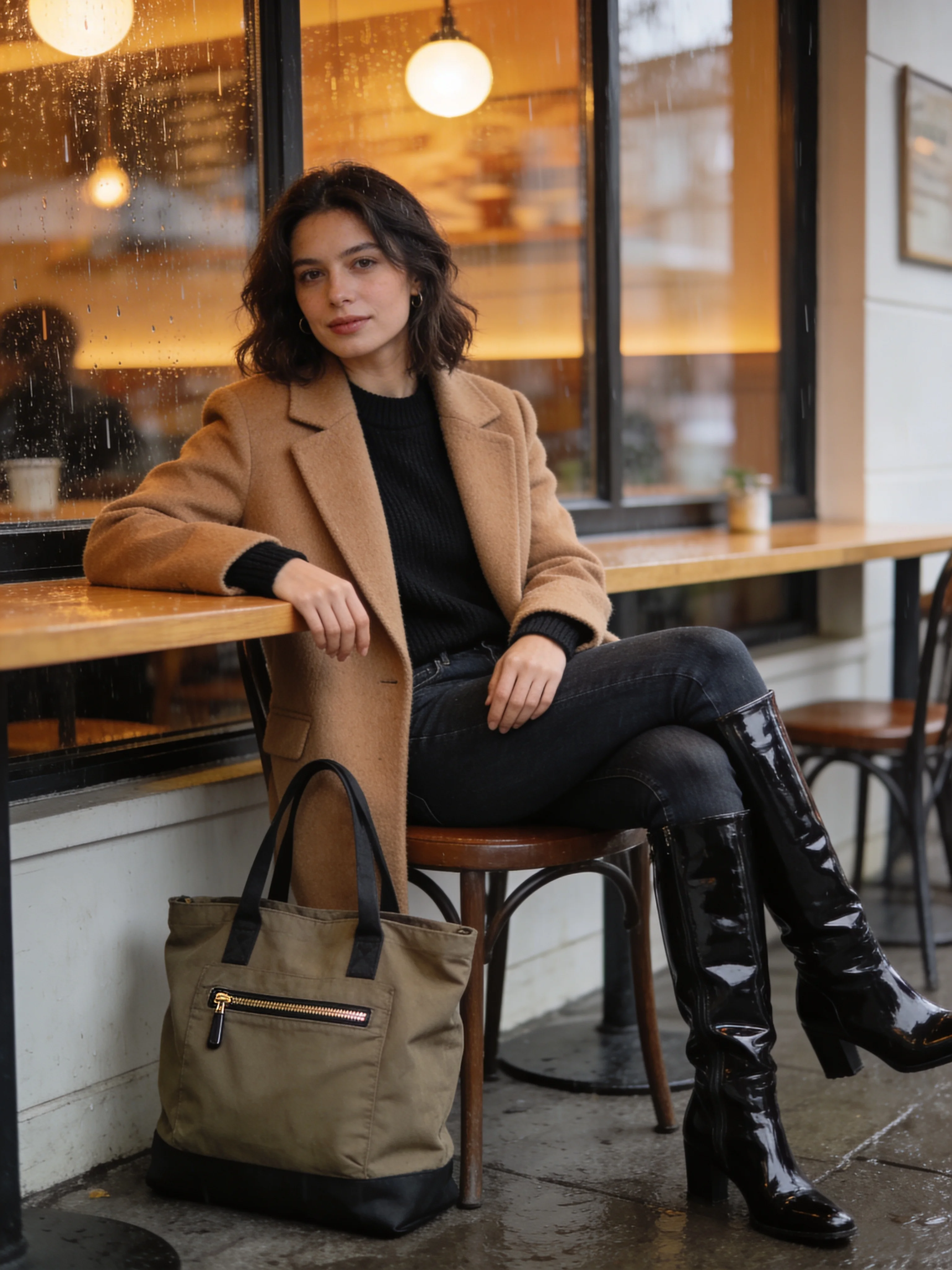
A camel coat over dark jeans and a black crewneck gains editorial edge from patent leather thigh-high boots in light rain. A canvas tote keeps the rest functional.
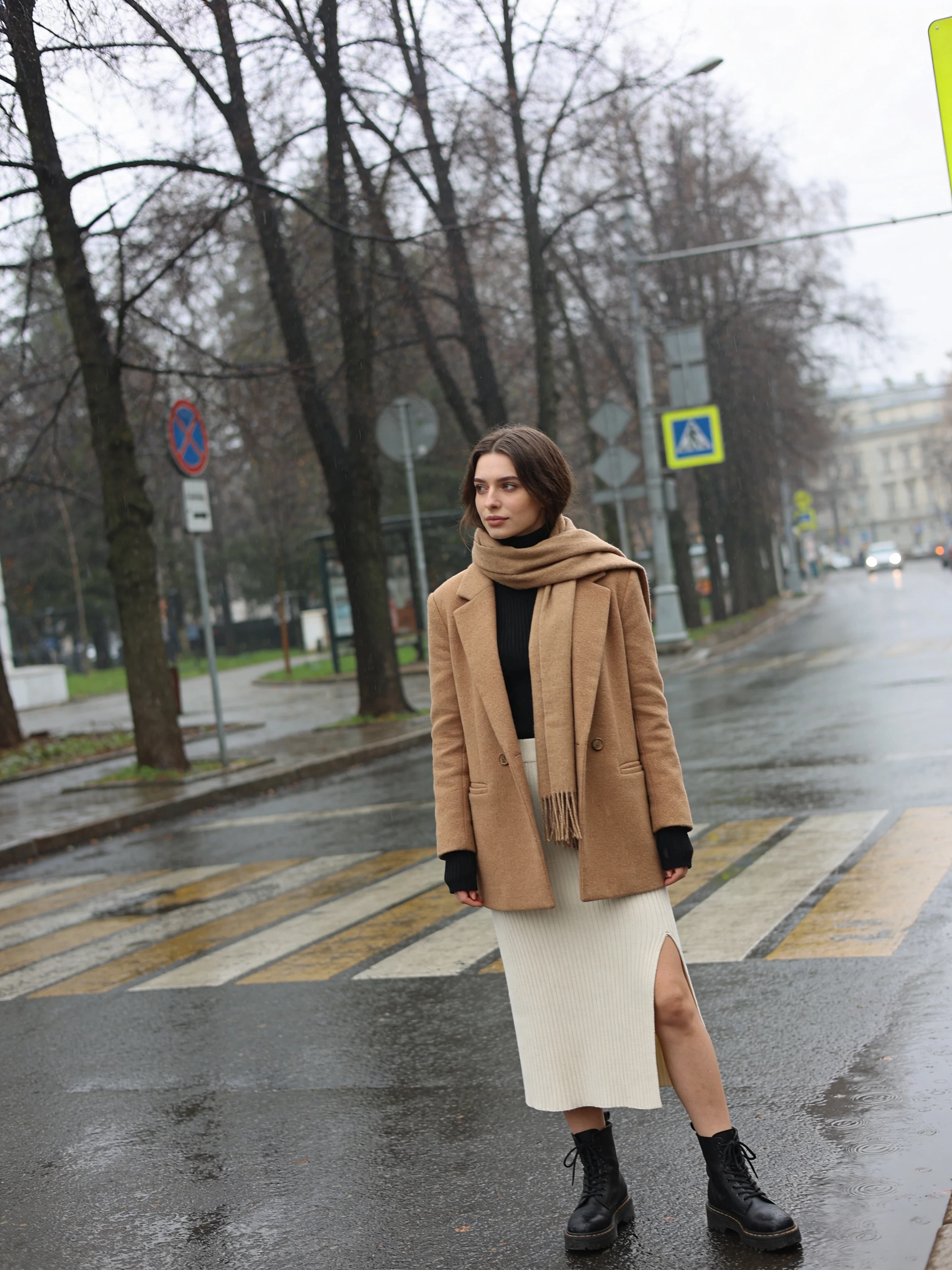
A camel coat over a black turtleneck and cream maxi skirt cuts a strong silhouette in light rain. Black combat boots under the skirt are the editorial surprise that makes it.
Wear a heavy wool coat over thermal base layers and a warm sweater to manage the 38–47°F humid cold while exploring the Latin Quarter. Since the high humidity makes the air feel sharper, a mid-weight scarf is necessary to block the wind-tunnel effect along the Seine quays. Choose waterproof leather boots to stay dry during the 10 days of precipitation typical of a Parisian January.
January is an excellent time for those who prefer quiet museums and shorter lines at the Eiffel Tower, provided you prepare for the 38–47°F weather. The city is peaceful, and the lack of crowds in neighborhoods like Montmartre offers a more authentic glimpse into local life. While it is the coldest month, the crisp winter light provides beautiful photography opportunities across the city's historic bridges.
Waterproof leather boots with cushioned soles are the best choice for navigating the 38–47°F dampness and the uneven cobblestones of Le Marais. Avoid thin-soled shoes or stilettos, as the winter humidity can make historic pavements slippery and the cold can quickly penetrate light materials. Sturdy footwear is also essential for climbing the steep, often damp stairs leading up to the Sacré-Cœur in Montmartre.
January temperatures in Paris average a low of 38°F and a high of 47°F, but the high maritime humidity often makes it feel much colder. You can expect about 10 days of precipitation, usually as cold rain or mist that lingers in the narrow streets of the Latin Quarter. Wind chill along the Seine quays can further drop the apparent temperature, necessitating wind-blocking outer layers.
Pack a heavy wool coat, thermal base layers, wool socks, and a compact umbrella for the 10 days of rain expected during the 38–47°F January weather. Include a mid-weight scarf and gloves to handle the river chill along the Seine quays and a pair of waterproof boots for the cobblestones of Le Marais. A versatile, polished sweater will help you fit the 'less is more' Parisian aesthetic while keeping you warm in drafty historic buildings.
Packing tools
Free calculators — city and month pre-filled when we know them. No account required. Start with how many outfits, sudoku packing, or bag fees.
Trip
Planning a trip to one city?
One city → typical weather for your month, packing counts that fit your bags, and email your plan.
Outfits
How many outfits for this trip?
Trip length, bag size, and climate → exact tops, bottoms, layers, and outfit combinations.
Jacket
Not sure about a jacket?
City + month → base / mid / shell stack and pack-or-skip verdicts for rain jacket, coat, and thermals.
Shoes
Shoes for this climate?
Climate, activities, and bag size → pair count, primary/backup types, and climate-matched picks.
Bags
Will this trip cost bag fees?
Airline + fare bucket + bags you plan to bring → fit verdicts and typical carry-on / checked fee ranges.
Capsule
Try sudoku packing for this climate?
City + month → climate-ready 3 tops / 3 bottoms / 3 layers you can edit — up to 27 mix-and-match outfits.