Navy Trench and Shorts
A navy trench coat over khaki bermuda shorts and a blue linen blouse works between seasons on a mild rainy day. Black pointed-toe heels sharpen what could easily be too casual.

January in Sacramento averages 39–53°F with the Central Valley's tule fog at its densest and most persistent — the cold, saturated air makes the 39°F mornings feel rawer than the number suggests, and fog events can reduce visibility to near zero for days at a stretch. A waterproof jacket and waterproof footwear are more practical than heavy insulation; about 9 rainy days bring the month's formal precipitation, but the fog keeps surfaces continuously damp in between. Afternoons that fully clear are pleasant in winter sunshine at 53°F.
top / Long-Sleeve Top
fitted long-sleeve
lightweight layer for mild temps
bottom / Jeans
straight-leg
chinos for a slightly smarter look
footwear / Waterproof Boots
ankle boots
rubber sole for traction — keep feet dry all day
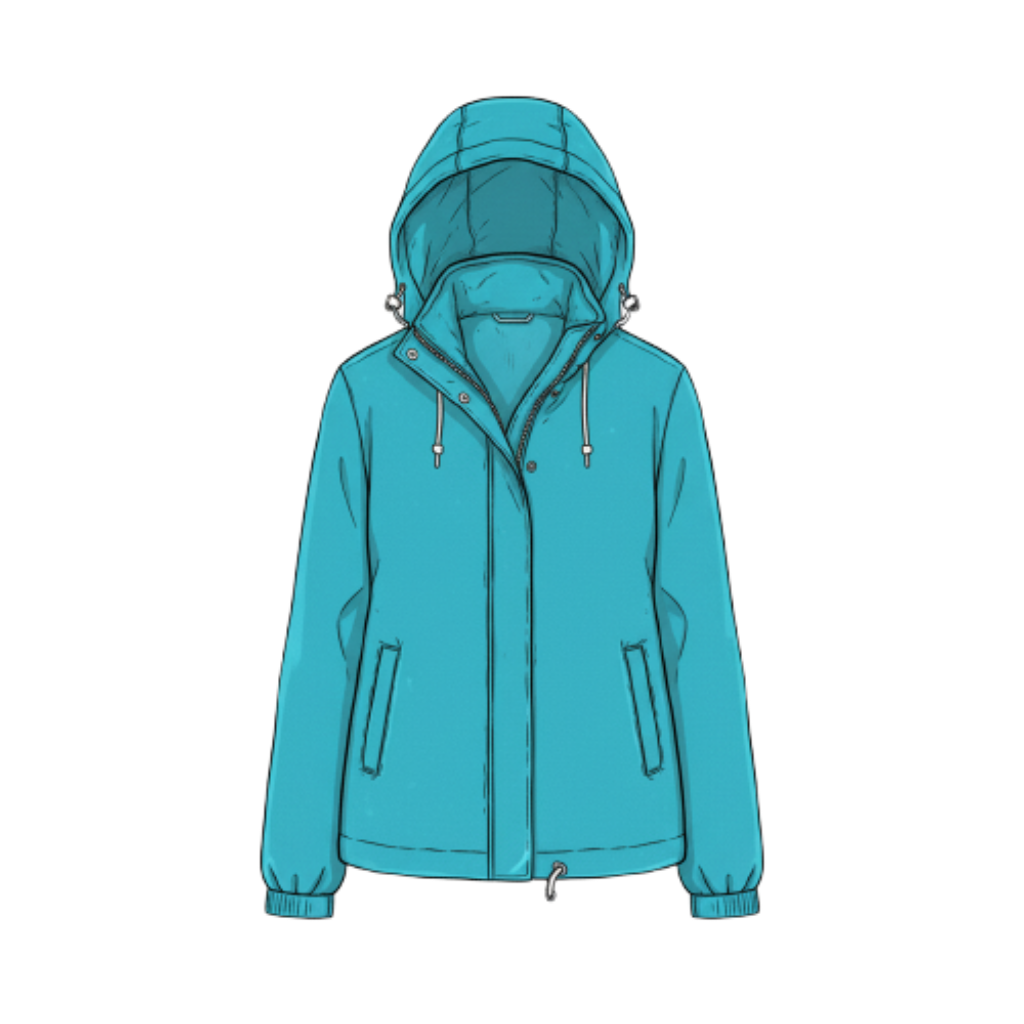
outerwear / Rain Jacket
shell jacket
waterproof or DWR-treated — keep it packable
Based on typical January conditions in Sacramento. Weather varies year to year — check the live forecast when you're within two weeks of your trip.
Sacramento's January brings the tule fog at its worst — the thick, radiation fog that settles into the Central Valley when clear nights radiate heat rapidly and cold, moist air pools at surface level. Visibility near zero is not uncommon on the worst mornings, Highway 50 and I-80 see fog-related accidents regularly, and the Sacramento Riverwalk and Old Sacramento's wooden boardwalks stay perpetually damp. About 9 rainy days provide the month's formal precipitation, but the fog contributes continuous low-level moisture to everything between formal rain events. Highs average 53°F when the fog eventually burns off. Sacramento's California casual style doubles down on moisture management in January — a waterproofed shell or waxed cotton jacket over a sweater or flannel handles the fog-damp air more practically than a dry wool coat. The Tower District's restaurant and coffee shop scene provides warm indoor refuge; Midtown's K Street and the Sacramento Railyards area are accessible on the clearer afternoon windows. Yosemite's valley floor and Lake Tahoe's ski resorts are within 2–3 hours for visitors willing to navigate the fog-affected highways.

A navy trench coat over khaki bermuda shorts and a blue linen blouse works between seasons on a mild rainy day. Black pointed-toe heels sharpen what could easily be too casual.

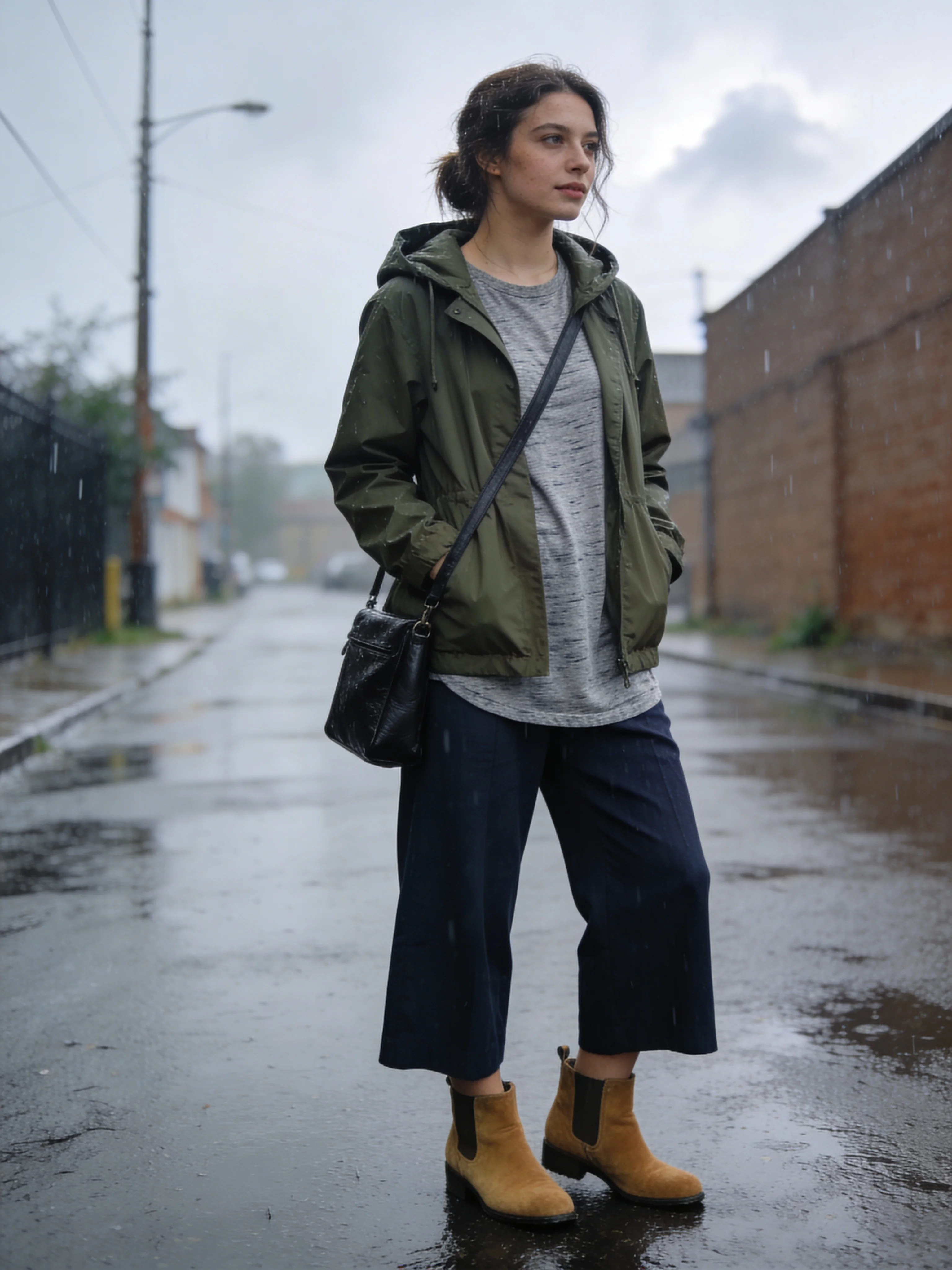
An olive anorak handles mild rain without abandoning the polish of wide-leg navy trousers underneath. The crossbody stays tucked and close.

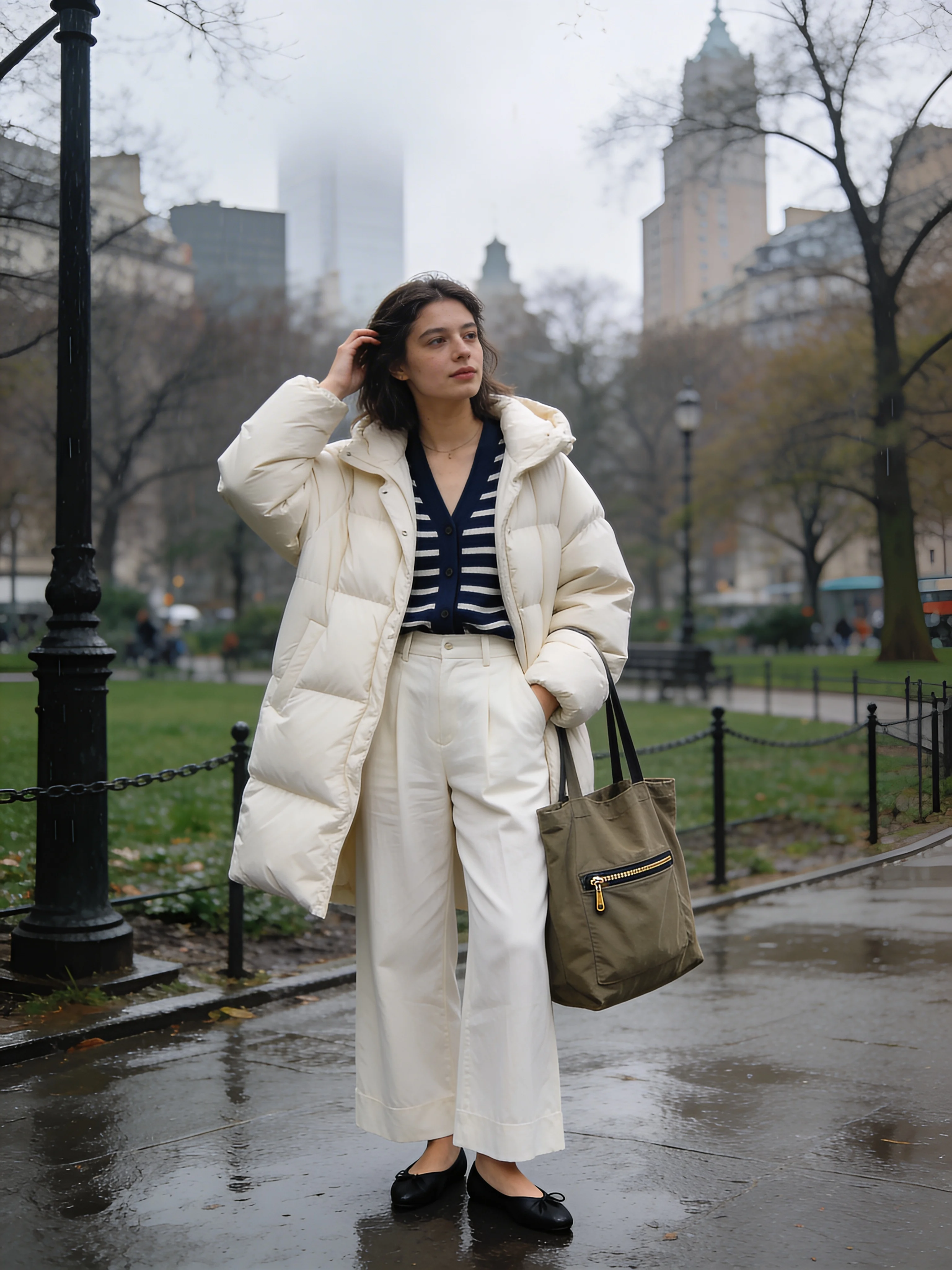
A cream oversized puffer over a navy striped cardigan and wide-leg ivory linen trousers handles mild rain with a considered mix of textures. Black ballet flats are the restrained finish.

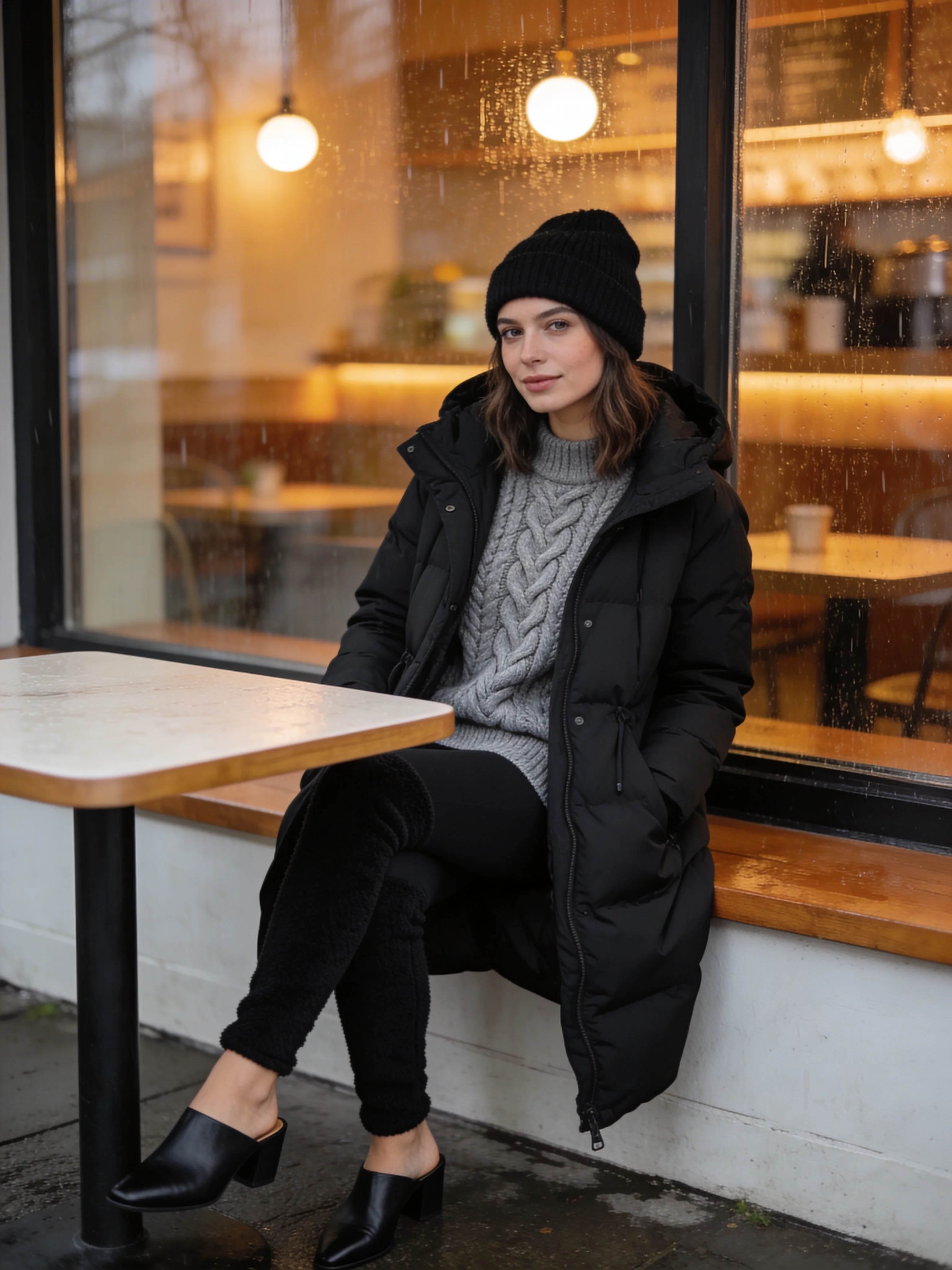
A black longline parka over a cable knit sweater in mild rain keeps warmth without overdressing. Black mule heels under leggings are an unexpected and intentional detail.

A blush cropped jacket over a grey cardigan and black sweater mini skirt handles mild rain with charm. A black bucket bag and ankle boots keep the proportions balanced.

A grey longline coat over an ivory blouse and black wide-leg trousers handles mild rain without losing formal intent. Black Chelsea boots and a mini bag keep it focused.

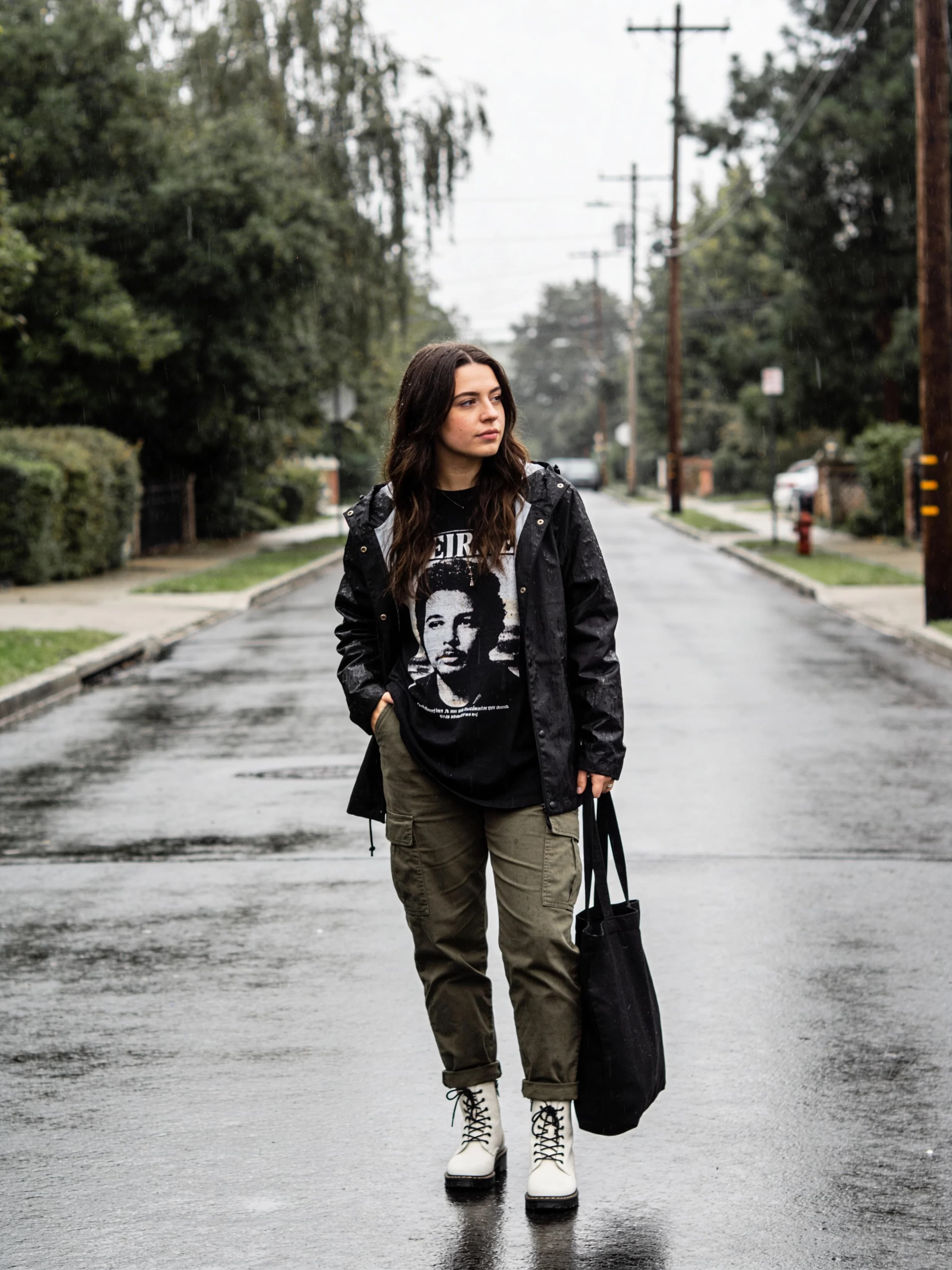
A black rain jacket over an oversized graphic tee and olive cargo trousers handles mild rain practically. White lace-up booties finish the look with enough contrast to lift the palette.

A waterproof or water-resistant outer layer is the priority — tule fog keeps surfaces and the air itself continuously damp even between formal rain days. Layer a sweater or light fleece underneath for the 39°F fog-drenched mornings. Waterproof footwear handles Old Sacramento's wooden boardwalks and the Riverwalk path's damp surfaces. By afternoon at 53°F when the fog lifts, the outer layer can come off and the sweater carries the remaining chill.
Sacramento in January is best for visitors using the city as a base for Yosemite's winter scenery or Lake Tahoe's ski season. The California State Capitol's legislative sessions begin in January, and the Crocker Art Museum and California Museum are accessible without peak crowds. The tule fog is the main local challenge: Highway 50 and I-80 fog events can significantly delay travel times to mountain destinations. Late morning departures typically avoid the worst fog.
Waterproof Chelsea boots or waterproof trail shoes handle the tule fog's persistent moisture and Old Sacramento's wooden boardwalks and the Riverwalk path after rain. The Tower District and Midtown's walkable streets stay wet for extended periods between rain events. Avoid suede or untreated leather — the fog's pervasive moisture is as damaging to unprotected materials as direct rain.
Morning lows average 39°F in the tule fog, which makes the air feel raw and damp. Daytime highs reach 53°F when the fog burns off, typically by late morning. About 9 days bring measurable rain in January. The fog itself is the defining feature — some events persist all day, and the Highway 50 and I-80 corridors are among the most fog-hazardous driving routes in California during January.
Pack a waterproof jacket, a mid-layer sweater or fleece, waterproof footwear, and layers that remove easily as the fog clears in the afternoon. Heavy winter insulation isn't necessary — Sacramento's cold is moderate — but waterproofing your outer layer and shoes matters more than warmth rating. If driving to Yosemite or Tahoe, carry chains and check both fog advisories and mountain road conditions before departing.