Cargo Rain Jacket
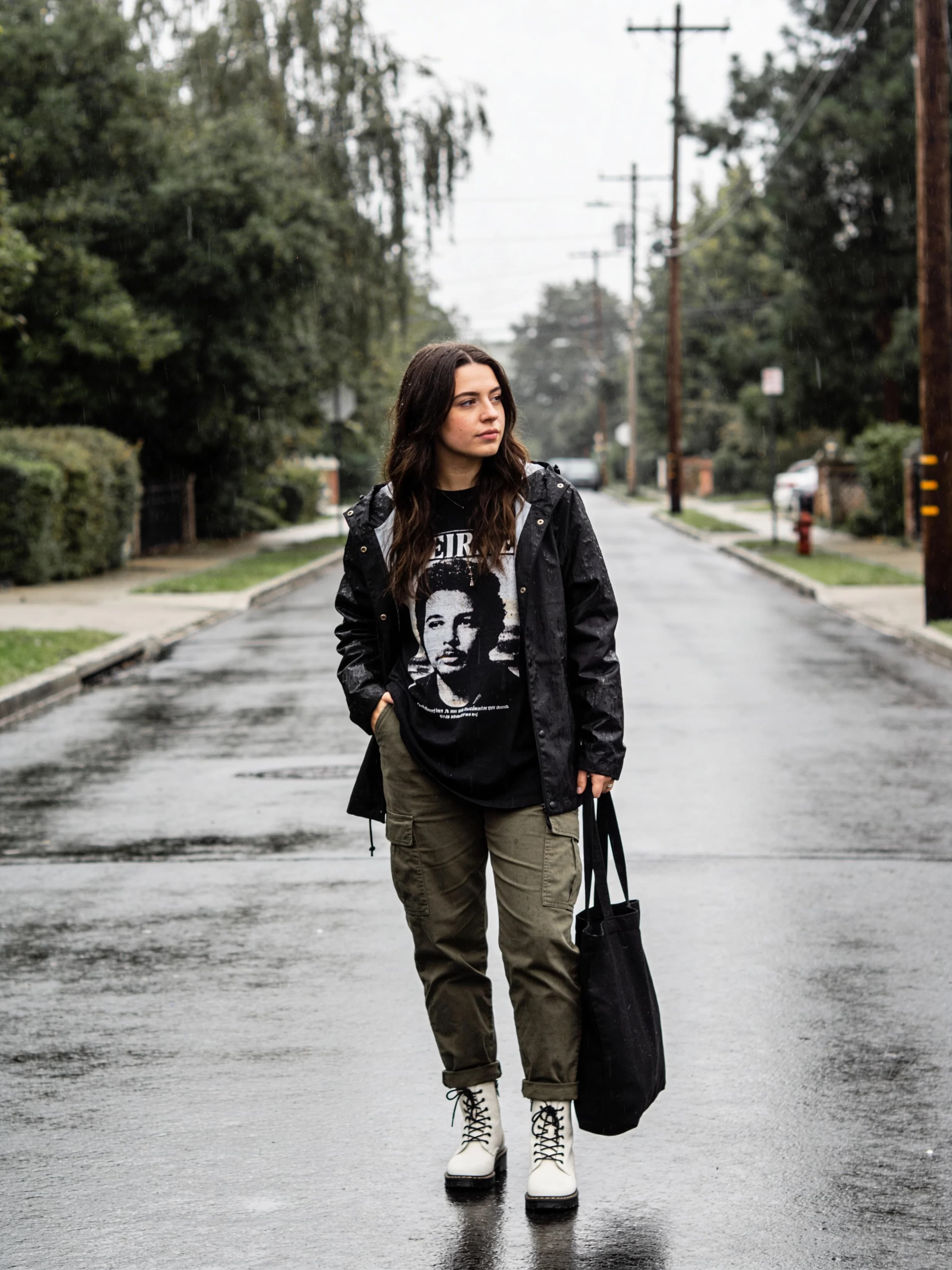
A black rain jacket over an oversized graphic tee and olive cargo trousers handles mild rain practically. White lace-up booties finish the look with enough contrast to lift the palette.
January in San Francisco is the wettest month, averaging 46–57°F with about 11 days of Pacific storm precipitation — a seam-sealed waterproof shell with a hood, Merino wool mid-layers, and waterproof ankle boots are the functional standard for the Ferry Building, Mission District, and the Golden Gate Bridge approaches. The Pacific wind off the Bay and on the bridge's exposed span drives the real-feel temperature well below the air reading, and the persistent drizzle soaks through light rain jackets over the course of a sustained day outdoors.
top / Long-Sleeve Top
fitted long-sleeve
lightweight layer for mild temps
bottom / Jeans
straight-leg
chinos for a slightly smarter look
footwear / Waterproof Boots
ankle boots
rubber sole for traction — keep feet dry all day
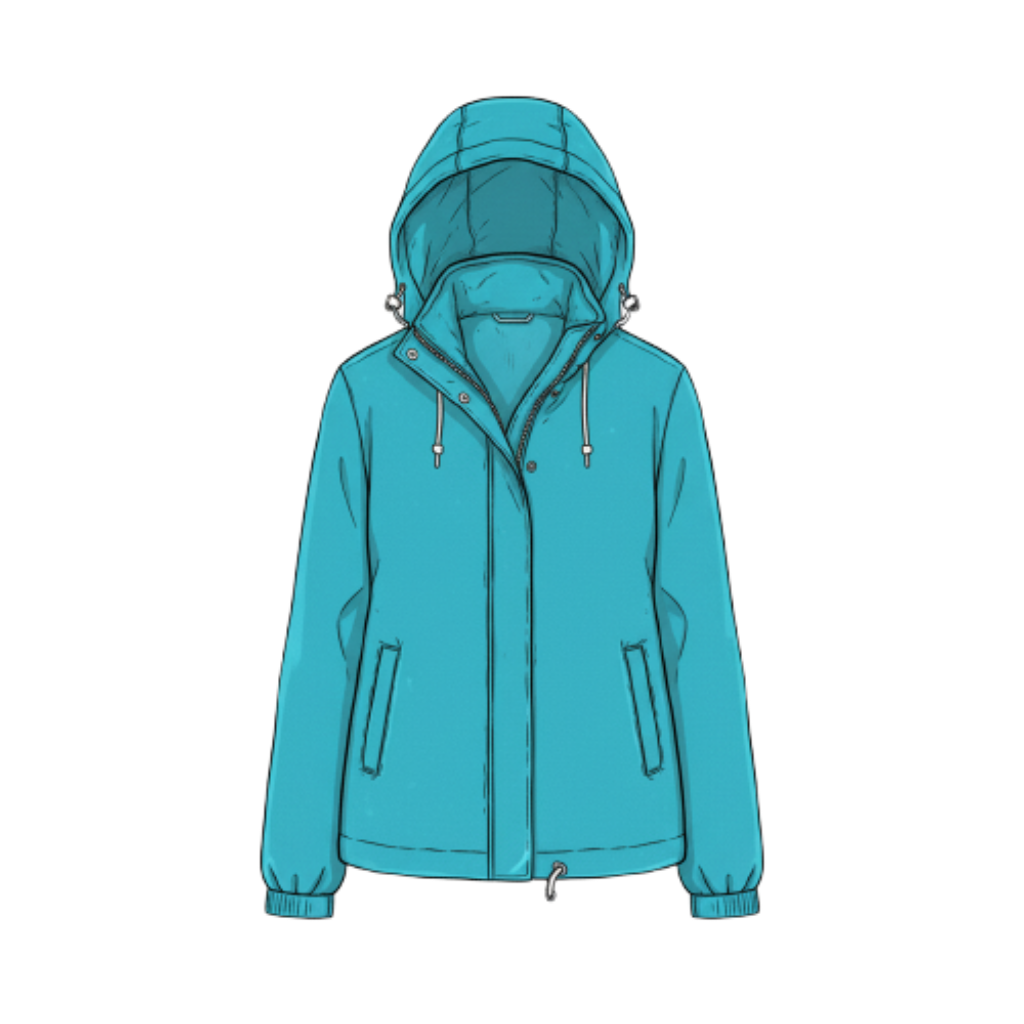
outerwear / Rain Jacket
shell jacket
waterproof or DWR-treated — keep it packable
Based on typical January conditions in San Francisco. Weather varies year to year — check the live forecast when you're within two weeks of your trip.
San Francisco's January is the rainiest month of the year — about 11 days of Pacific storm precipitation, multi-day overcast stretches between systems, and the Bay wind that makes the Ferry Building waterfront and the Golden Gate Bridge span feel significantly colder than the 46–57°F air temperature. The Pacific storms that define January are genuine events — atmospheric river systems can deposit several inches of rain over 24–48 hours, flooding the Embarcadero low points and pushing the Muni streetcar system into disruption. The Mission District's murals, the Castro's neighborhood character, and the SoMa gallery scene all persist through the rain. San Francisco's eclectic tech-casual and Mission hipster style reaches peak waterproofing commitment in January — Patagonia and Arc'teryx shells over Merino mid-layers, waterproof Chelsea boots, and the city's characteristic layered, wind-blocking approach. The micro-climate variation between the rainy, windswept Sunset and Richmond districts near the Pacific and the warmer, slightly drier Mission and SoMa is even more pronounced in January than in summer; a layer that's comfortable at the Ferry Building may be insufficient at Ocean Beach.

A black rain jacket over an oversized graphic tee and olive cargo trousers handles mild rain practically. White lace-up booties finish the look with enough contrast to lift the palette.
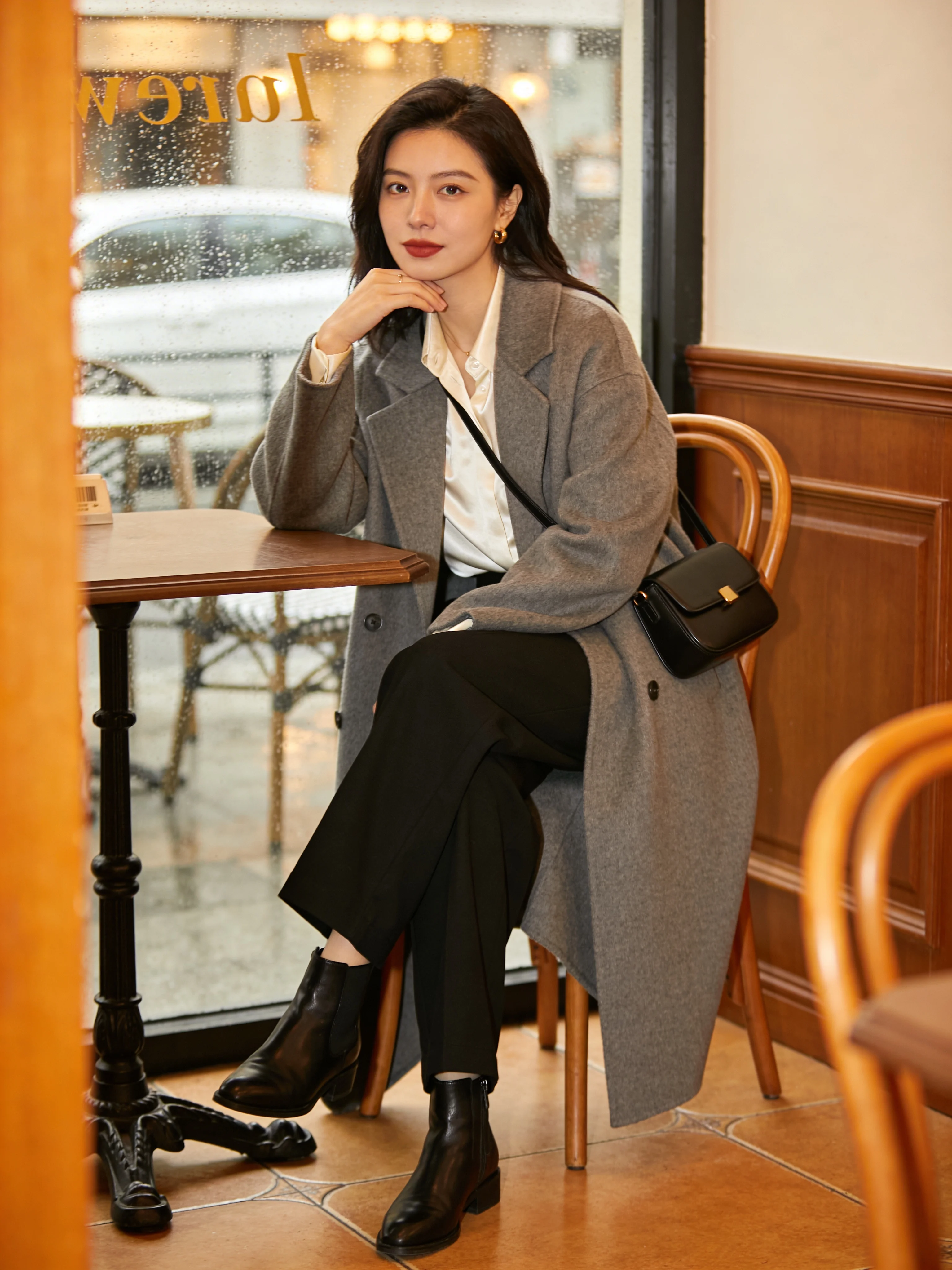
A grey longline coat over an ivory blouse and black wide-leg trousers handles mild rain without losing formal intent. Black Chelsea boots and a mini bag keep it focused.

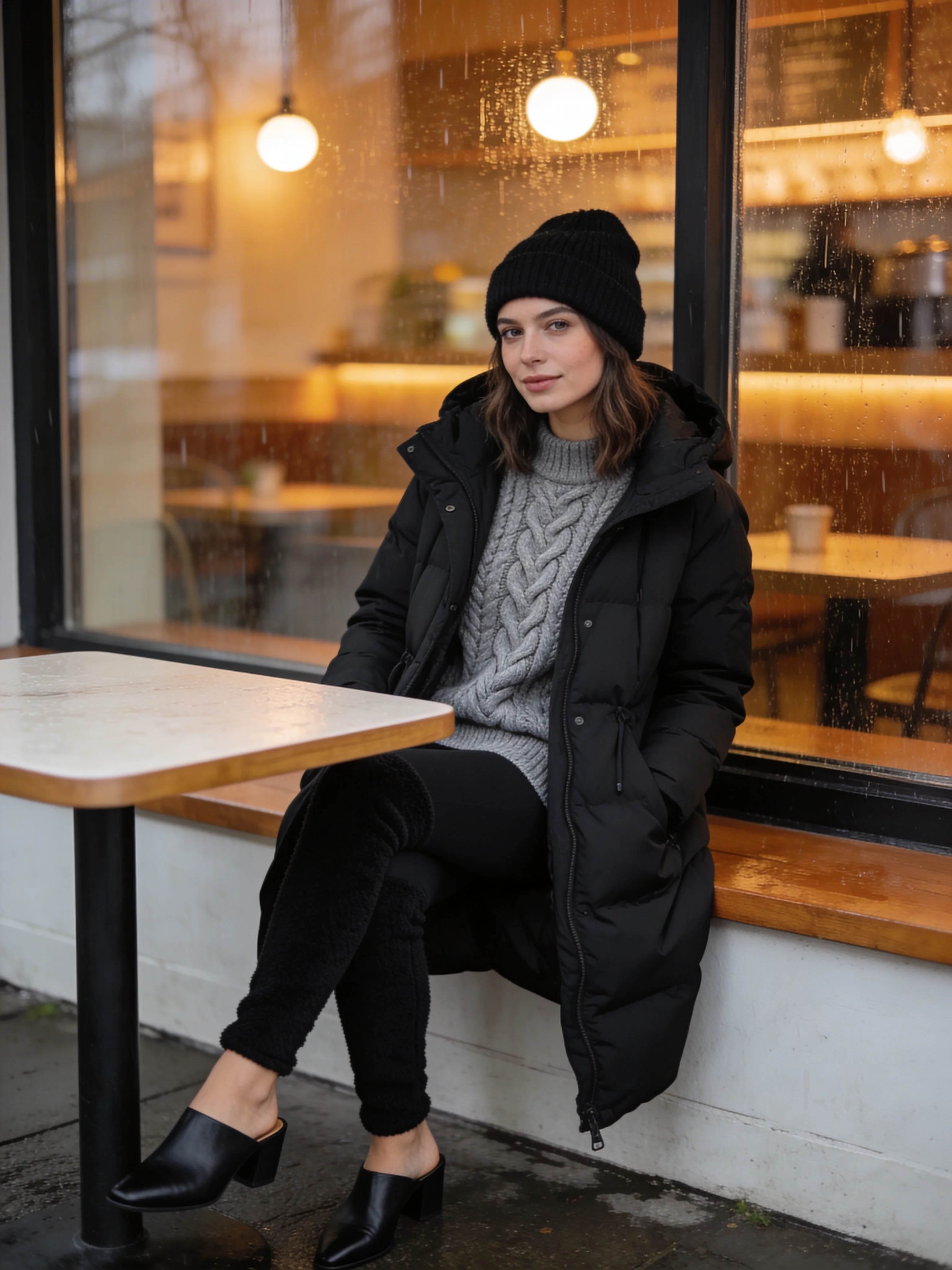
A black longline parka over a cable knit sweater in mild rain keeps warmth without overdressing. Black mule heels under leggings are an unexpected and intentional detail.

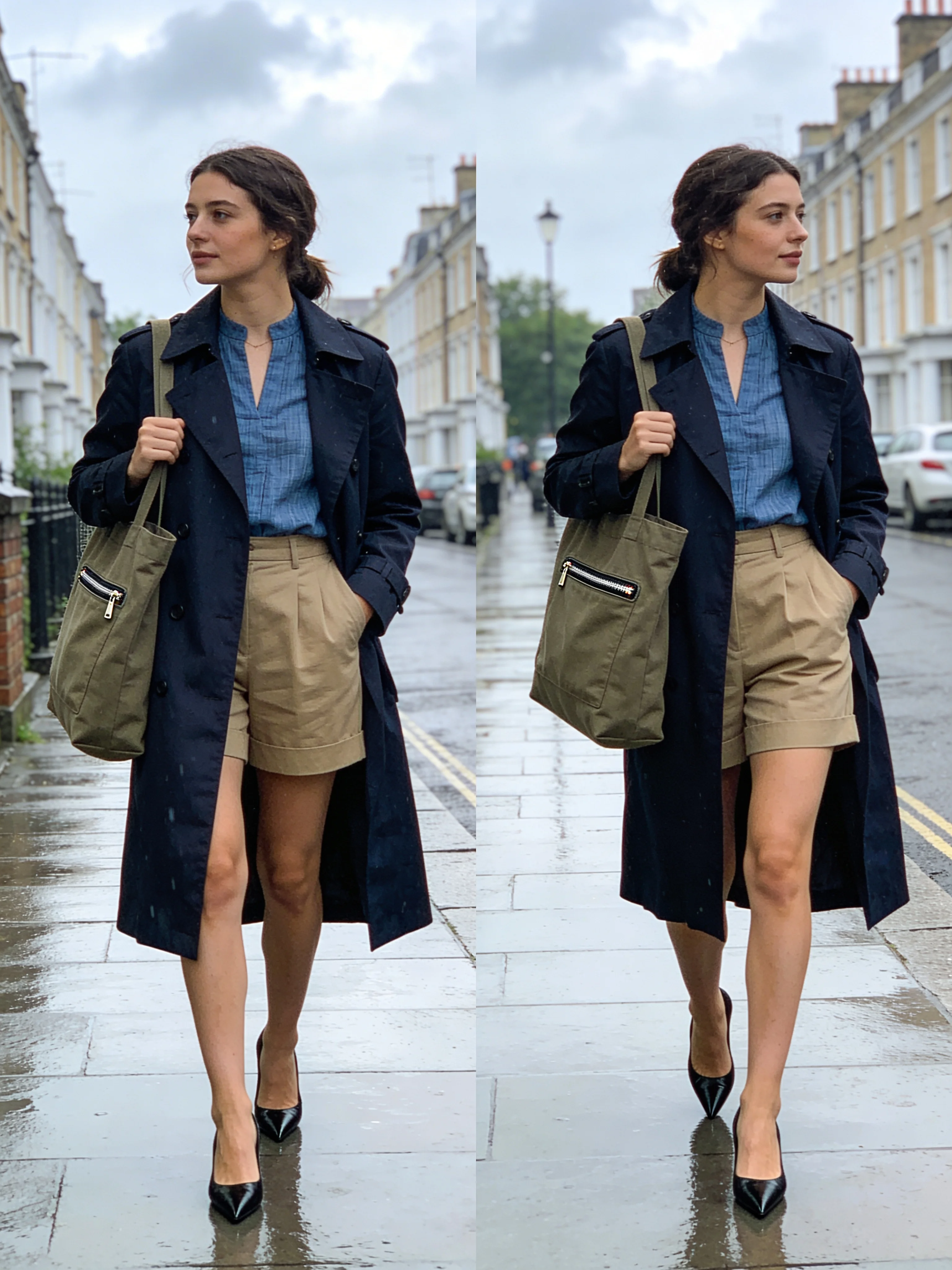
A navy trench coat over khaki bermuda shorts and a blue linen blouse works between seasons on a mild rainy day. Black pointed-toe heels sharpen what could easily be too casual.

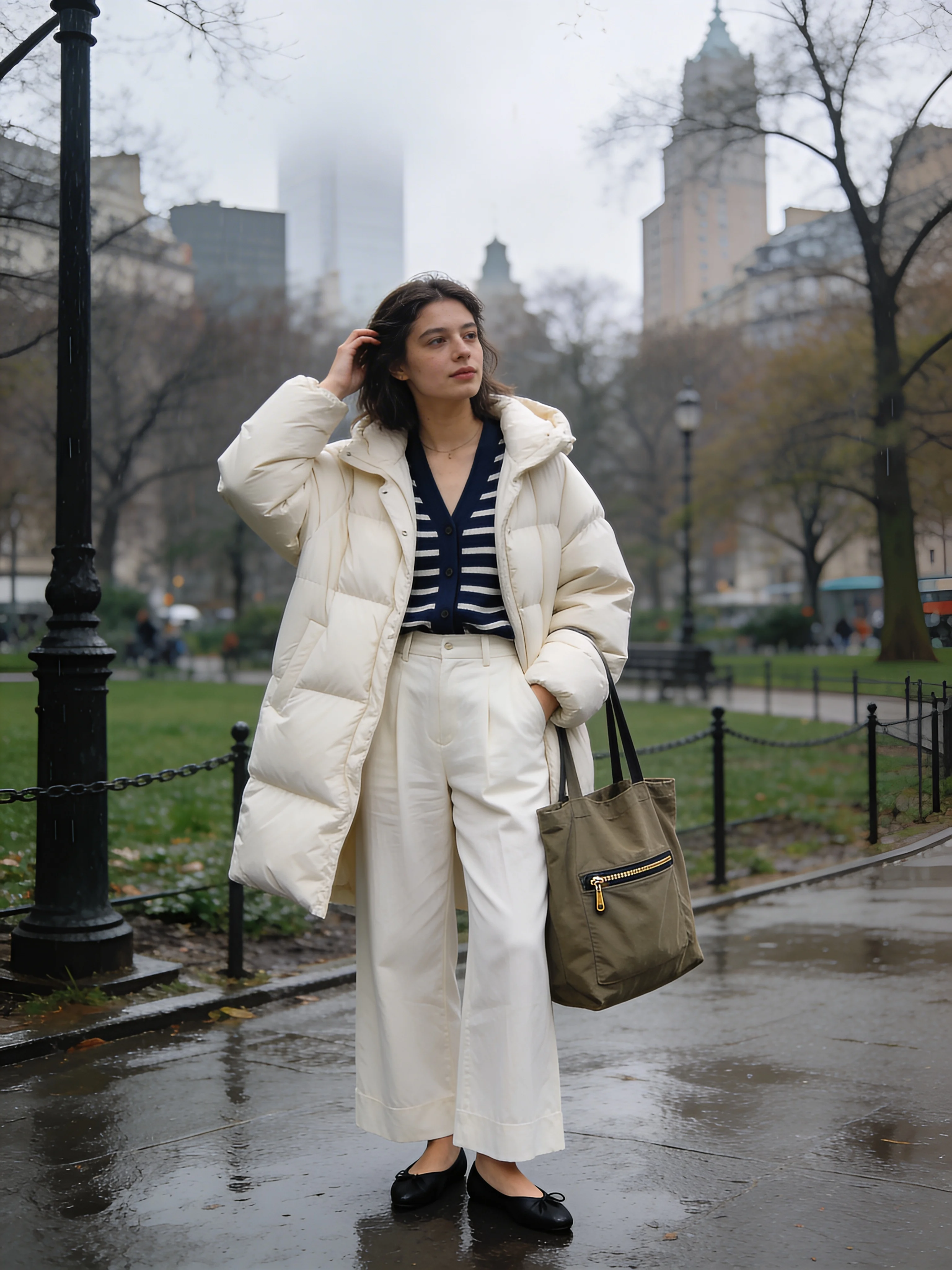
A cream oversized puffer over a navy striped cardigan and wide-leg ivory linen trousers handles mild rain with a considered mix of textures. Black ballet flats are the restrained finish.

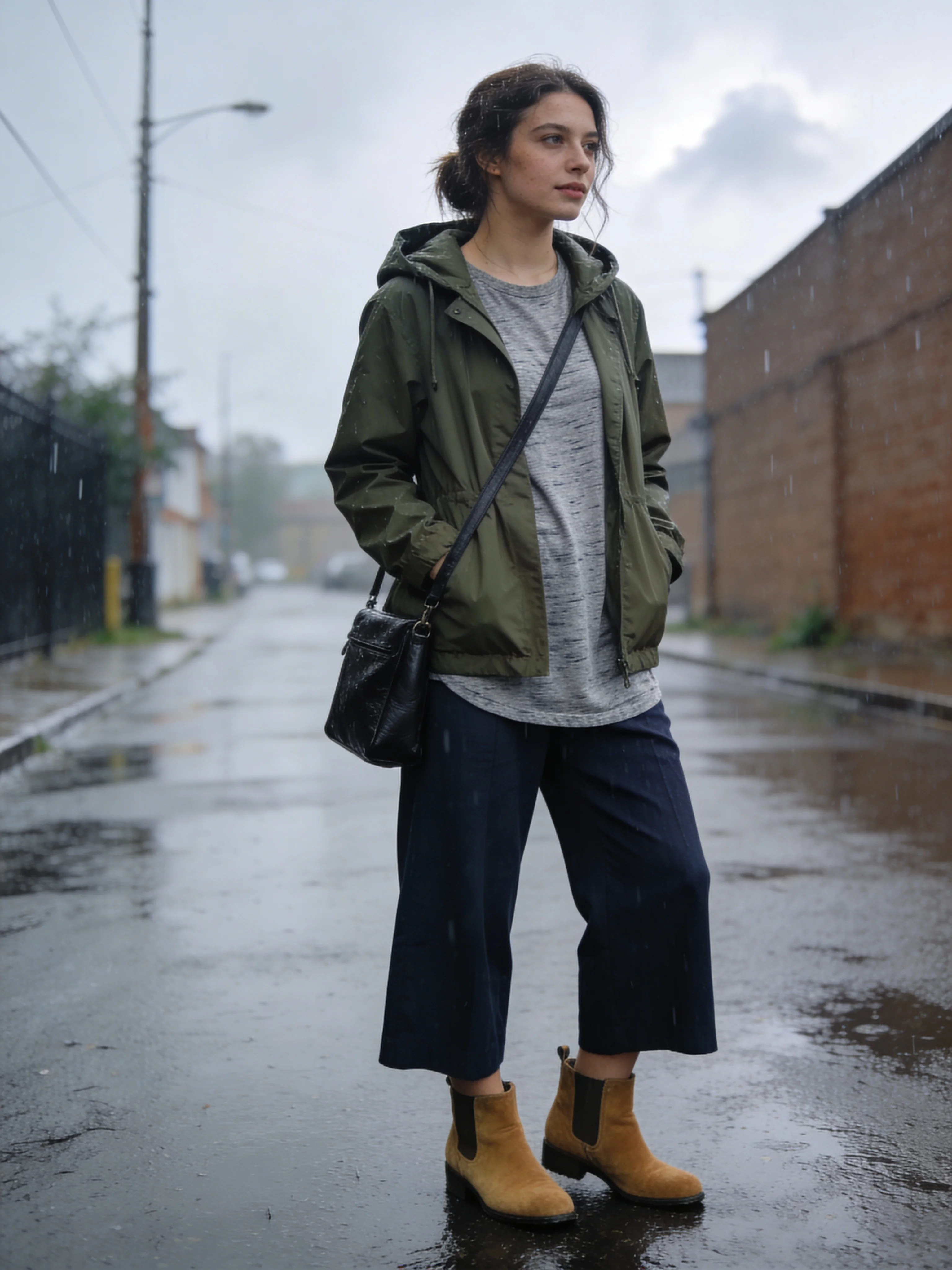
An olive anorak handles mild rain without abandoning the polish of wide-leg navy trousers underneath. The crossbody stays tucked and close.

A blush cropped jacket over a grey cardigan and black sweater mini skirt handles mild rain with charm. A black bucket bag and ankle boots keep the proportions balanced.
Packing List
What to Pack for San Francisco in January →
A seam-sealed waterproof shell with a hood is non-negotiable — 11 days of Pacific precipitation means sustained exposure rather than brief showers, and atmospheric river systems deliver genuine downpours. Layer Merino wool or heavyweight synthetic mid-layer and moisture-wicking base underneath. Waterproof ankle boots handle the Mission District's hills, the Embarcadero promenade after rain, and the Golden Gate Bridge approaches. Add a wool scarf and light gloves for the windiest Bay-exposed locations.
San Francisco's January rewards visitors who embrace the indoor culture. SFMOMA, the de Young Museum, the Asian Art Museum, and the Ferry Building Marketplace are all excellent and uncrowded. The Mission District's restaurant scene is at its neighborhood best without tourist crowds. Atmospheric river events — which occur 2–4 times per January — produce spectacular post-storm clear skies and views of snow on Mount Tamalpais across the Bay. Hotel rates are at annual lows.
Waterproof ankle boots with a grip sole are essential — the steep hills of Russian Hill, Nob Hill, and the Castro combine with wet pavement and rain-slicked cable car tracks to create genuine slip hazards. The Embarcadero promenade pools after heavy rain, and the atmospheric river events can create significant puddle accumulation at crosswalks. A waterproof Chelsea boot in Gore-Tex or well-treated leather is the most versatile option for the mix of urban hills and waterfront walking.
Temperatures average 46–57°F — mild in absolute terms but made colder by Bay wind and persistent moisture. About 11 days bring precipitation, with atmospheric river events depositing multiple inches of rain in 24–48 hours. The Sunset and Richmond districts near the Pacific are consistently 5°F cooler and foggier than the Mission and SoMa. The Golden Gate Bridge span is one of the windiest pedestrian locations in the city — the apparent temperature drops significantly in the bridge's exposed midpoint.
Pack a seam-sealed waterproof shell with hood, Merino wool or synthetic base and mid-layers, waterproof ankle boots, a wool scarf, and light gloves. Leave the umbrella at home — the Bay wind makes them ineffective on the Embarcadero and the bridge. A waterproof daypack protects electronics and dry layers during sustained rain. Plan itineraries to adapt to the micro-climate variation between neighborhoods — what's appropriate in the Mission may be insufficient at Ocean Beach.