Sporty
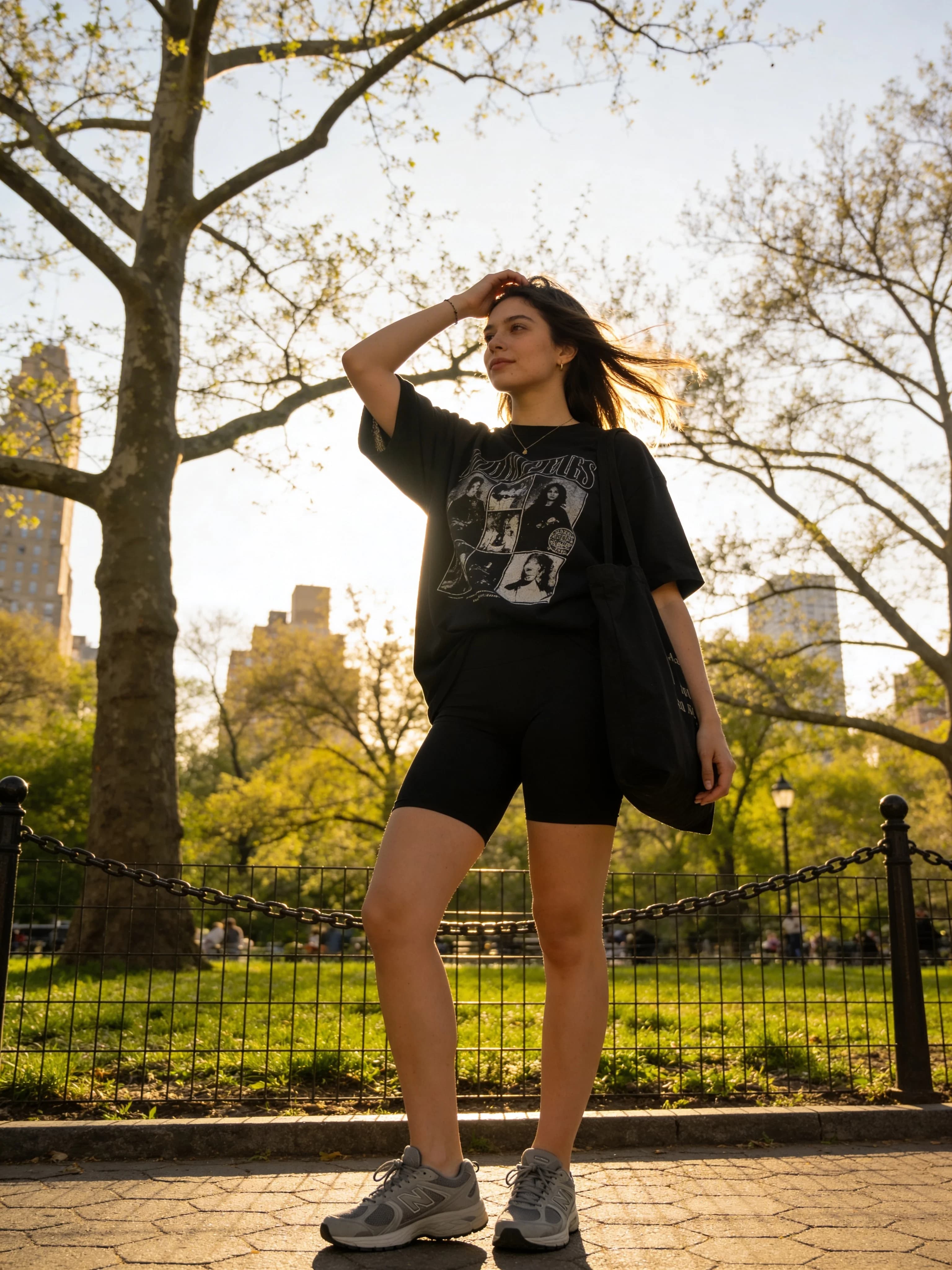
Off-Duty Track Edit
Flatters smaller busts
A black oversized graphic tee at 60°F makes the gym-to-street transition look deliberate. Black biker shorts keep the silhouette sharp from the waist down.

What to Wear in Vancouver
Friday, October 2
Vancouver's Pacific Coast climate brings more drizzle than downpour — locals wear waterproof shell jackets year-round and treat umbrellas as tourist artifacts. January through February are persistently gray and damp at 44–47°F highs, and persistent dampness makes it feel colder than the reading; proper waterproofing separates comfortable visitors from miserable ones. The North Shore mountains (Grouse, Seymour, Cypress) are ski-accessible in winter and hiking terrain in summer, requiring a completely different gear set from downtown city clothes.
Compare rates across Booking.com, Agoda, Expedia, and Trip.com in one search.
Search hotels in VancouverBased on 64°F and clear sky

top / Long-Sleeve Top
fitted long-sleeve
lightweight layer for mild temps

bottom / Jeans
straight-leg
chinos for a slightly smarter look

footwear / Sneakers
classic sneakers
cushioned for all-day city walking
Vancouver sits between the Pacific Ocean and the Coast Mountains, and that geography shapes everything about how locals dress. The city has a temperate rainforest climate — winters are mild but persistently wet, summers are warm and often sunny, and the shoulder seasons demand real versatility. Expect temperatures ranging from around 3°C in January to 22°C in July, though the marine influence keeps extremes rare. Snow in the city itself is infrequent but not unheard of, while the nearby mountains pile up metres of it each winter. Rain is the defining factor for most of the year, heaviest from October through March, which is why a quality waterproof jacket is considered a wardrobe essential here rather than an occasional accessory. Vancouver dressers tend toward a polished-outdoor hybrid — think technical fabrics that look sharp enough for a café or an office, layered over merino base pieces. Gore-Tex, fleece, and trail-ready footwear appear regularly in everyday settings without reading as underdressed. In summer the city leans into lighter linen and casual cotton, but locals rarely leave home without a layer within reach, since evenings near the water cool down quickly even in August.
A black oversized graphic tee at 60°F makes the gym-to-street transition look deliberate. Black biker shorts keep the silhouette sharp from the waist down.
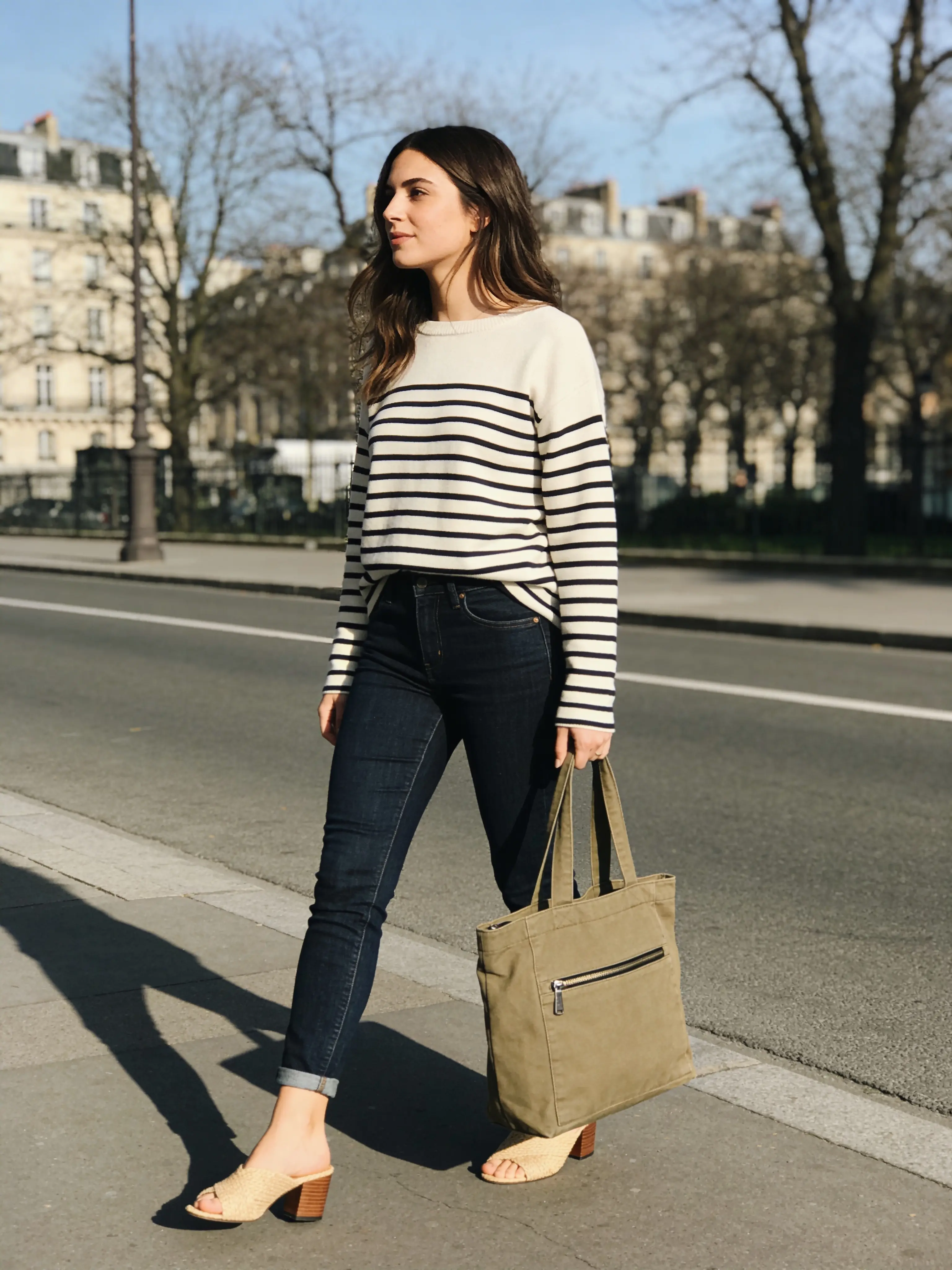
At 55–64°F the Breton stripe does the heavy lifting — dark indigo ankle jeans and raffia mules do the rest. A canvas tote keeps it honest.
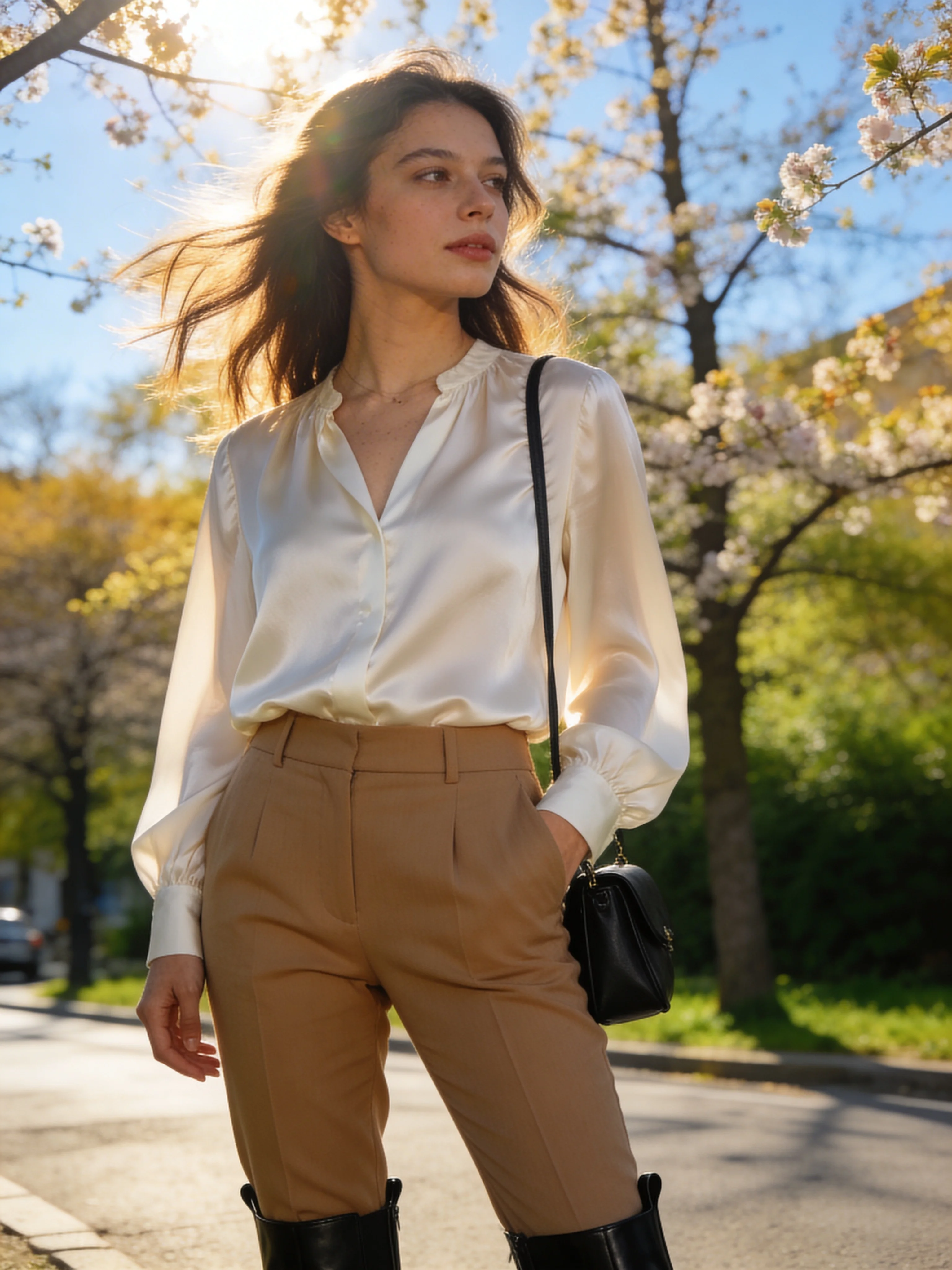
An ivory silk-look blouse tucked into camel tailored trousers is the mild-day formal look stripped to its essentials. Black Chelsea boots and a mini bag close it with precision.
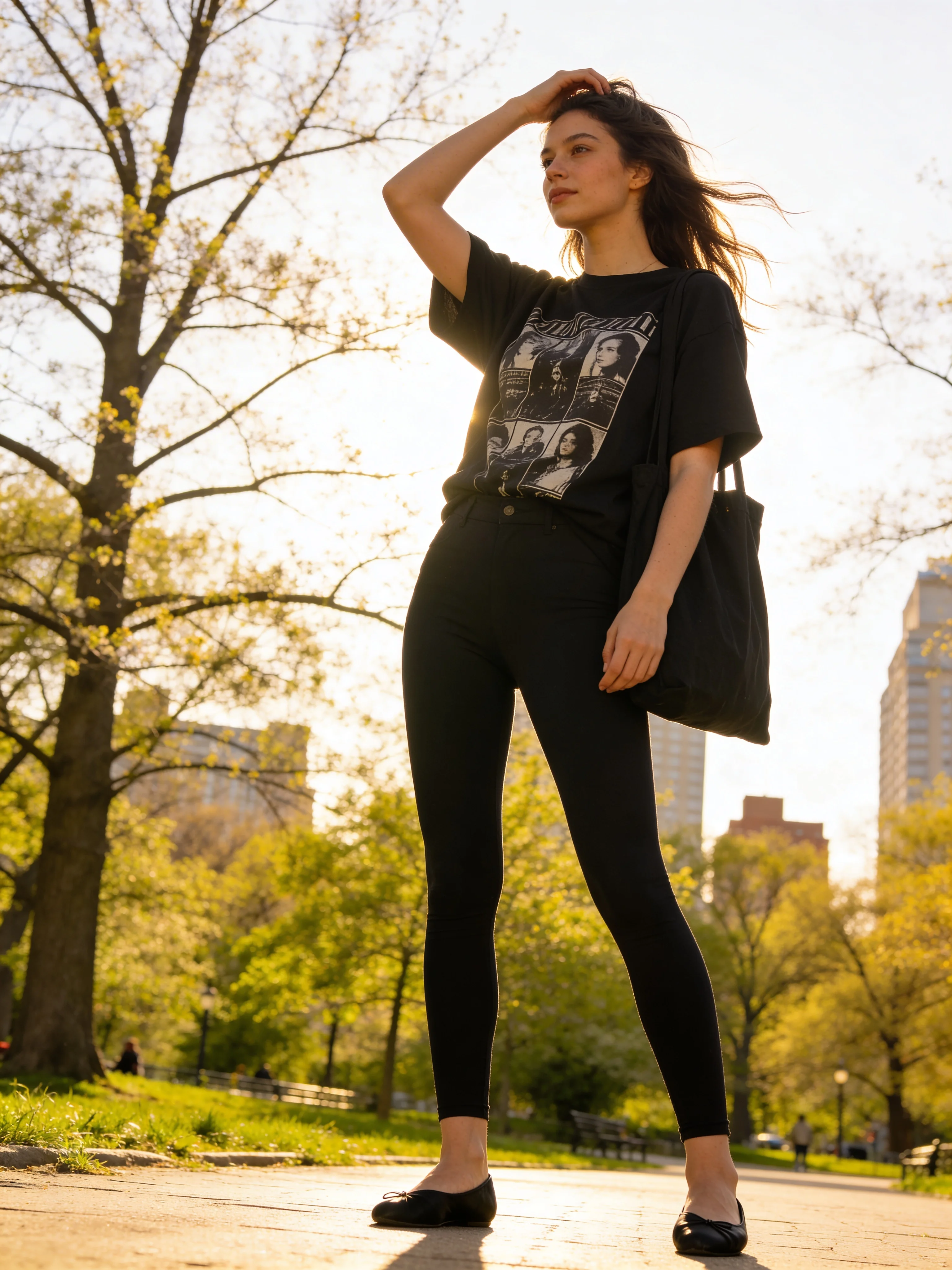
A black oversized graphic tee with high-rise leggings and ballet flats is the mild-clear sporty look that doesn't read as gym wear. A black canvas tote carries the rest of the day.
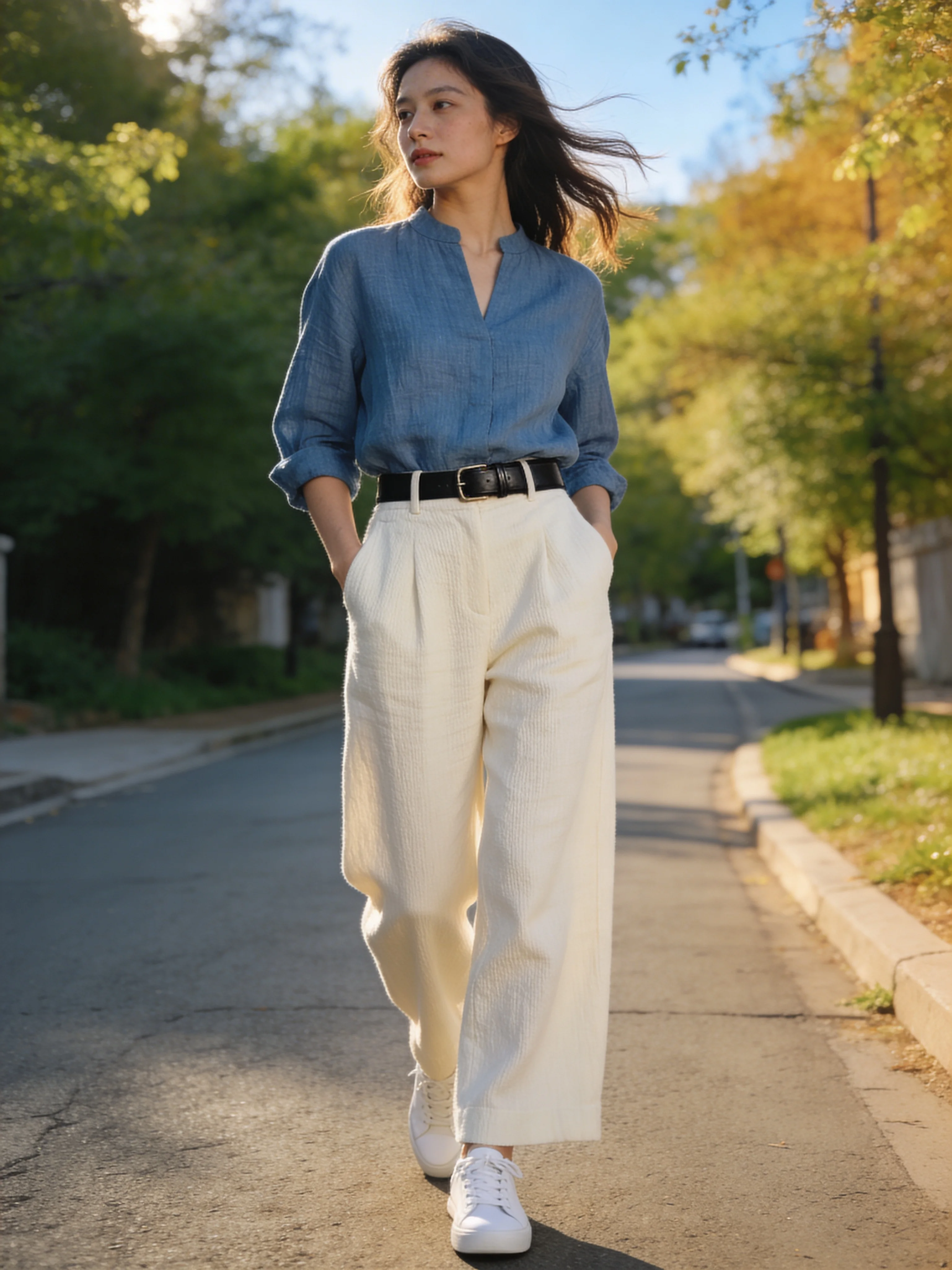
A blue linen collarless blouse over cream linen wide-leg trousers with a black belt is the mild-weather office look that breathes. White sneakers keep it from becoming too stiff.
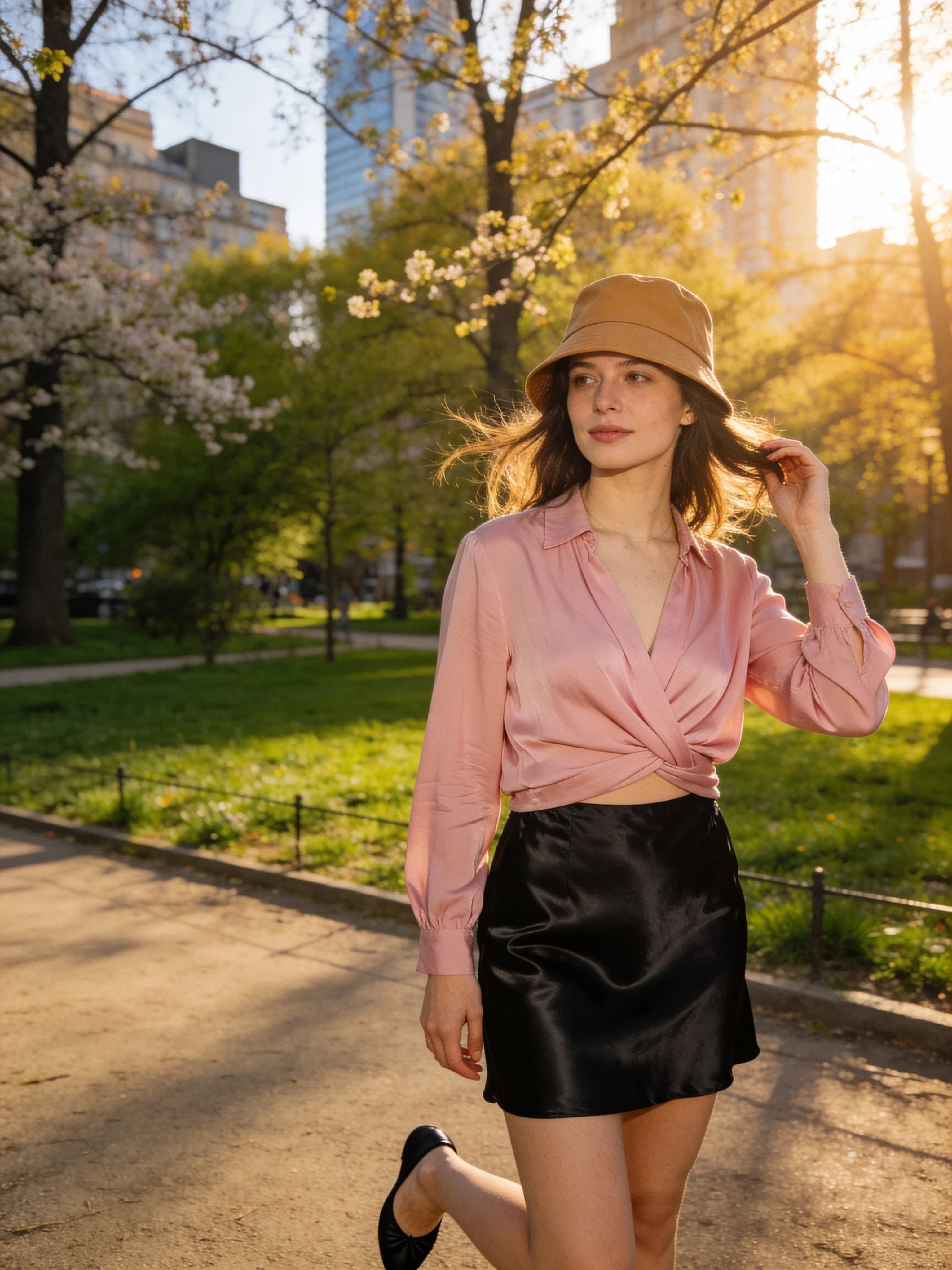
A blush wrap blouse over a black satin mini skirt is an effortlessly feminine mild-day combination. A camel bucket hat pulls it together without trying.
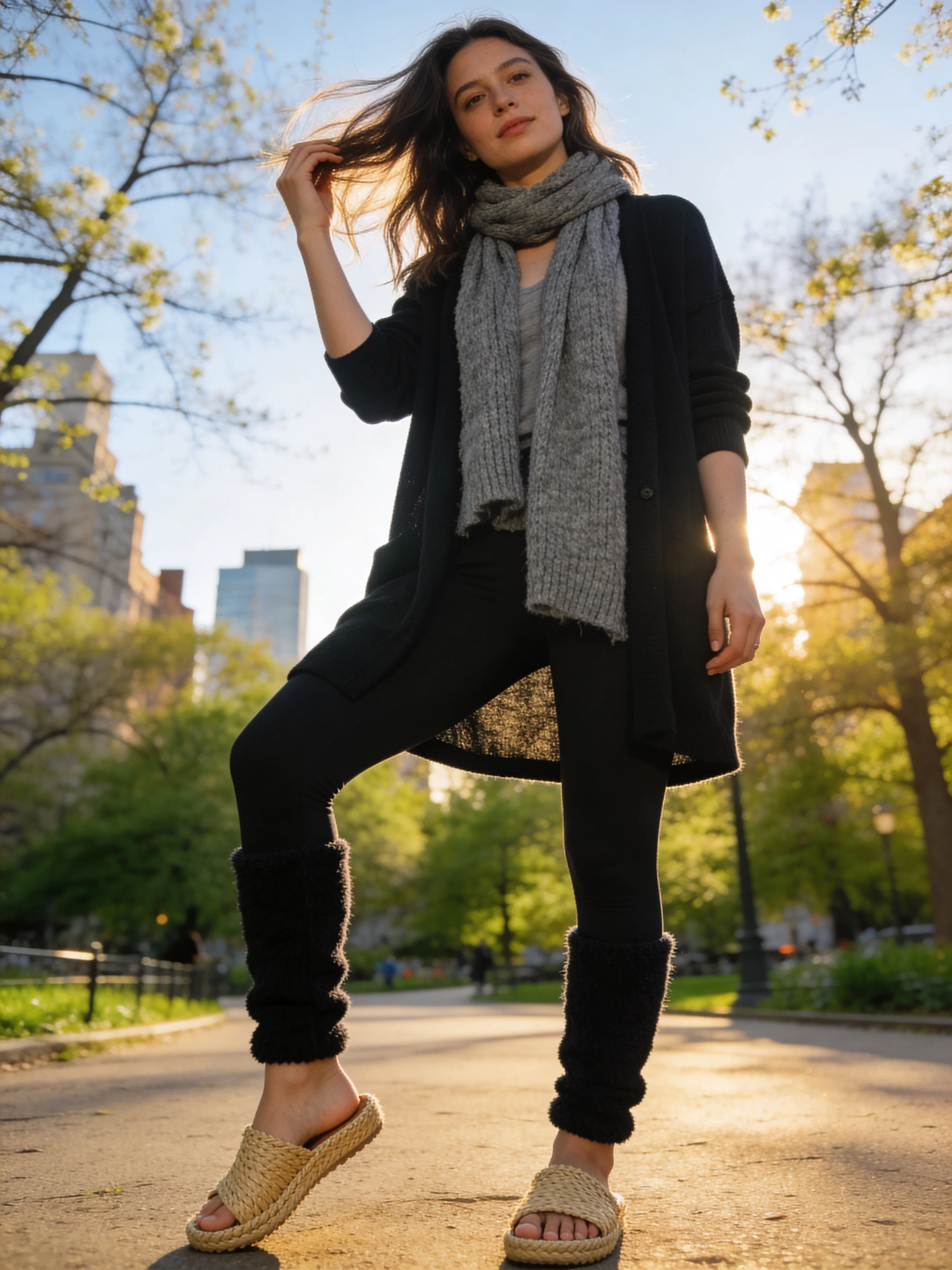
A black open-front cardigan over fleece leggings and espadrilles on a mild day doesn't try too hard. The grey scarf adds the only texture.
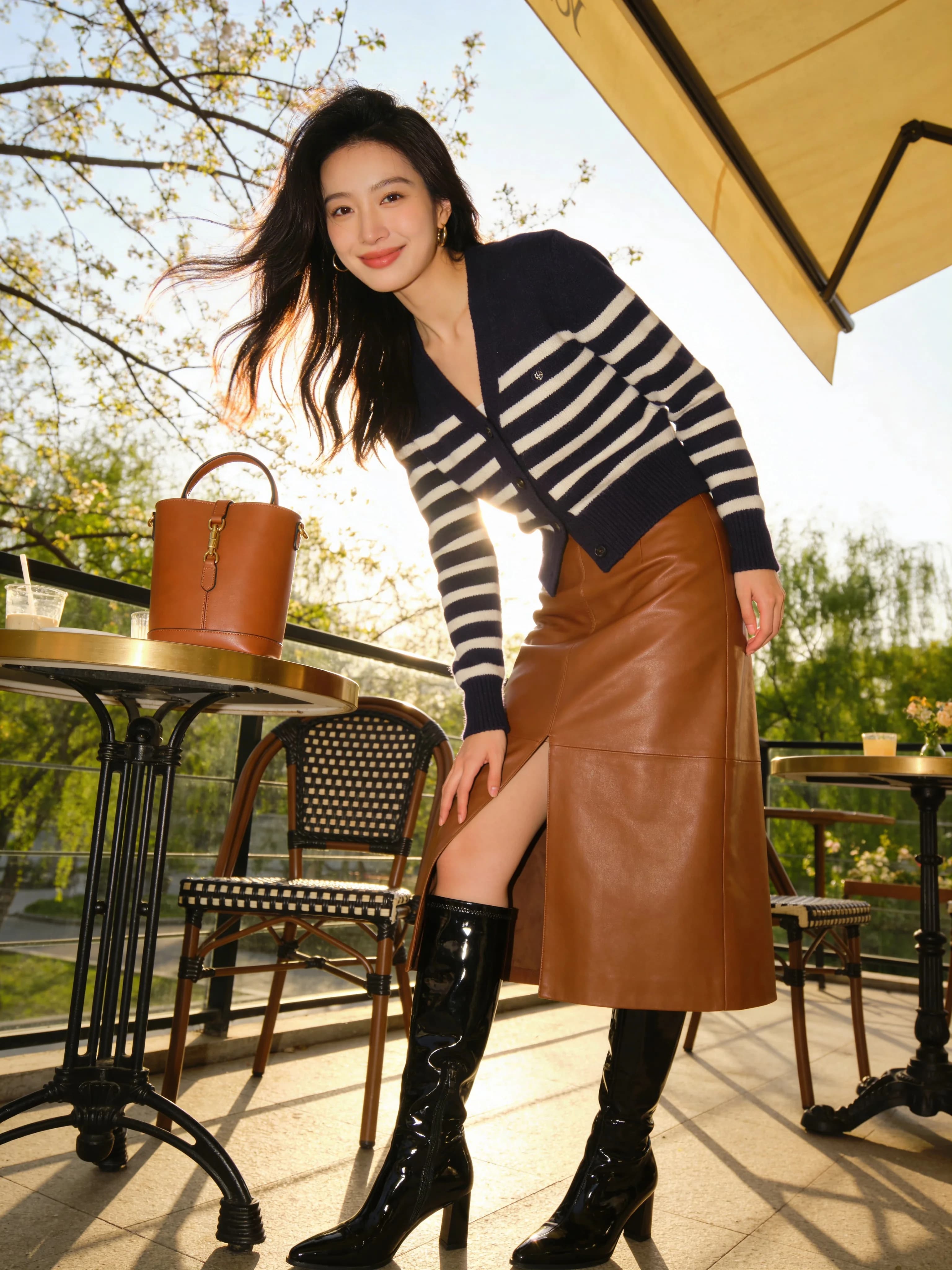
A navy striped cardigan over a brown faux-leather midi skirt and patent thigh-high boots on a mild clear day is quietly editorial. The structured bucket bag is the only accessory it needs.
Packing List
What to Pack for Vancouver →
Best shoes
Best shoes for Vancouver — by month →
Climate-matched walking shoes, waterproof boots, and sandals.
See typical weather and outfit ideas for Vancouver in any month of the year.
Vancouver winters are wet and grey rather than bitterly cold, with temperatures typically sitting between 3°C and 8°C from December through February. A waterproof insulated jacket, waterproof boots with good grip, and mid-weight layers like a fleece or chunky knit will cover most days. A packable umbrella or a jacket with a proper hood is more practical than a heavy parka, since the rain is relentless but temperatures rarely require extreme insulation.
Summers in Vancouver are warm and relatively dry, with July and August averaging highs around 22°C and plenty of sunny days. Light clothing like linen shirts, cotton dresses, shorts, and breathable sneakers or sandals works well during the day. That said, evenings along the waterfront or in areas like Kitsilano can drop to 13°C or cooler, so carrying a light jacket or long-sleeved layer is a reliable habit even in peak summer.
Vancouver is one of Canada's mildest cities year-round — it rarely experiences the deep freezes common to cities like Toronto or Calgary. Winter temperatures hover just above freezing rather than well below it, and snowfall in the city is light and short-lived most years. The trade-off is persistent dampness and overcast skies for much of autumn and winter, so cold-weather dressing here is more about staying dry than staying warm.
Vancouver has a temperate oceanic climate with mild, rainy winters and warm, drier summers. Annual rainfall is substantial — around 1,150mm — with the bulk falling between October and April. Summer stretches from roughly June to September with reliable sunshine and low humidity, while the rest of the year calls for waterproof outerwear and layering strategies rather than heavy insulation.
Packing tools
Free calculators — city and month pre-filled when we know them. No account required. Start with how many outfits, sudoku packing, or bag fees.
Trip
Planning a trip to one city?
One city → typical weather for your month, packing counts that fit your bags, and email your plan.
Outfits
How many outfits for this trip?
Trip length, bag size, and climate → exact tops, bottoms, layers, and outfit combinations.
Jacket
Not sure about a jacket?
City + month → base / mid / shell stack and pack-or-skip verdicts for rain jacket, coat, and thermals.
Shoes
Shoes for this climate?
Climate, activities, and bag size → pair count, primary/backup types, and climate-matched picks.
Bags
Will this trip cost bag fees?
Airline + fare bucket + bags you plan to bring → fit verdicts and typical carry-on / checked fee ranges.
Capsule
Try sudoku packing for this climate?
City + month → climate-ready 3 tops / 3 bottoms / 3 layers you can edit — up to 27 mix-and-match outfits.