Cozy
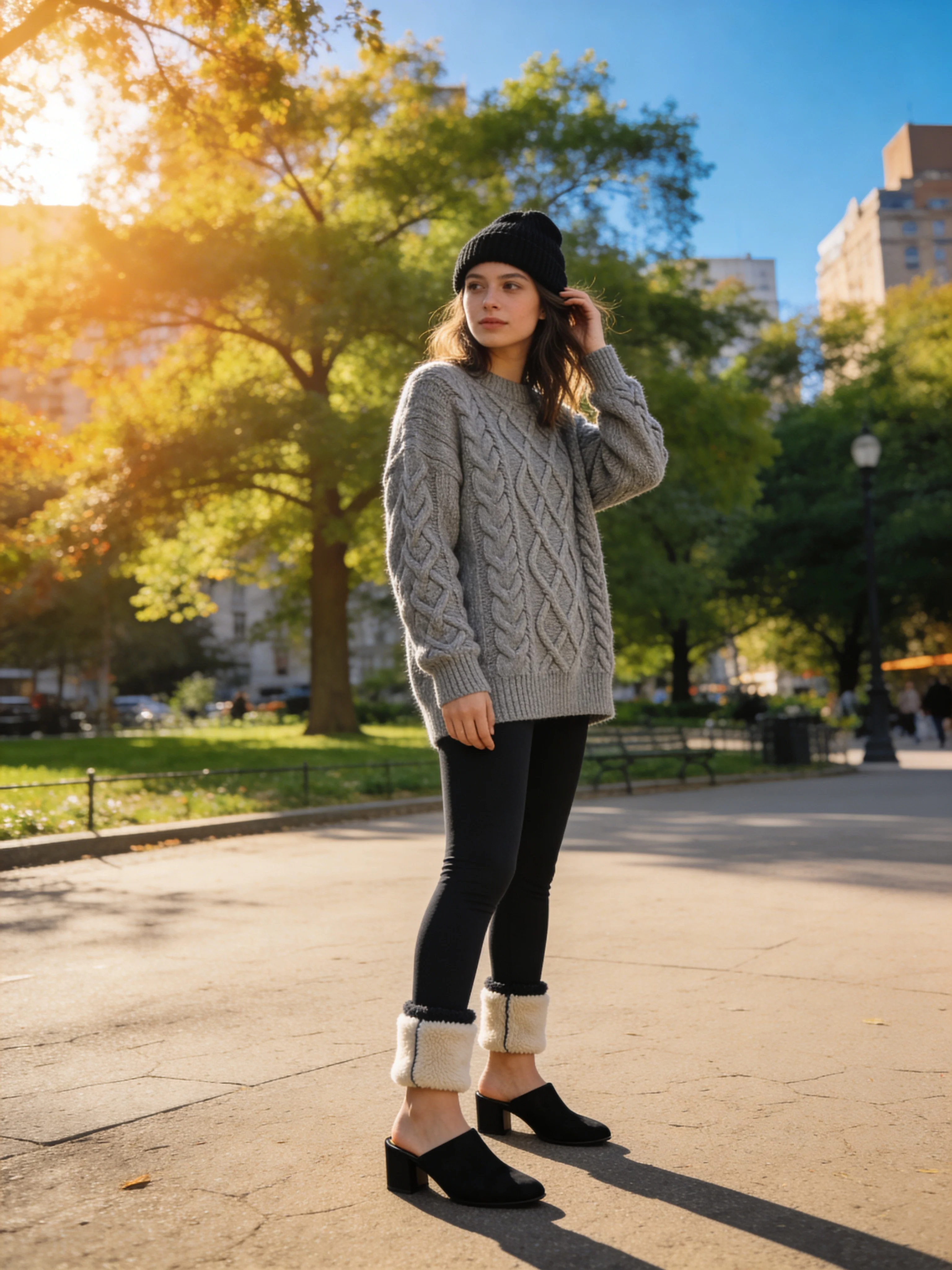
Cable Knit and Mules
A grey cable knit with fleece-lined leggings and black mules in warmer weather is cozy without capitulating to the temperature. A knit beanie on a warm-clear day feels like a choice.
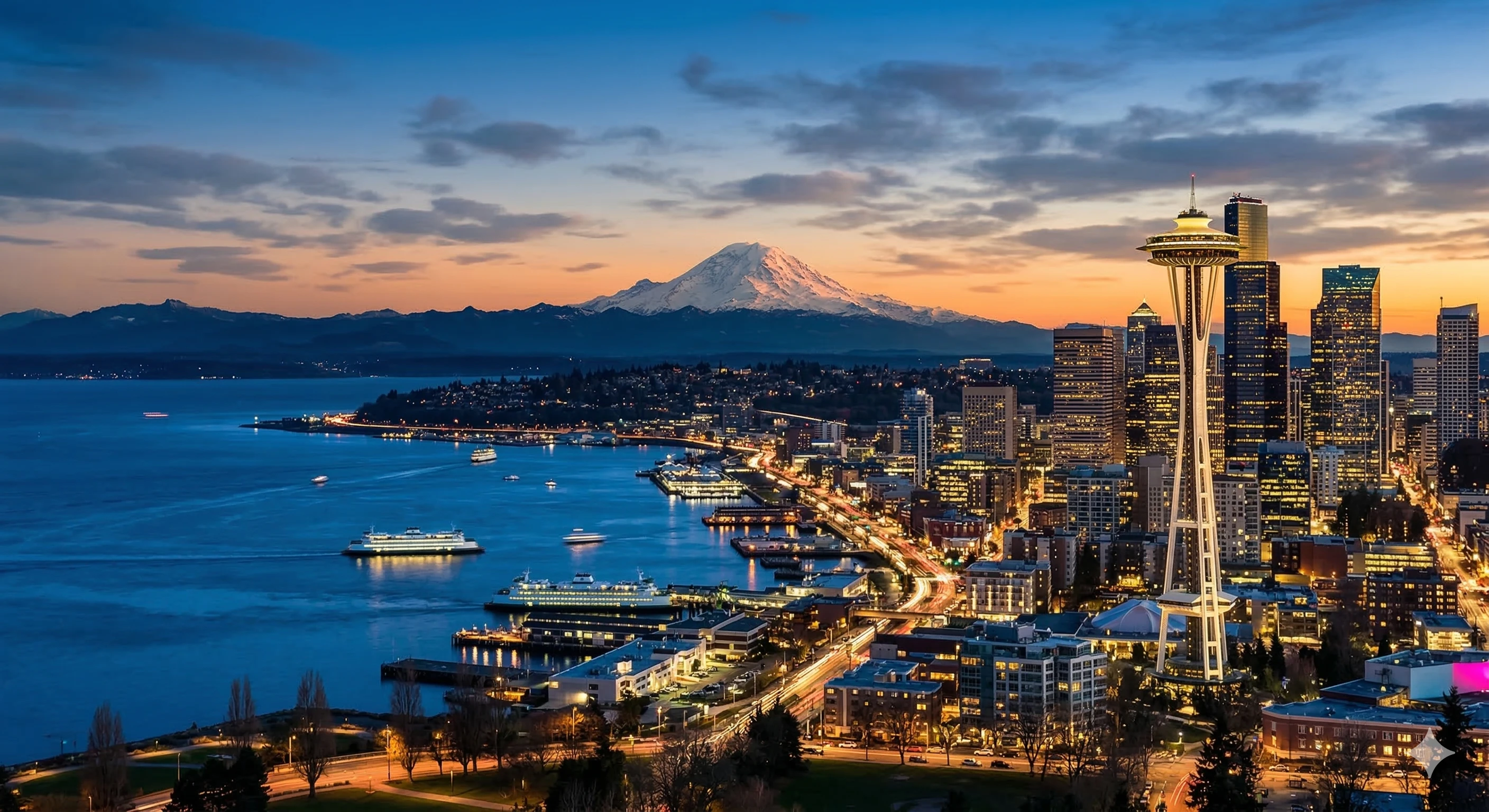
What to Wear in Seattle
Friday, October 2
Seattle's oceanic climate means persistent drizzle from October through May — locals never use umbrellas, wearing waterproof shell jackets instead; pulling out an umbrella marks you as a tourist. Summer (July–August) is genuinely warm and dry at 75–76°F with low humidity and long daylight hours. Pike Place Market's steep hill access on wet cobblestone ramps, Capitol Hill, and the Elliott Bay waterfront all demand waterproof flat-soled footwear.
Compare rates across Booking.com, Agoda, Expedia, and Trip.com in one search.
Search hotels in SeattleBased on 67°F and partly cloudy

top / Short-Sleeve Top
classic tee

bottom / Jeans
straight-leg
chinos for a slightly smarter look

footwear / Sneakers
classic sneakers
cushioned for all-day city walking
Seattle's reputation for rain often precedes it, but understanding its climate is key to dressing comfortably. While precipitation is a frequent companion from October through May, it's often a gentle drizzle rather than a downpour. Winters are mild, rarely seeing extreme cold or heavy snow, while summers offer a delightful contrast with warm, sunny, and notably dry conditions from July to September. Spring and autumn are transitional, bringing a mix of sun breaks and scattered showers. The local style here leans heavily into practical comfort and utilitarian chic. Think layers, durable fabrics, and pieces that can transition easily from a coffee shop to a rainy park trail. Functionality is paramount, with a strong emphasis on waterproof outer layers, comfortable footwear suitable for walking hills, and versatile sweaters or fleece. Locals prioritize staying dry and comfortable without sacrificing a relaxed, understated aesthetic. You'll often see residents sporting technical jackets, jeans, and sturdy boots or sneakers, embodying a style that's ready for whatever the Pacific Northwest weather decides to do.
A grey cable knit with fleece-lined leggings and black mules in warmer weather is cozy without capitulating to the temperature. A knit beanie on a warm-clear day feels like a choice.
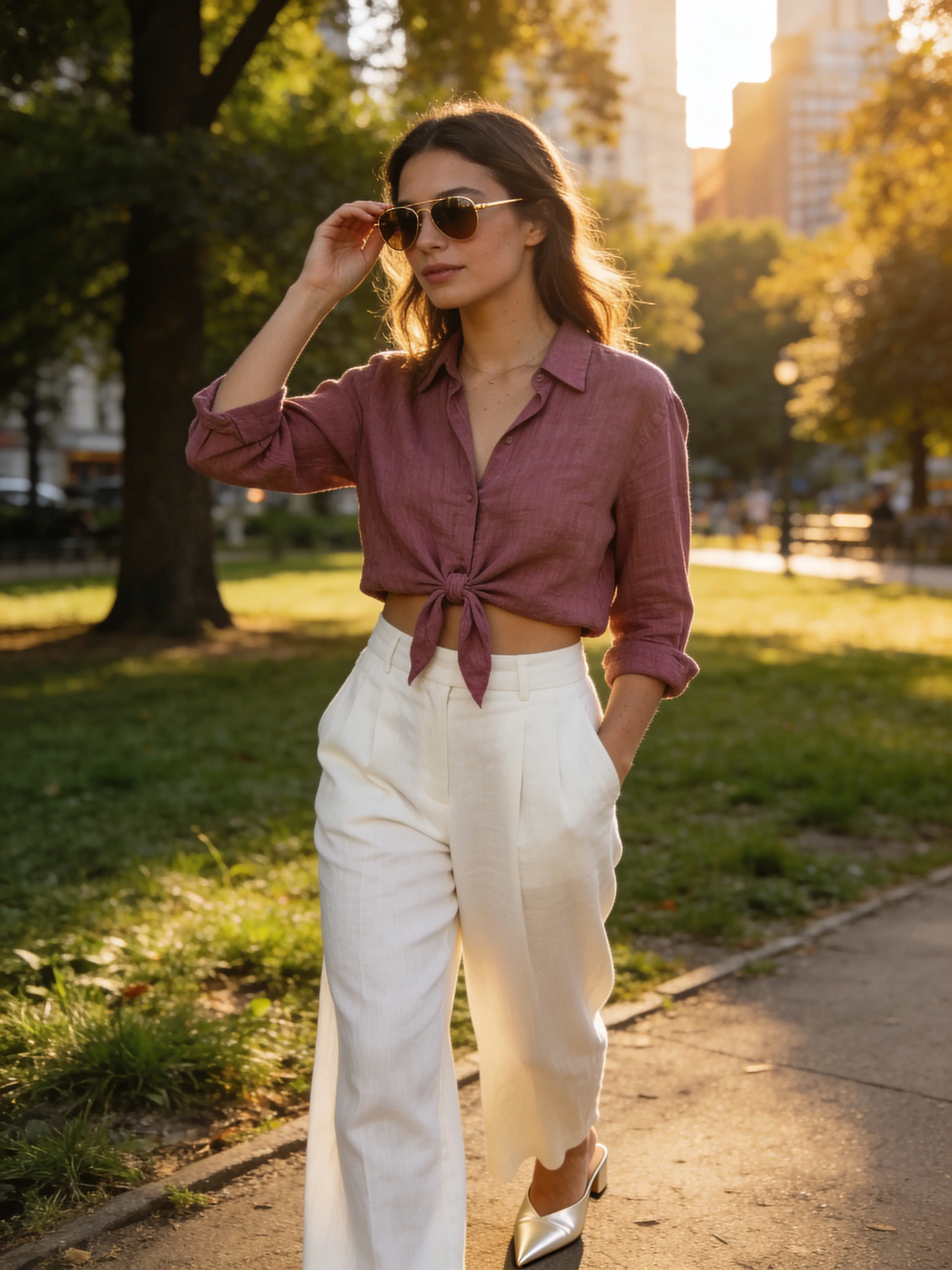
At 65–74°F the mauve tie-front cropped linen shirt earns its place over ivory wide-leg linen trousers. Ivory pointed-toe mules and aviator sunglasses make the commute feel like an editorial moment.
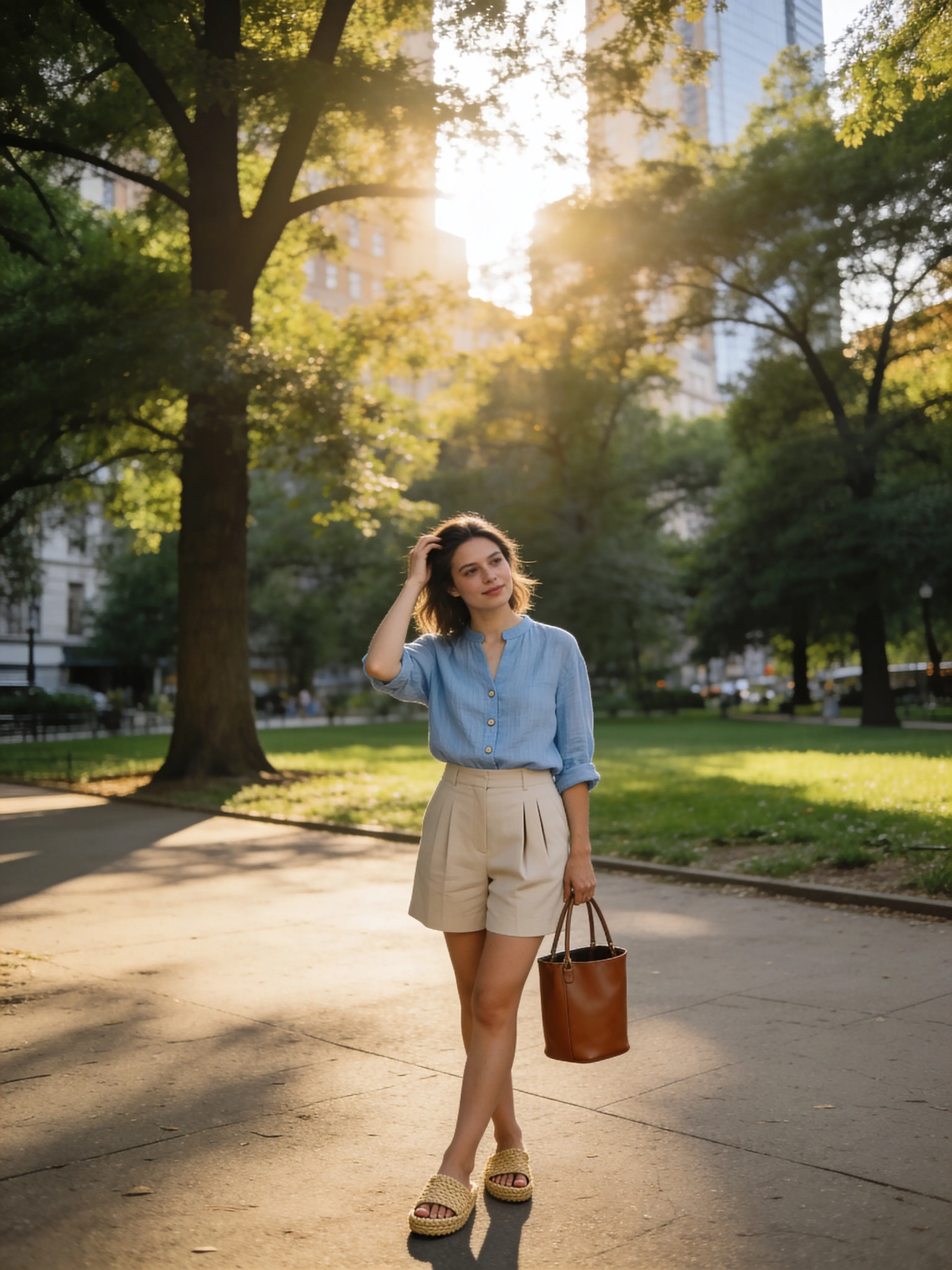
Embrace the 65–74°F sunny weather with a breathable linen shirt, classy bermuda shorts, and espadrilles. Pair it with a class bucket bag for that summer ready look.
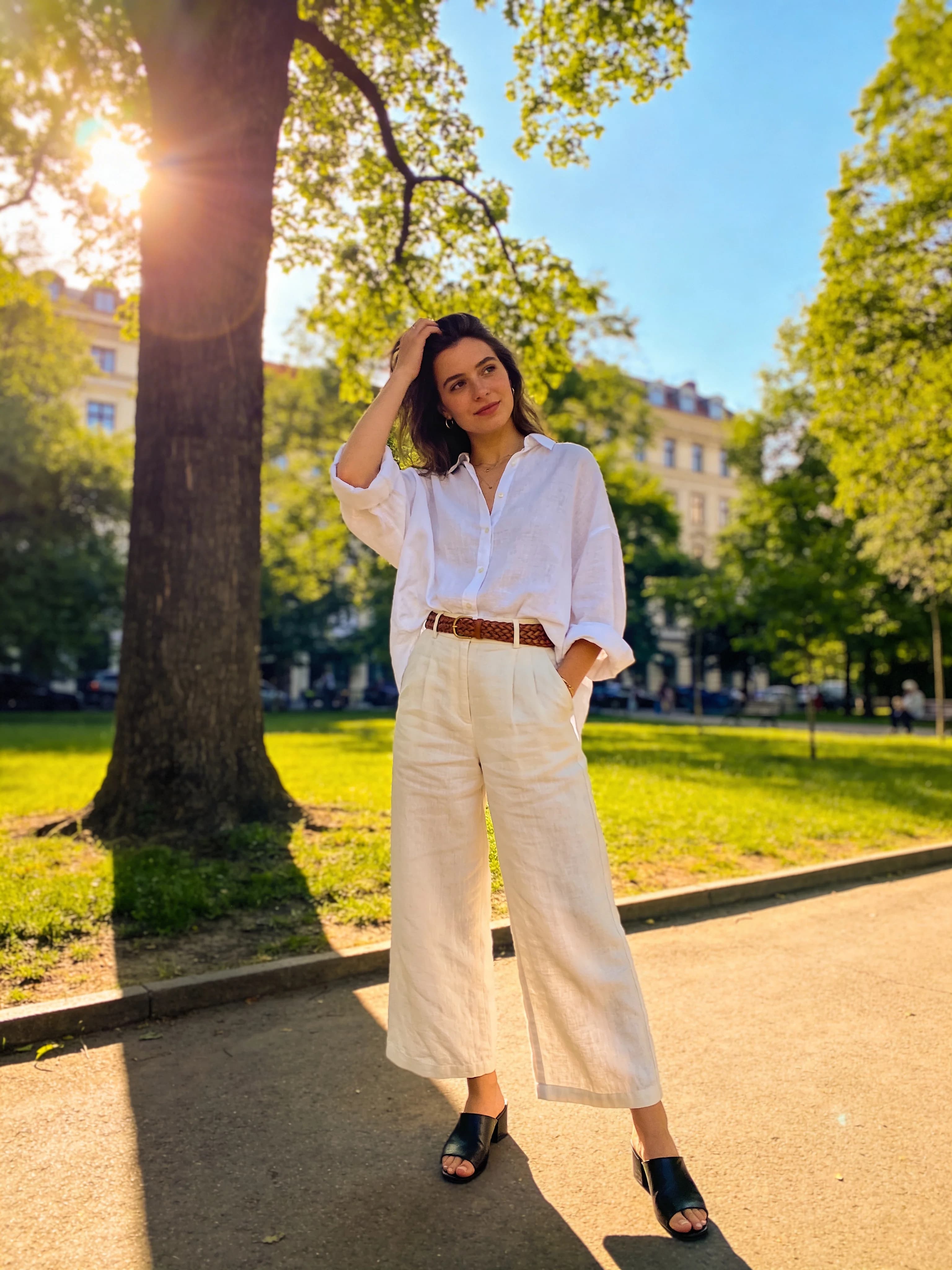
A white oversized button-down with ivory wide-leg linen trousers and a brown woven belt is the warm-clear uniform for someone who doesn't overthink it. Black mule heels are the one decisive choice.
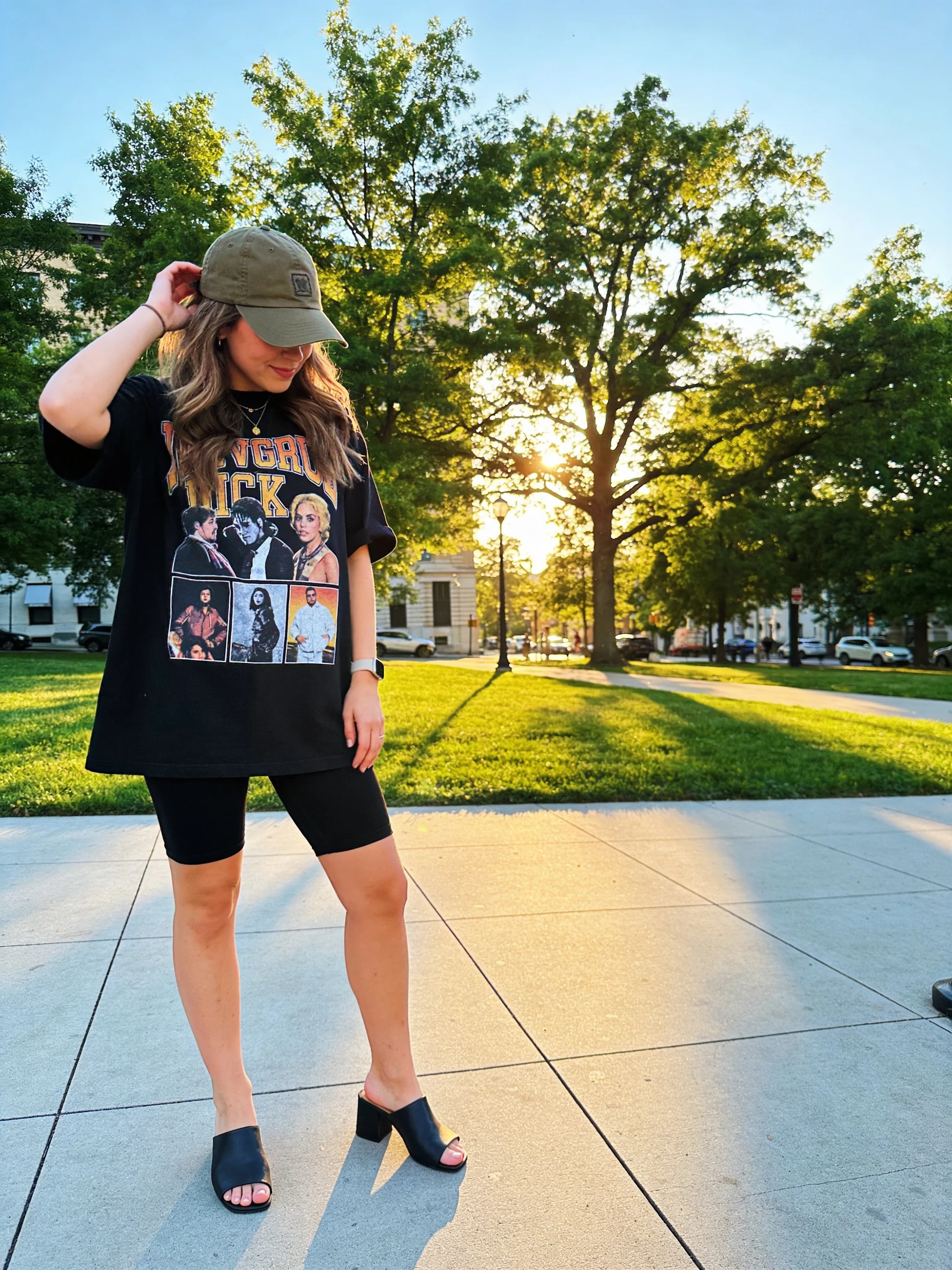
A black graphic tee over biker shorts with mule heels is the warm-day sporty look that works from coffee to casual. The olive baseball cap adds a directional touch.
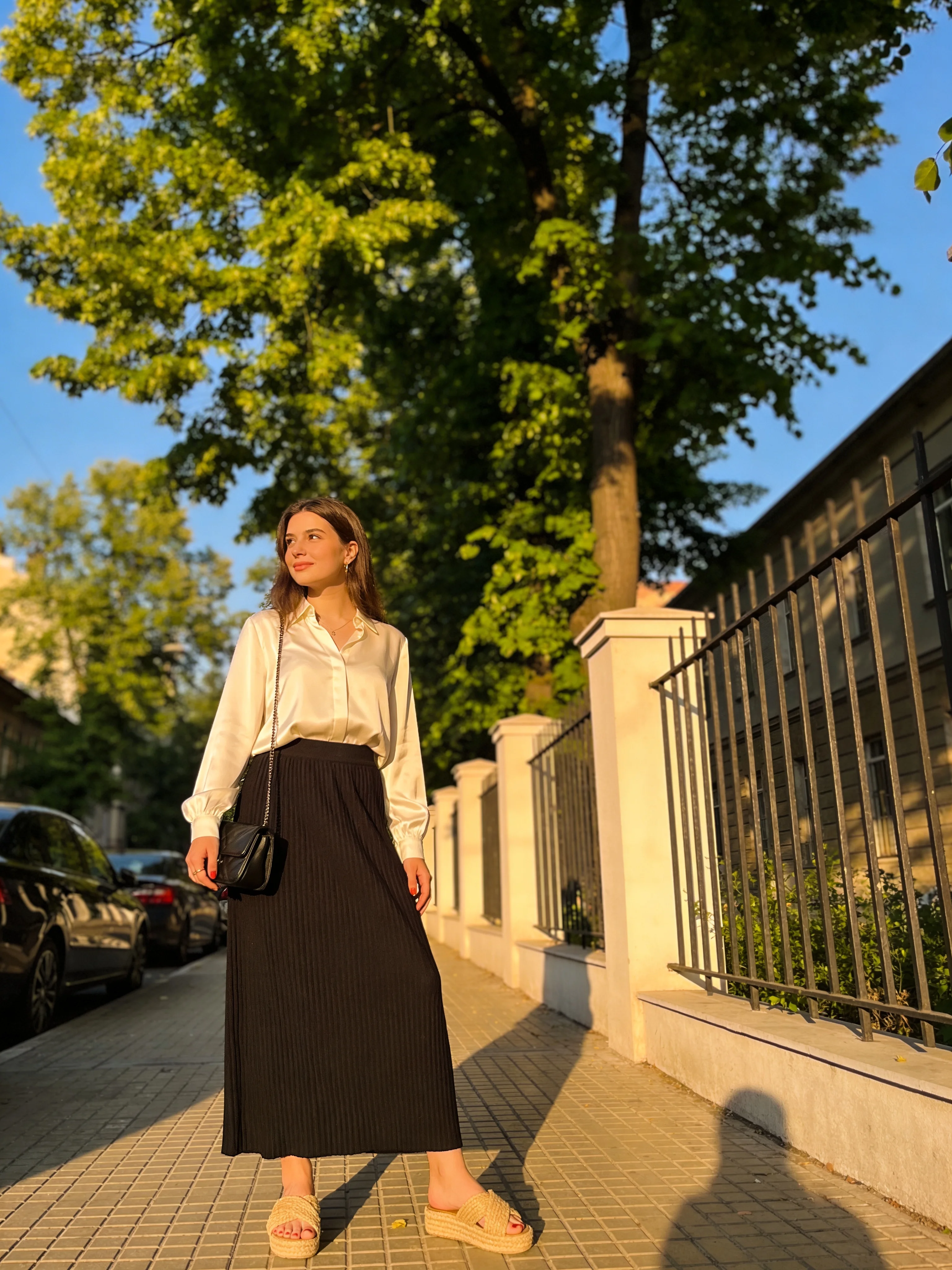
An ivory silk-look blouse tucked into a black pleated maxi skirt is the warm-clear formal look with evening flexibility. Espadrilles and a black mini bag make it daytime without losing the occasion feel.
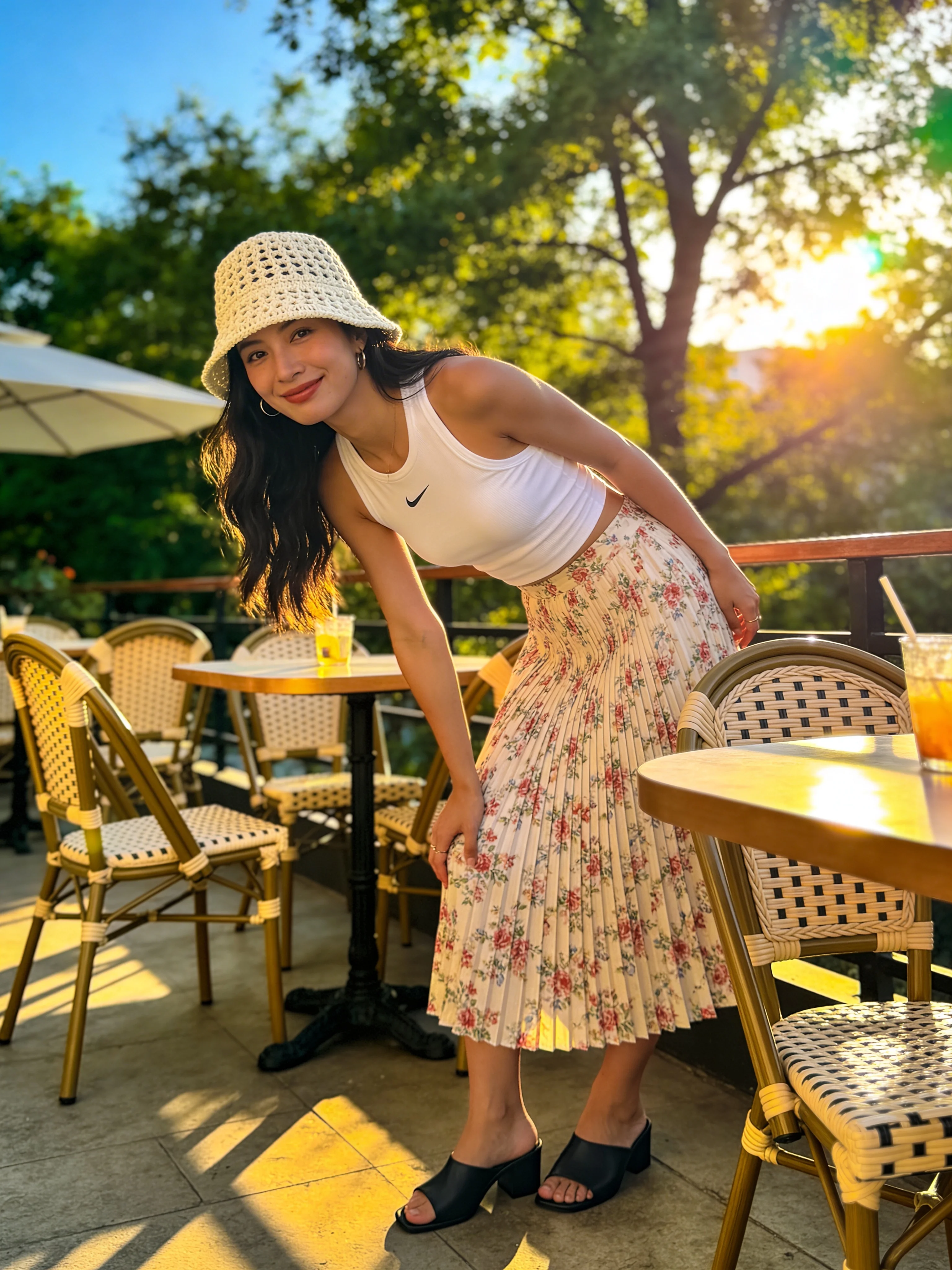
A floral pleated midi skirt with a white fitted tank and black mules reads warm-day dressed-up without veering formal. A crochet bucket hat shifts the mood back to weekend.
Packing List
What to Pack for Seattle →
Best shoes
Best shoes for Seattle — by month →
Climate-matched walking shoes, waterproof boots, and sandals.
See typical weather and outfit ideas for Seattle in any month of the year.
Seattle winters are mild but consistently damp and cool. Prioritize waterproof and windproof outerwear, such as a sturdy rain jacket, over heavy parkas. Layering with sweaters or fleece under your shell is essential for warmth, and waterproof boots are highly recommended for navigating wet streets and trails.
Seattle summers (July-September) are typically warm, sunny, and dry, making light clothing like t-shirts, shorts, and dresses suitable for daytime. However, evenings can cool down significantly, so always pack a light sweater, cardigan, or denim jacket. Comfortable walking shoes are a must for exploring.
Seattle is generally not considered extremely cold, especially when compared to other northern cities. Winters are cool and damp, with temperatures typically ranging from 35-50°F (2-10°C), and rarely dropping below freezing for extended periods. Summers are warm and pleasant, usually in the 70s°F (20s°C).
Seattle's weather is characterized by mild temperatures year-round, but distinct seasonal patterns. From October to May, expect frequent cloudy skies, light rain or drizzle, and cool temperatures. Summers, from July to September, are notably dry, warm, and sunny, offering a beautiful contrast. Spring and fall are transitional, often a mix of both.
Packing tools
Free calculators — city and month pre-filled when we know them. No account required. Start with how many outfits, sudoku packing, or bag fees.
Trip
Planning a trip to one city?
One city → typical weather for your month, packing counts that fit your bags, and email your plan.
Outfits
How many outfits for this trip?
Trip length, bag size, and climate → exact tops, bottoms, layers, and outfit combinations.
Jacket
Not sure about a jacket?
City + month → base / mid / shell stack and pack-or-skip verdicts for rain jacket, coat, and thermals.
Shoes
Shoes for this climate?
Climate, activities, and bag size → pair count, primary/backup types, and climate-matched picks.
Bags
Will this trip cost bag fees?
Airline + fare bucket + bags you plan to bring → fit verdicts and typical carry-on / checked fee ranges.
Capsule
Try sudoku packing for this climate?
City + month → climate-ready 3 tops / 3 bottoms / 3 layers you can edit — up to 27 mix-and-match outfits.