Sporty
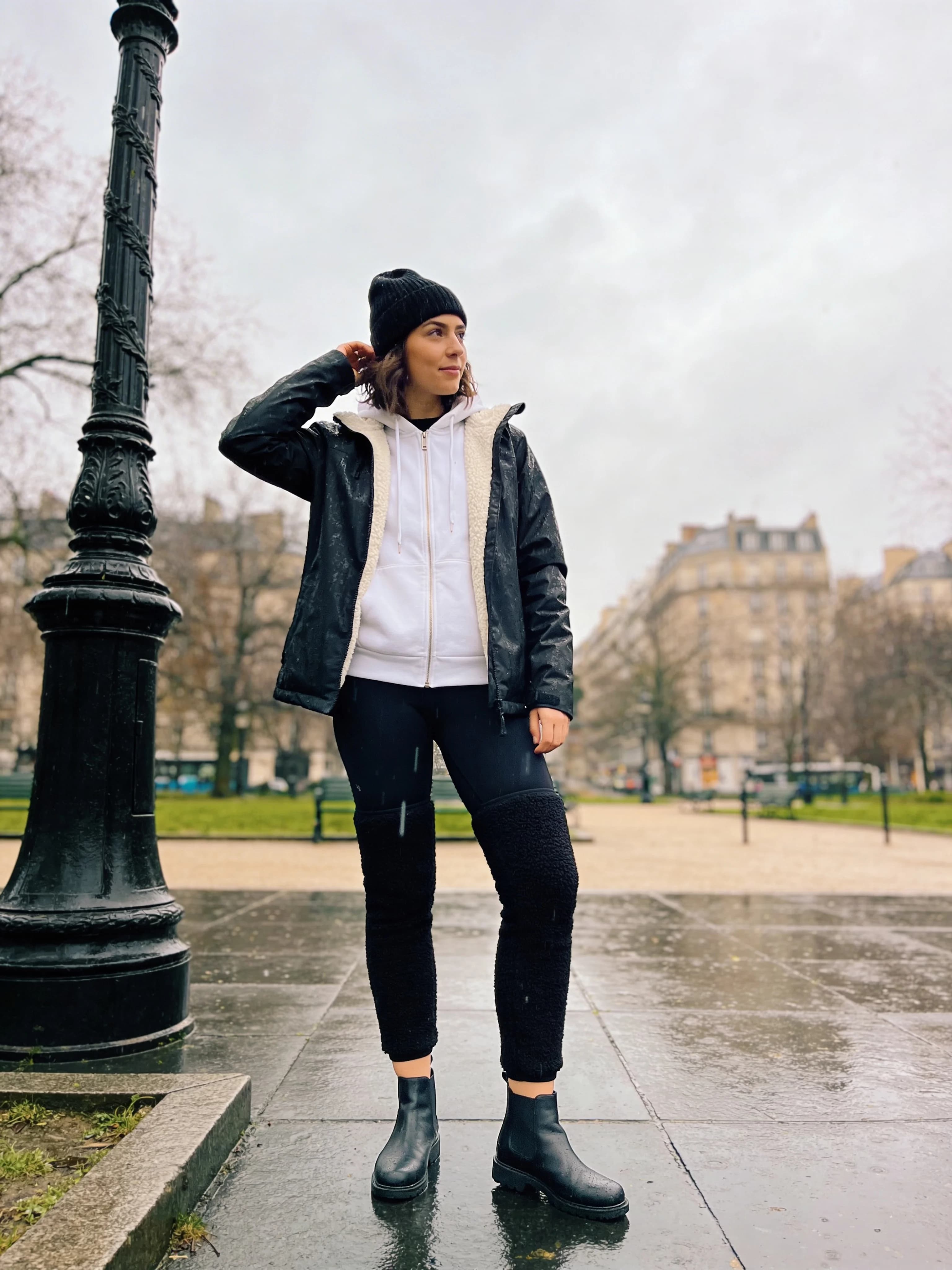
Rain Jacket Zip Layer
A black rain jacket over a white zip-up hoodie is the light-rain sporty combination that stays clean in colour. Fleece leggings and Chelsea boots handle the rest.
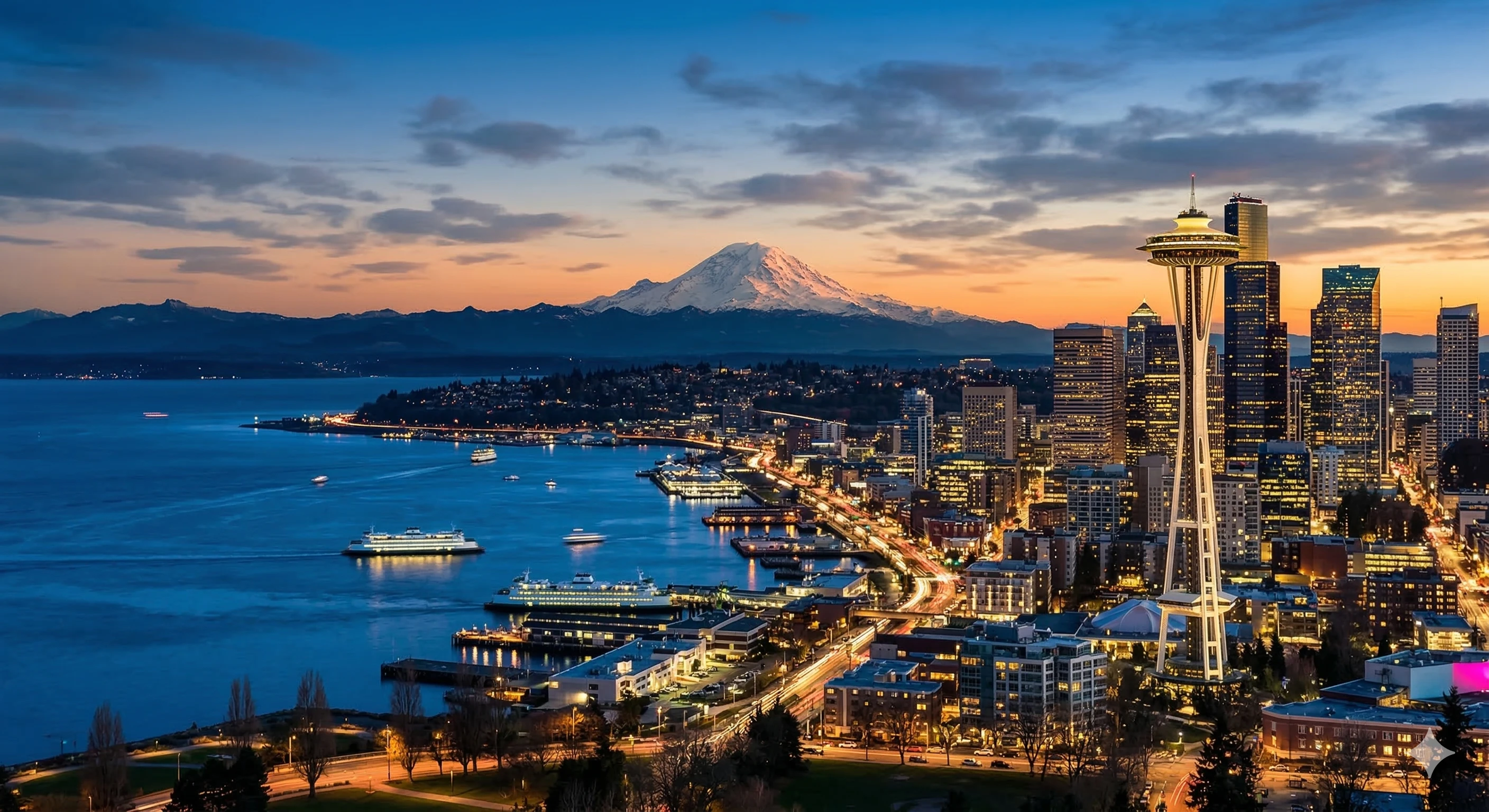
December in Seattle is the city's wettest month, with highs averaging 46°F and lows near 37°F across roughly 17 days of precipitation — a genuine waterproof shell and waterproof footwear are not optional. Pike Place Market, the Capitol Hill neighborhood, and the Elliott Bay waterfront are atmospheric under persistent drizzle but require full rain gear to enjoy without arriving soaked. Seattle's rain tends to come as relentless light drizzle rather than heavy downpours, which makes a proper shell more essential than an umbrella.
Also packing for this trip?
Full December packing list for Seattle →
Checklist of clothes, shoes, and gear — separate from these outfit ideas.
Compare prices across top booking sites for Dec 1–4.
Powered by Hotellook · prices from Booking.com, Agoda, and more

top / Long-Sleeve Top
fitted long-sleeve

bottom / Jeans
straight-leg
chinos for a slightly smarter look

footwear / Waterproof Boots
ankle boots
rubber sole for traction — keep feet dry all day
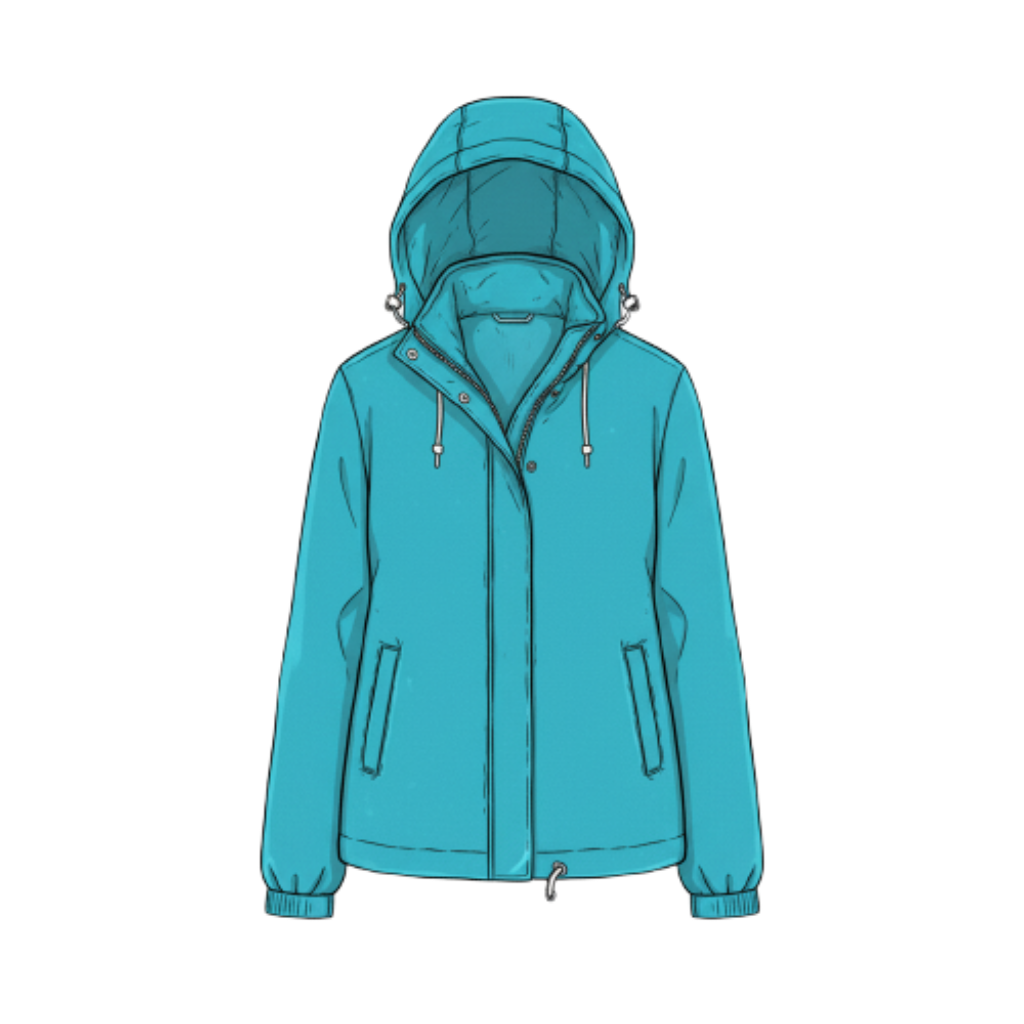
outerwear / Rain Jacket
shell jacket
waterproof or DWR-treated — keep it packable
Based on typical December conditions in Seattle. Weather varies year to year — check the live forecast when you're within two weeks of your trip.
December in Seattle ushers in the city's quintessential cool, damp, and decidedly grey weather. Expect average daytime temperatures ranging from the low to mid-40s°F (5-7°C), with nighttime lows hovering in the mid-30s°F (2-4°C). While heavy snowfall is uncommon, light flurries can occur, though persistent rain remains the primary precipitation. December is historically one of Seattle's wettest months, characterized by frequent drizzles and persistent overcast skies rather than intense downpours. The short daylight hours and pervasive dampness mean strategic layering is paramount for comfort. To navigate Seattle's December climate stylishly and practically, prioritize warmth and waterproofing. A high-quality, waterproof and windproof outer jacket is non-negotiable – ideally one with a hood. Beneath, build your outfit with moisture-wicking base layers, followed by insulating mid-layers like wool sweaters or fleece. For footwear, waterproof boots with good traction are essential for comfortable exploration of the city's hills and waterfronts. Don't forget accessories: a warm hat, gloves, and a scarf will provide crucial extra protection against the brisk air and persistent dampness, ensuring you stay cozy while enjoying the festive Pacific Northwest atmosphere.
A black rain jacket over a white zip-up hoodie is the light-rain sporty combination that stays clean in colour. Fleece leggings and Chelsea boots handle the rest.
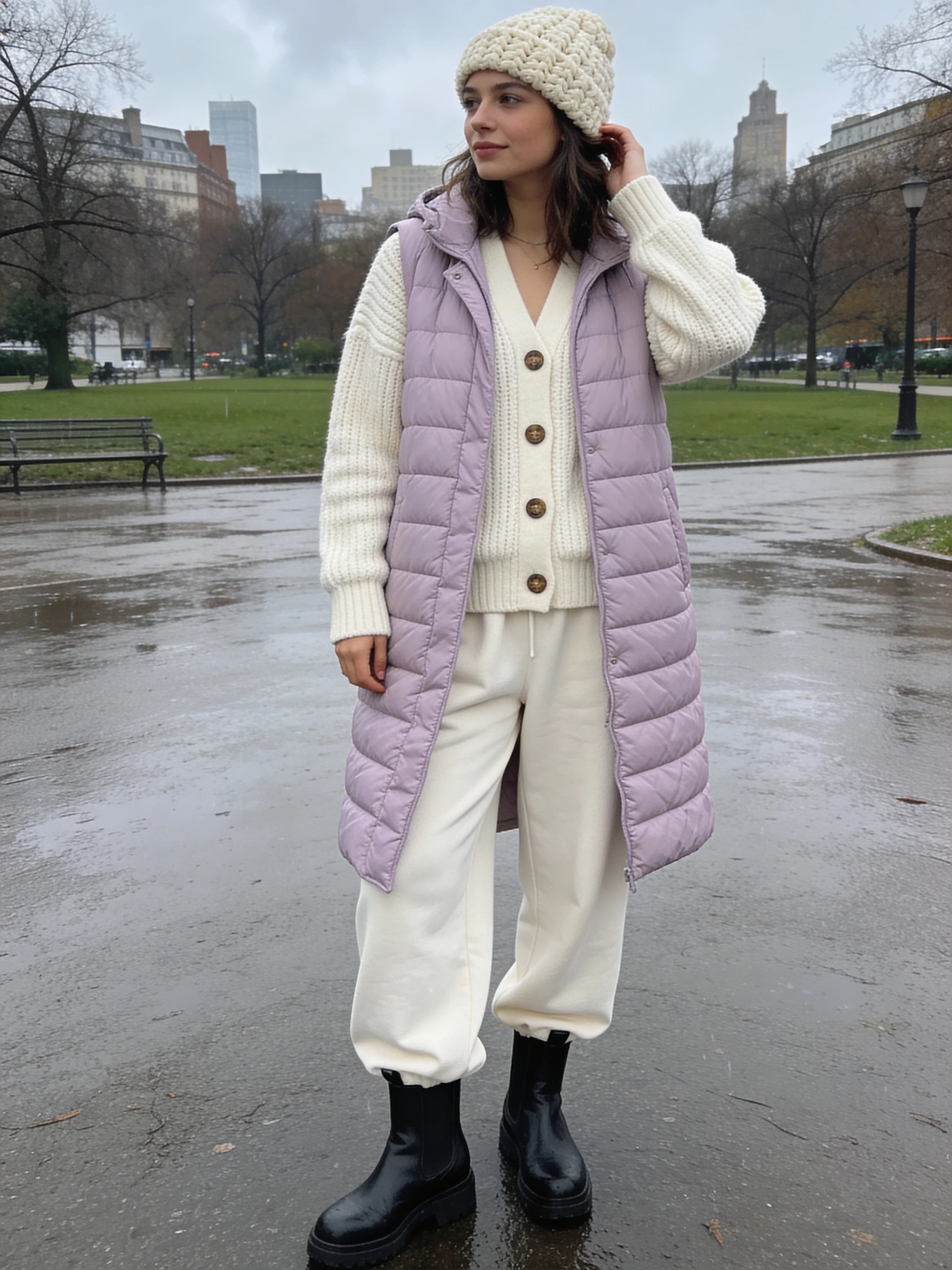
A pastel lilac vest over a cream cardigan and wide-leg sweatpants reads softly in light rain. Black Chelsea boots are the only contrast in this muted palette.
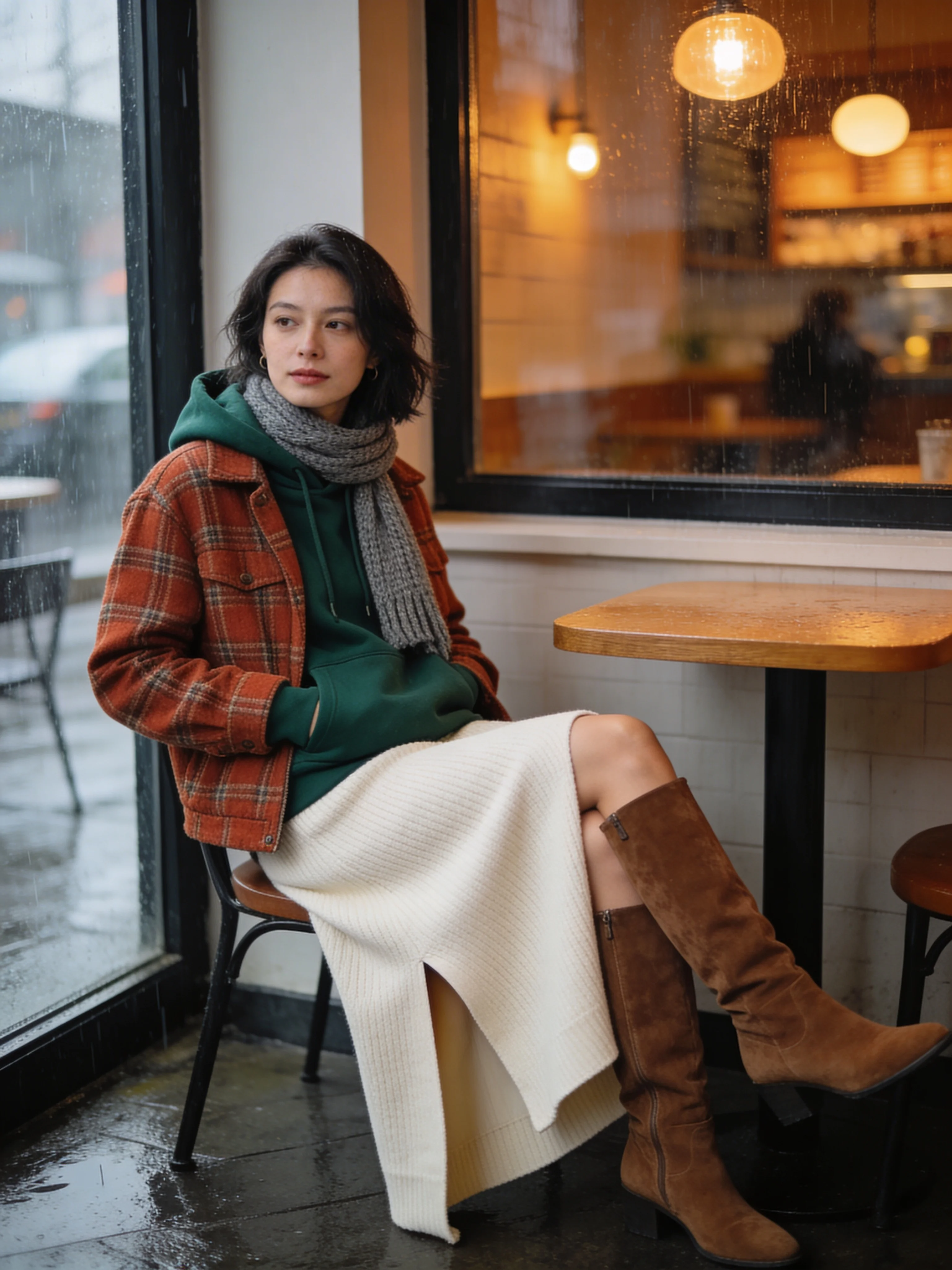
A rust plaid shacket works as jacket and top layer in light rain. Suede knee-high boots and a cream maxi skirt carry the look when the weather clears.
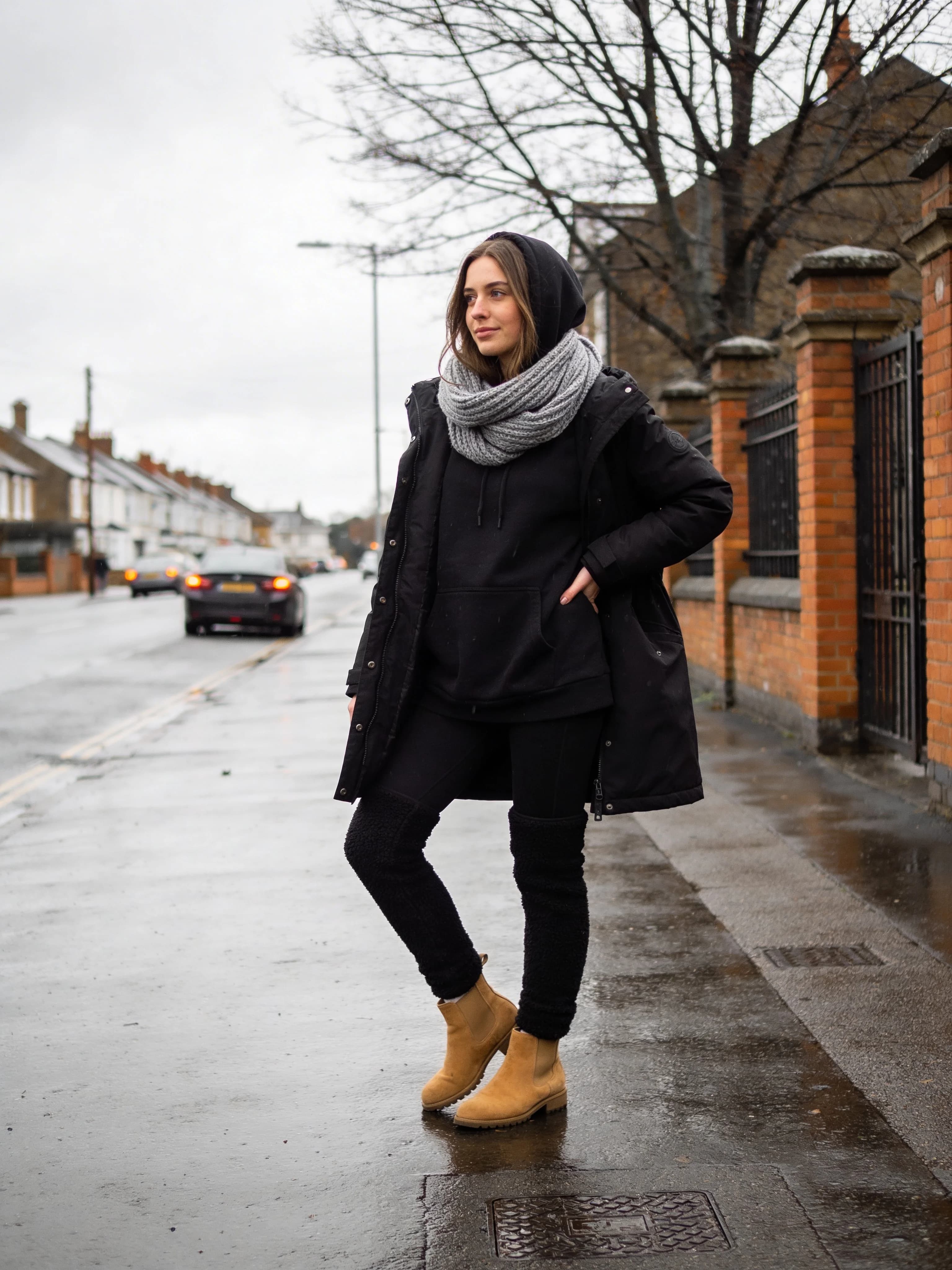
A black longline parka over an oversized hoodie and fleece-lined leggings handles everything light rain brings. Tan Chelsea boots and a grey scarf soften the all-black stack.
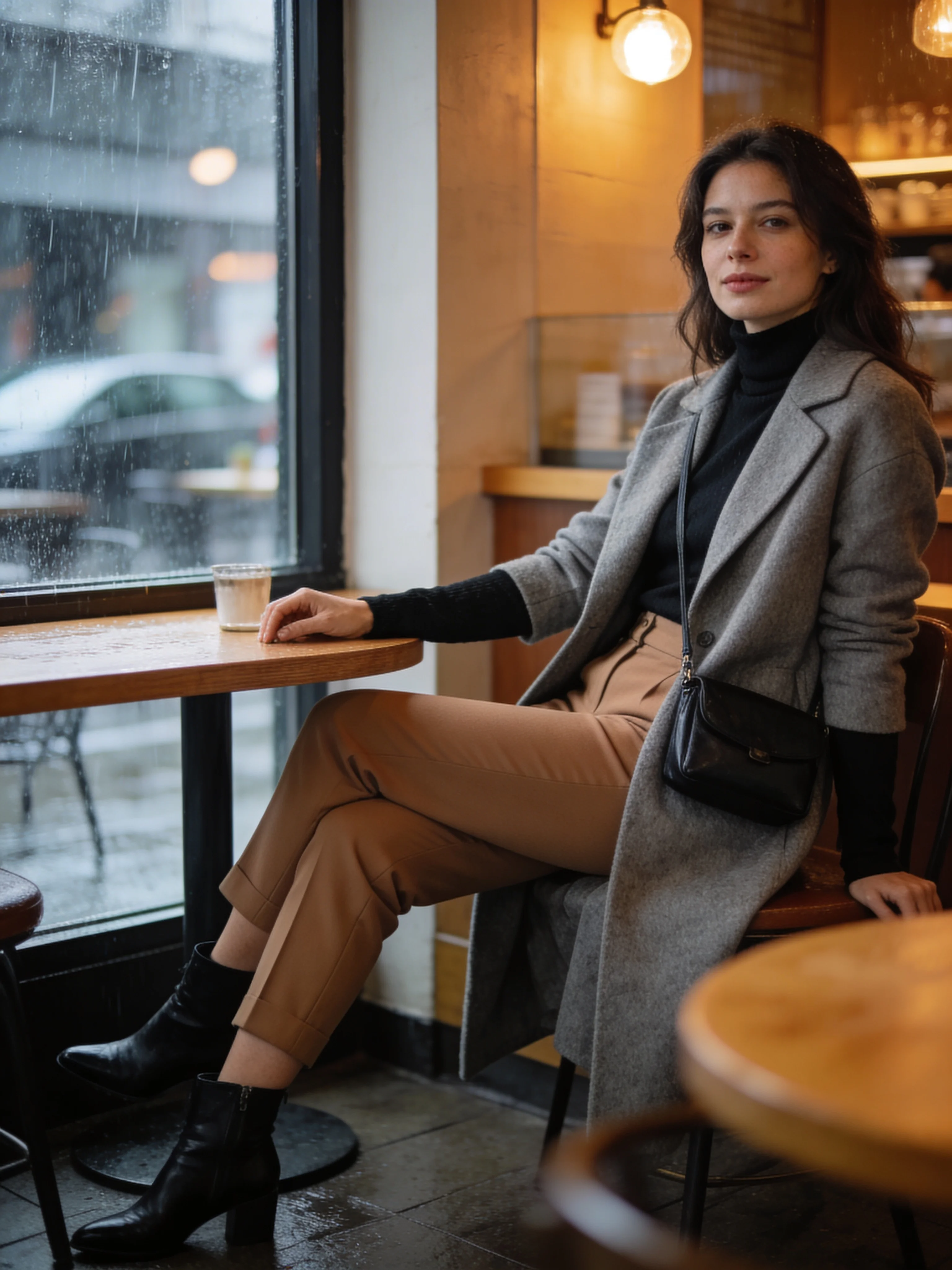
A grey longline coat over camel trousers and a black turtleneck holds formal presence through light rain. The black mini shoulder bag keeps what needs carrying close.
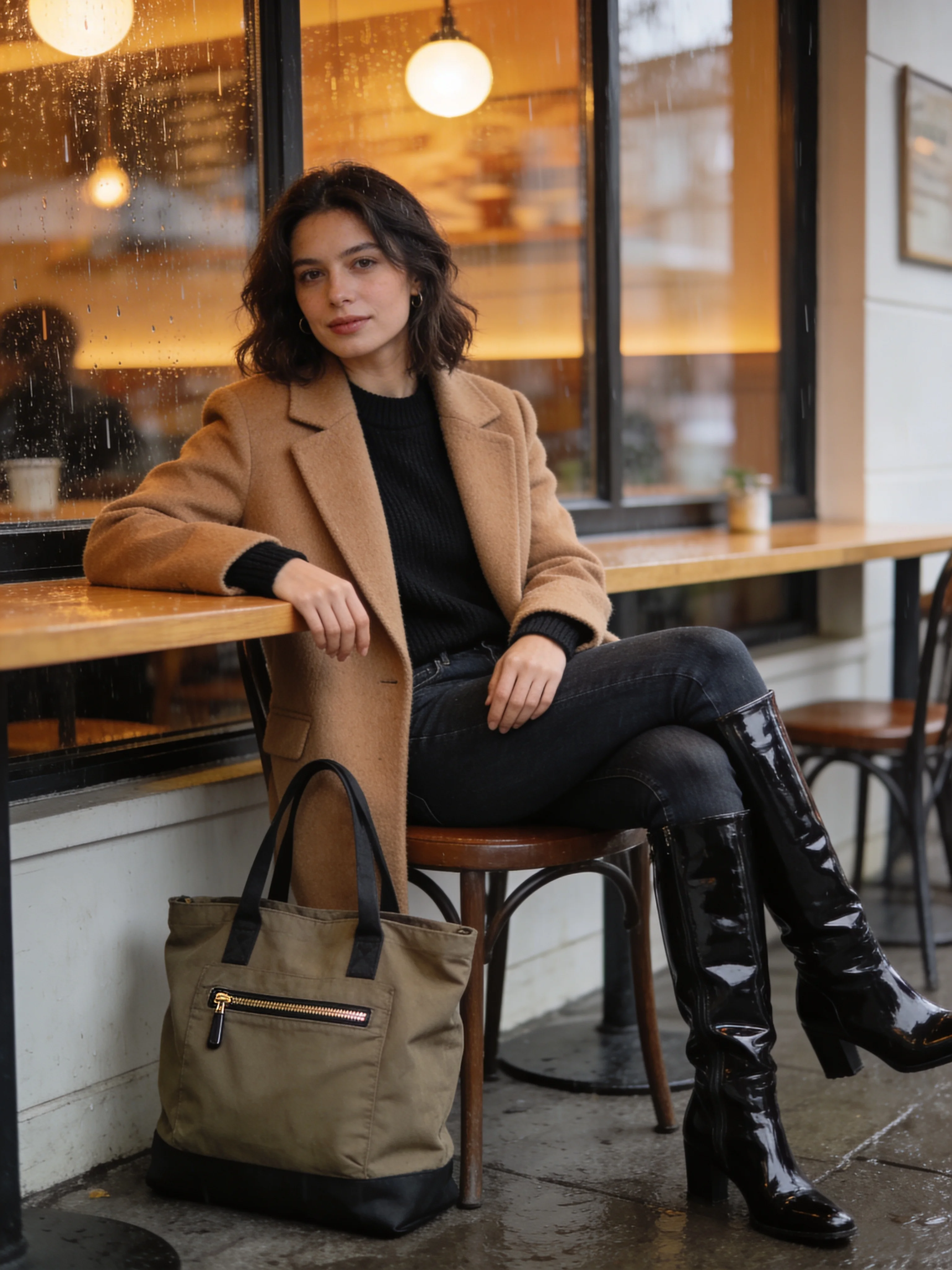
A camel coat over dark jeans and a black crewneck gains editorial edge from patent leather thigh-high boots in light rain. A canvas tote keeps the rest functional.
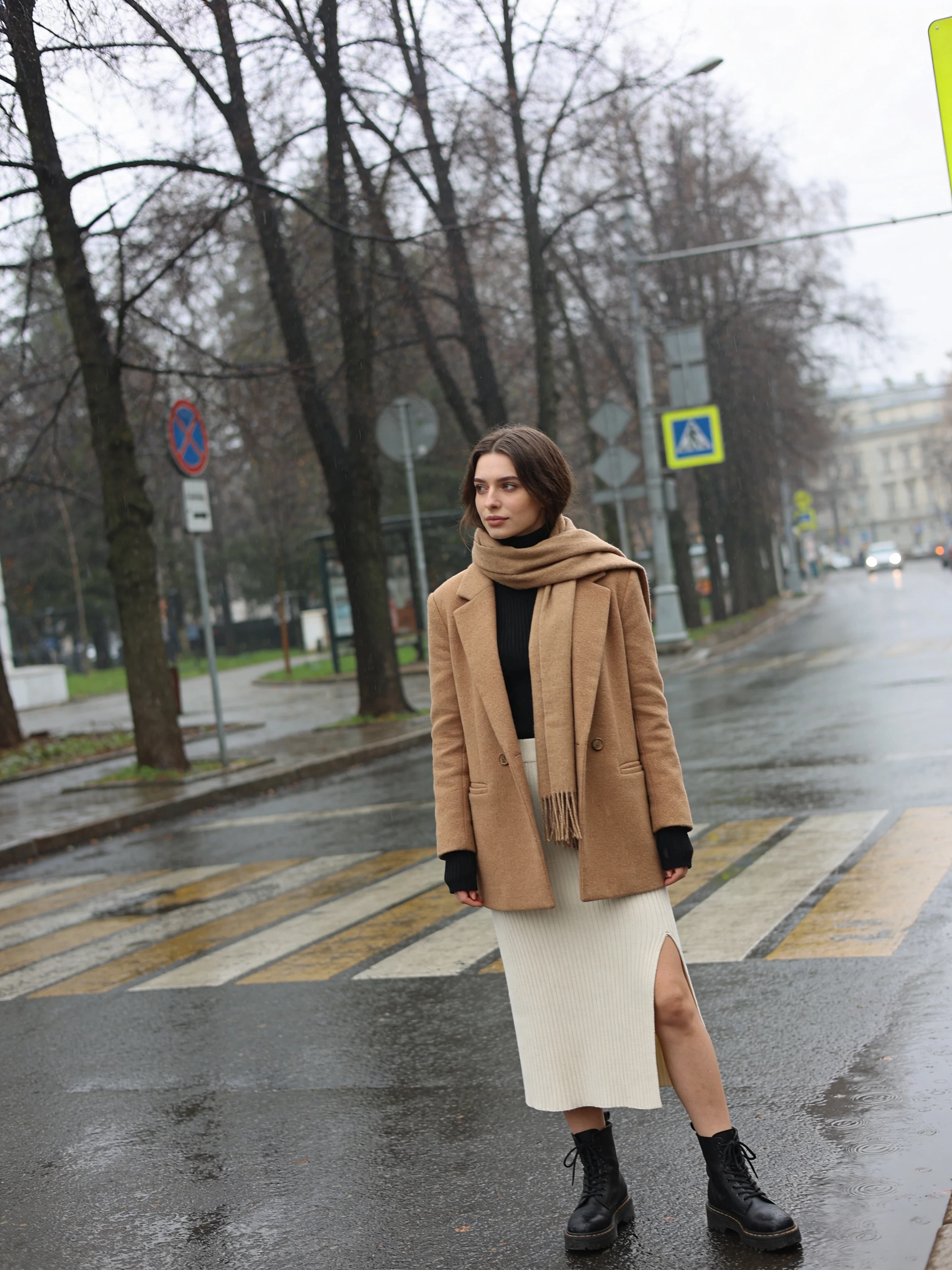
A camel coat over a black turtleneck and cream maxi skirt cuts a strong silhouette in light rain. Black combat boots under the skirt are the editorial surprise that makes it.
To confidently tackle Seattle's December weather, focus on a comprehensive layering strategy. Begin with a moisture-wicking base, add insulating mid-layers like sweaters or fleece, and top it all with a waterproof and windproof outer jacket, preferably hooded. Essential footwear includes waterproof boots with good traction, ensuring comfort during urban explorations.
Seattle in December is generally cool and damp, rather than intensely cold. Daytime temperatures typically range from the low to mid-40s°F (5-7°C), while nights hover around the mid-30s°F. The persistent dampness and occasional wind can make the air feel colder than the thermometer indicates, necessitating warm, protective clothing.
Yes, December is one of Seattle's wettest months, so expect frequent rain. While heavy downpours are less common, persistent drizzle and light rain are typical, often accompanied by overcast skies. A waterproof outer layer is essential to stay dry, even if you don't always need an umbrella.
For a December trip to Seattle, pack a quality waterproof and windproof jacket with a hood, along with warm, layered clothing such as wool sweaters, fleece, and thermal undershirts. Essential items also include waterproof boots for walking, and accessories like a warm hat, gloves, and a scarf. Consider a small, packable umbrella, though many locals rely on jacket hoods.
Packing tools
Free calculators — city and month pre-filled when we know them. No account required. Start with how many outfits, sudoku packing, or bag fees.
Trip
Planning a trip to one city?
One city → typical weather for your month, packing counts that fit your bags, and email your plan.
Outfits
How many outfits for this trip?
Trip length, bag size, and climate → exact tops, bottoms, layers, and outfit combinations.
Jacket
Not sure about a jacket?
City + month → base / mid / shell stack and pack-or-skip verdicts for rain jacket, coat, and thermals.
Shoes
Shoes for this climate?
Climate, activities, and bag size → pair count, primary/backup types, and climate-matched picks.
Bags
Will this trip cost bag fees?
Airline + fare bucket + bags you plan to bring → fit verdicts and typical carry-on / checked fee ranges.
Capsule
Try sudoku packing for this climate?
City + month → climate-ready 3 tops / 3 bottoms / 3 layers you can edit — up to 27 mix-and-match outfits.