Formal
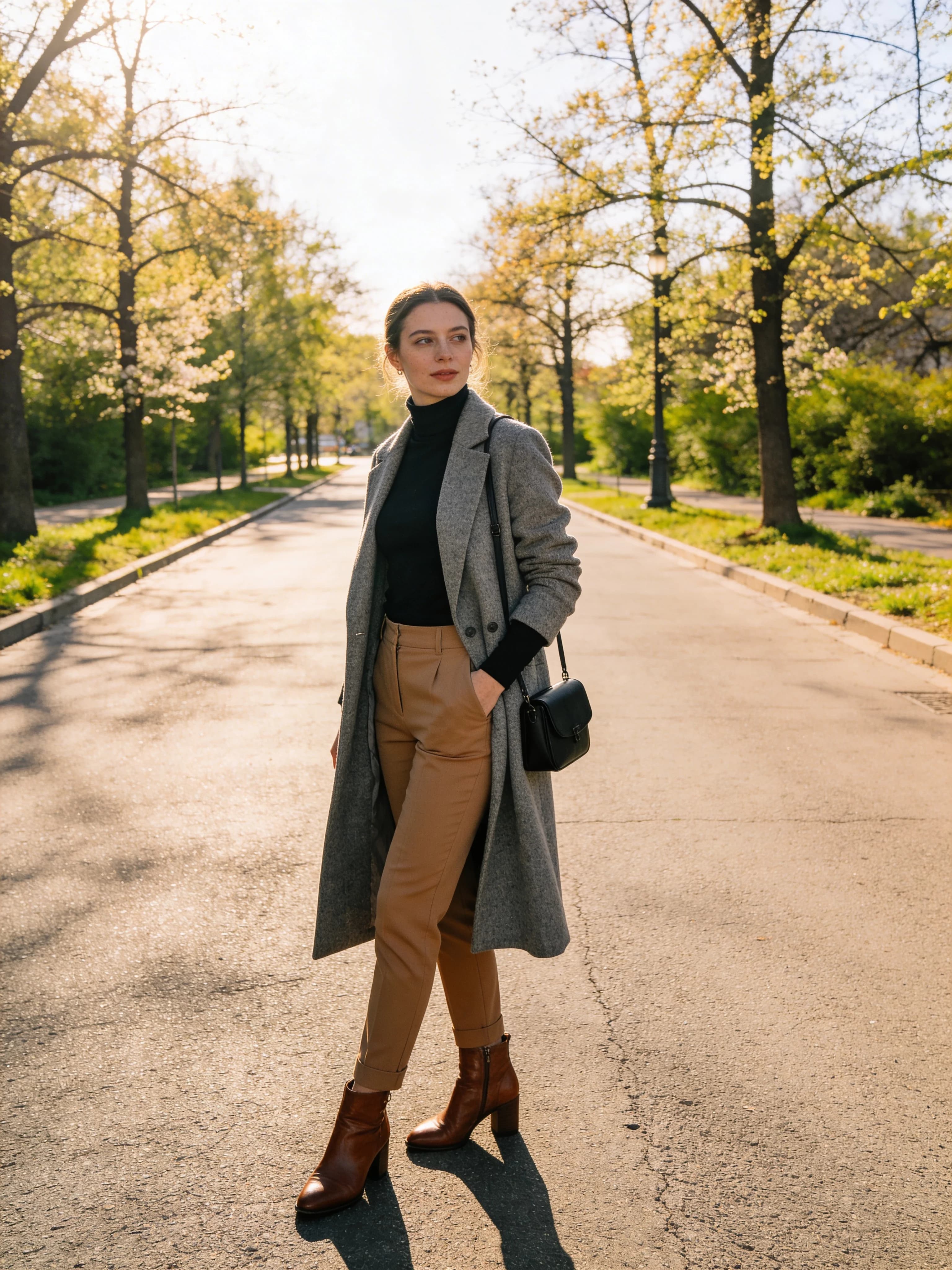
Grey Coat Brown Formal
A grey longline coat worn over camel trousers and a black turtleneck on a cool clear day earns its occasion. Brown leather ankle boots add warmth without disrupting the clean lines.
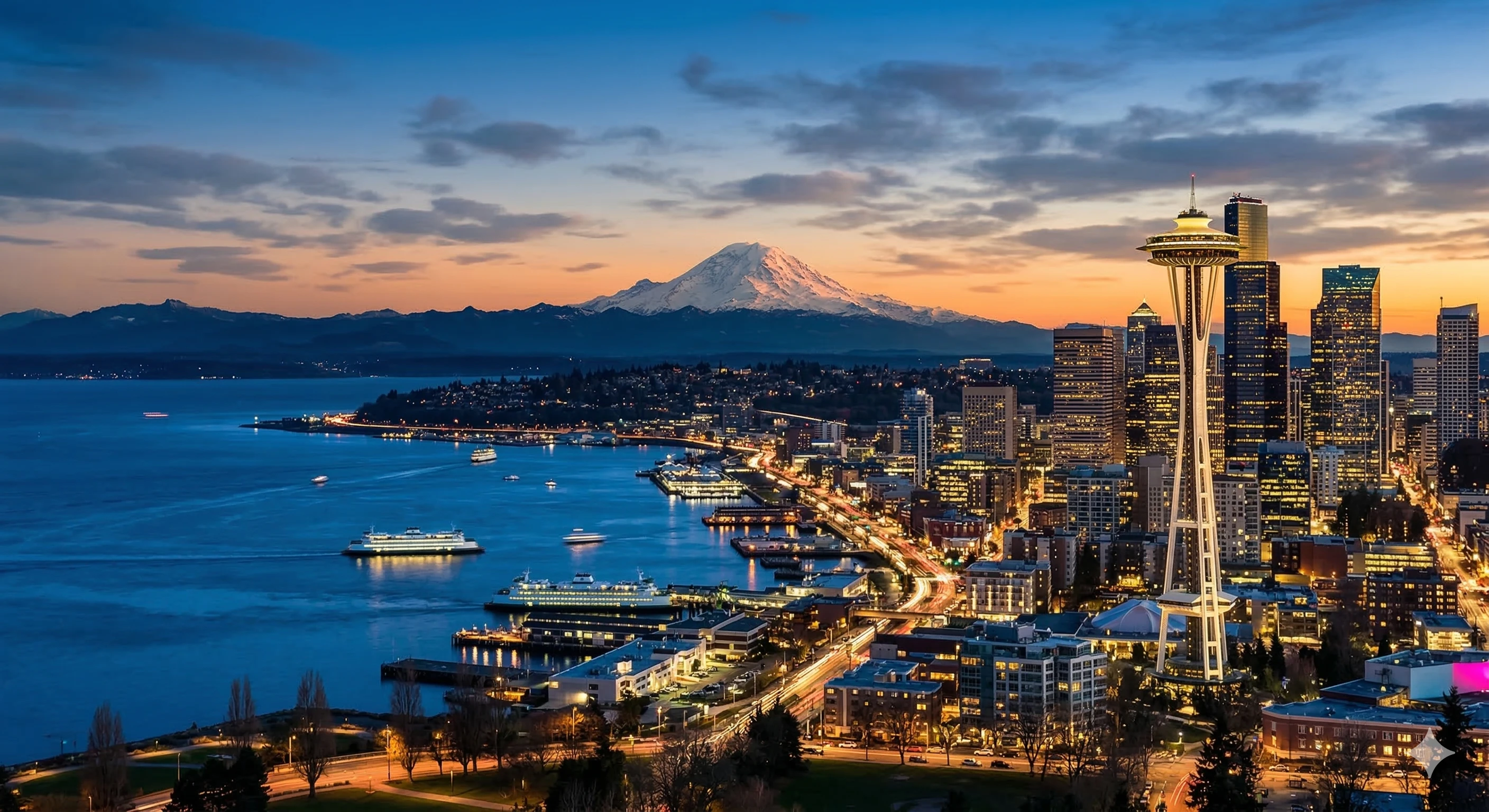
January in Seattle is among the wettest months, with highs averaging 47°F and lows near 37°F across roughly 15 days of precipitation — a seam-sealed waterproof shell, waterproof boots, and wool mid-layers are the functional standard for Pike Place Market, the Capitol Hill neighborhood, and the Elliott Bay waterfront. The Pacific rain arrives as persistent drizzle that soaks through light jackets over the course of a day; the Bay wind at the Embarcadero and on exposed ferry crossings to Bainbridge Island drives the real-feel temperature below the air reading.
Also packing for this trip?
Full January packing list for Seattle →
Checklist of clothes, shoes, and gear — separate from these outfit ideas.
Compare prices across top booking sites for Jan 1–4.
Powered by Hotellook · prices from Booking.com, Agoda, and more

top / Long-Sleeve Top
fitted long-sleeve

bottom / Jeans
straight-leg
chinos for a slightly smarter look

footwear / Waterproof Boots
ankle boots
rubber sole for traction — keep feet dry all day

outerwear / Light Jacket
bomber
wind-resistant for crisp mornings that warm up later

top / Hoodie
pullover hoodie
adds warmth without overheating
zip-up hoodie for more flexibility
Based on typical January conditions in Seattle. Weather varies year to year — check the live forecast when you're within two weeks of your trip.
Seattle's January is the Pacific Northwest's wet season near its peak — 15 days of precipitation, near-constant overcast, and the persistent Pacific drizzle that defines the city's winter identity. Highs average 47°F with lows near 37°F, and the combination of marine moisture and limited daylight (less than 9 hours) creates the conditions that inspired Seattle's world-class indoor coffee shop culture. Pike Place Market's covered arcade, the Seattle Art Museum, and the Capitol Hill neighborhood's dense concentration of restaurants and bars are genuinely excellent winter destinations. Seattle's Pacific Northwest cool style reaches maximum waterproofing commitment in January — Gore-Tex or Arc'teryx shells over Merino wool mid-layers, Blundstone or Danner waterproof boots, and wool beanies are the Capitol Hill and Fremont January standard. The city is built for this weather: covered walkways, heated bus shelters, and the density of indoor venues make January in Seattle navigable and enjoyable for anyone dressed appropriately. Umbrellas remain aspirational — locals use proper hoods.
A grey longline coat worn over camel trousers and a black turtleneck on a cool clear day earns its occasion. Brown leather ankle boots add warmth without disrupting the clean lines.
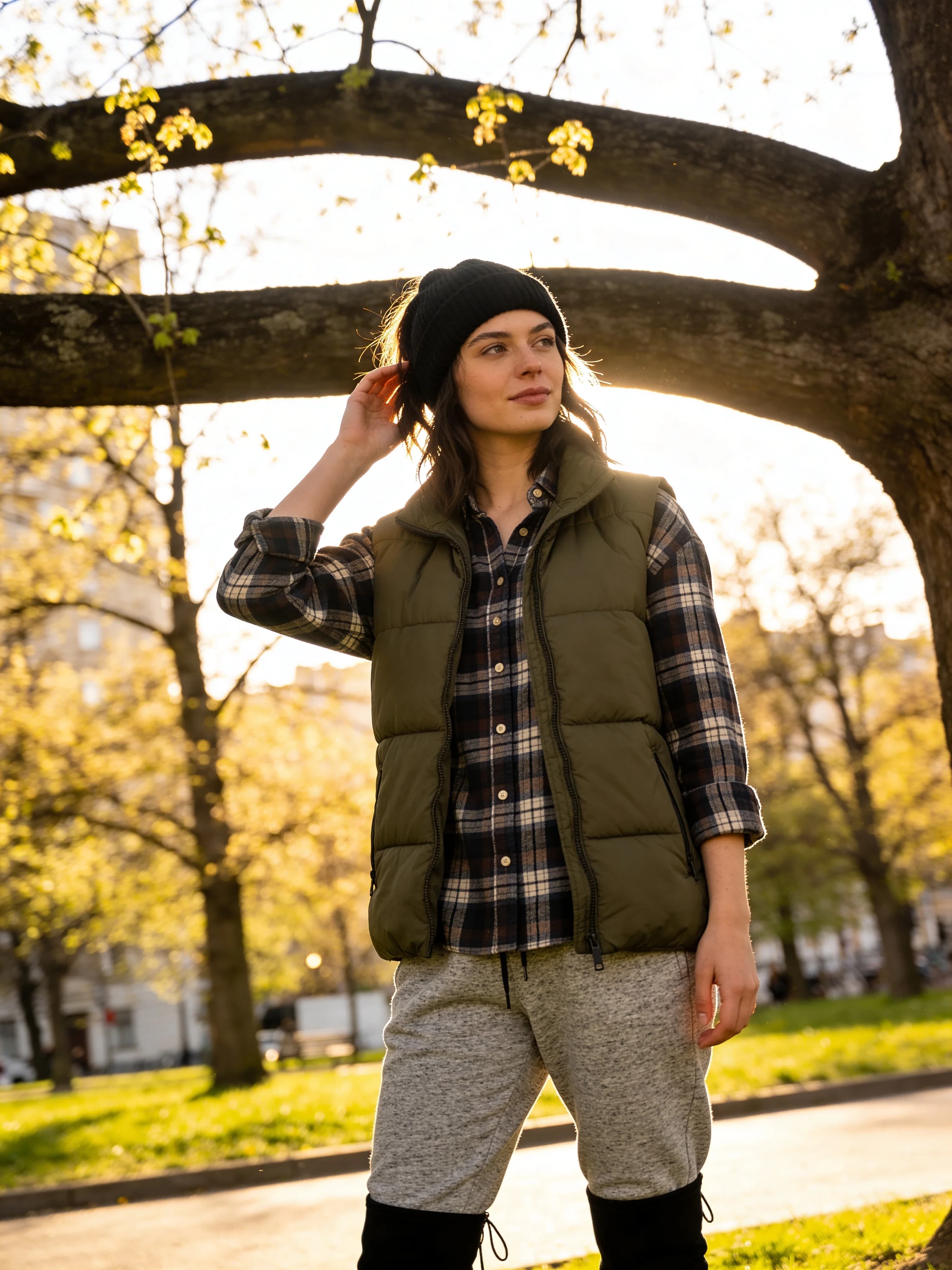
An olive puffer vest over a plaid flannel and grey joggers is the cool-clear casual combination that still looks considered. Black knee-high boots with joggers is the part that shouldn't work — but does.
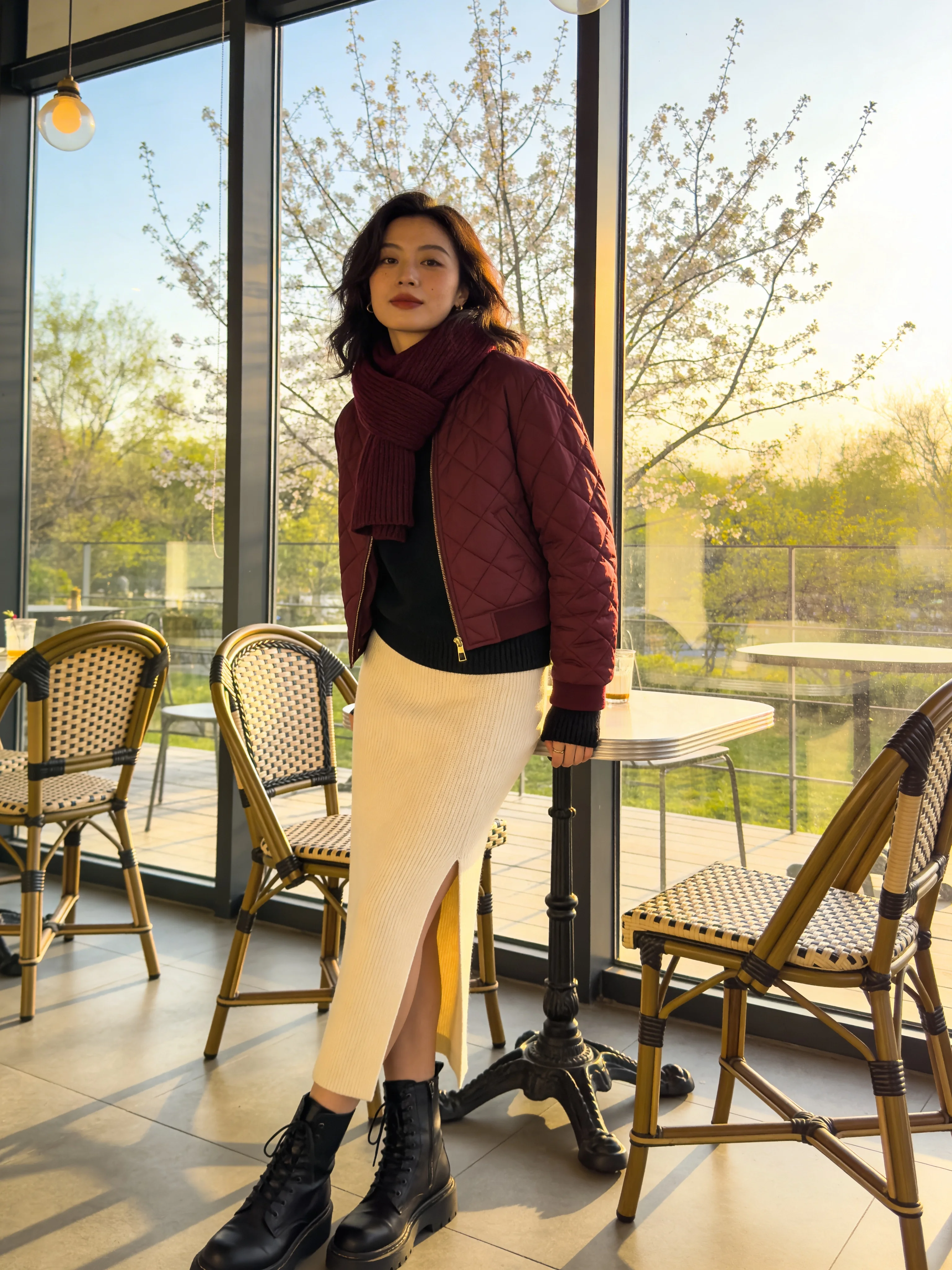
A burgundy quilted jacket over a black crewneck and cream maxi skirt is sharper than the forecast demands on a cool clear day. Black combat boots and a burgundy scarf land the look.
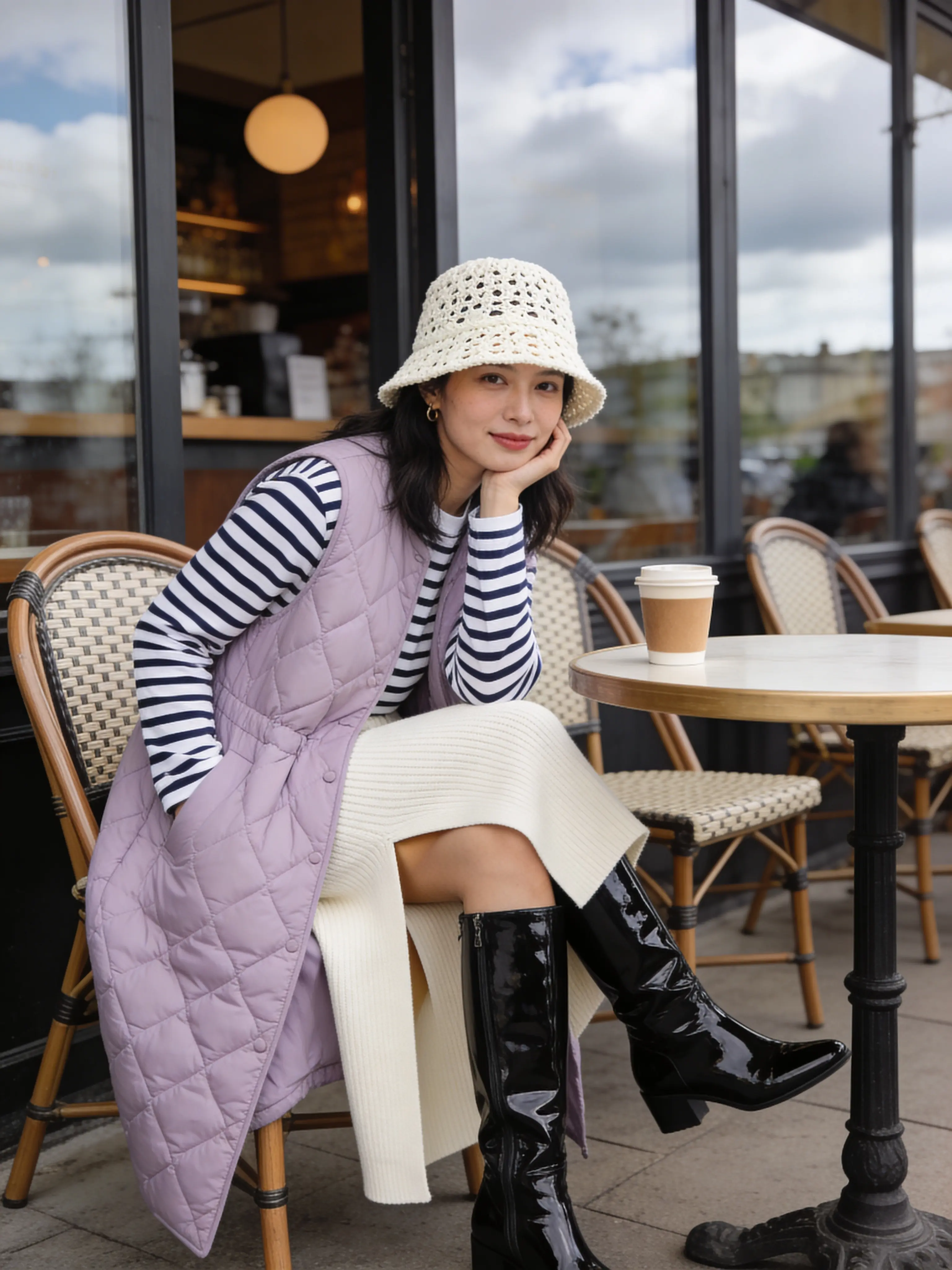
Clear skies at 45–54°F let the quilted lilac vest take the lead over a Breton stripe and cream maxi. Patent thigh-high boots make the whole thing slightly more interesting than expected.
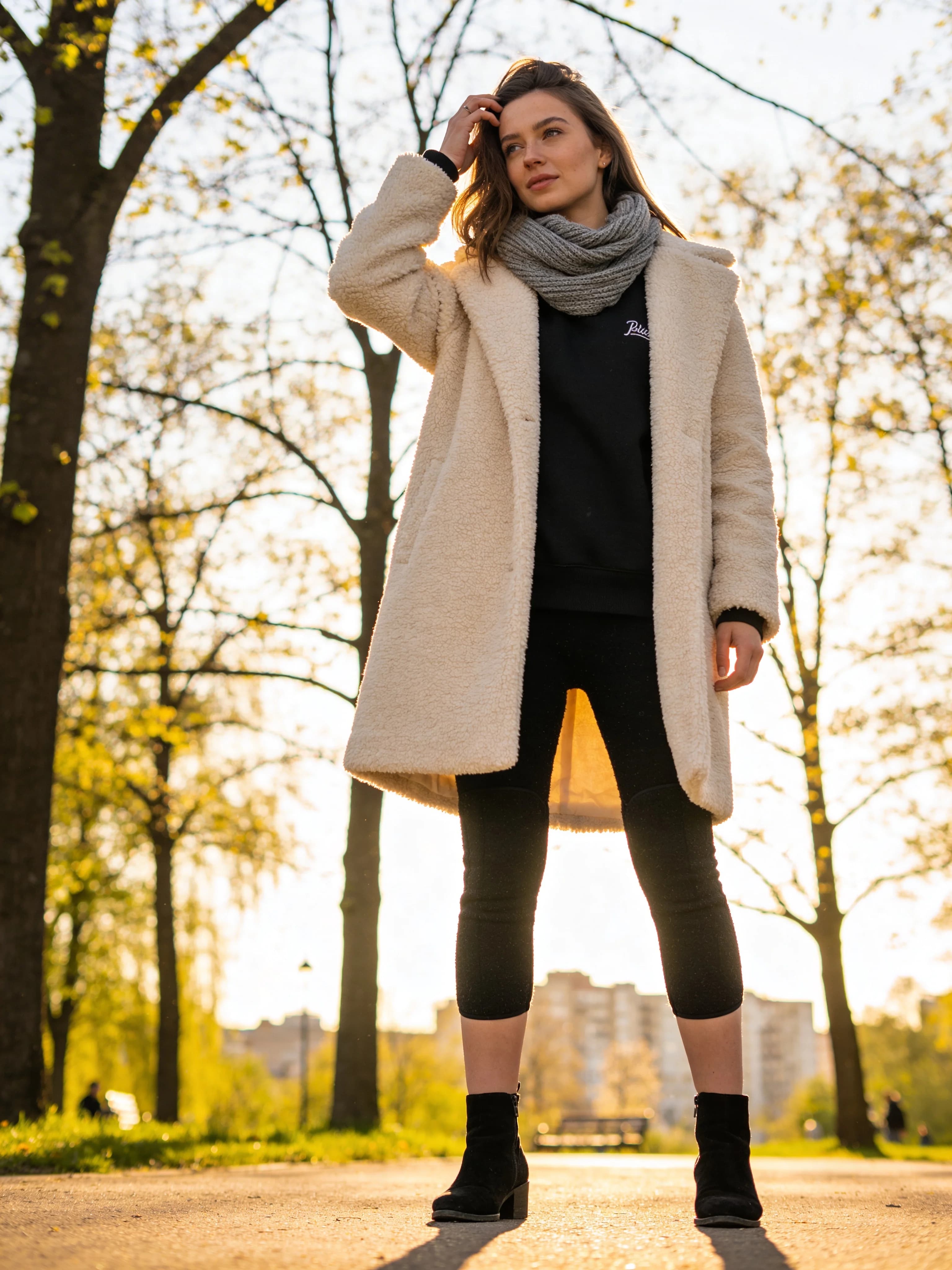
A cream teddy coat over a black crewneck and fleece-lined leggings is warm without being heavy. A grey knit scarf worn loose over the coat is the only accessory it needs.
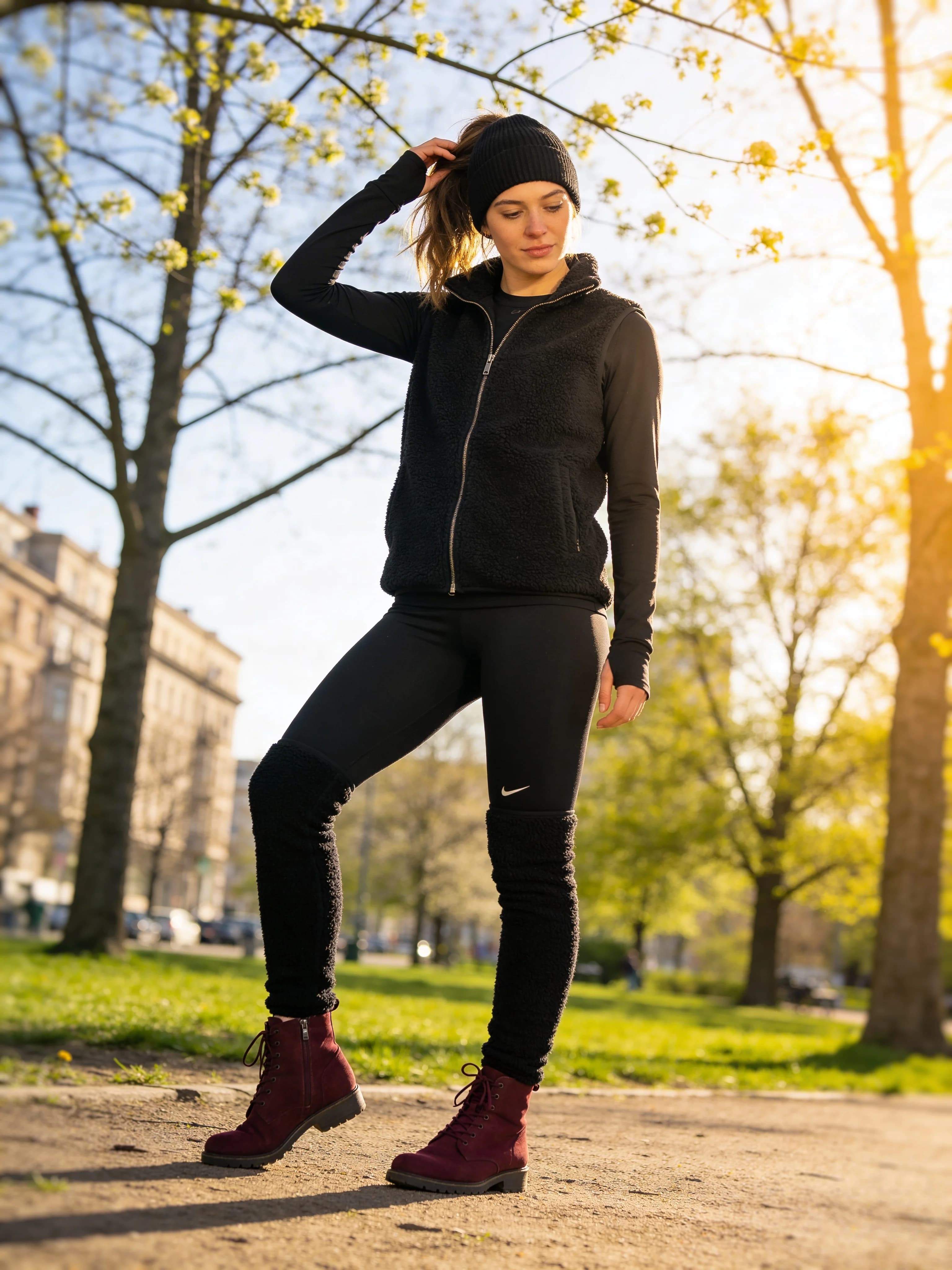
A black fleece zip-up over a long-sleeve athletic top and fleece leggings on a cool clear day is the sporty base that works. Burgundy ankle boots break the monochrome with one precise hit of colour.
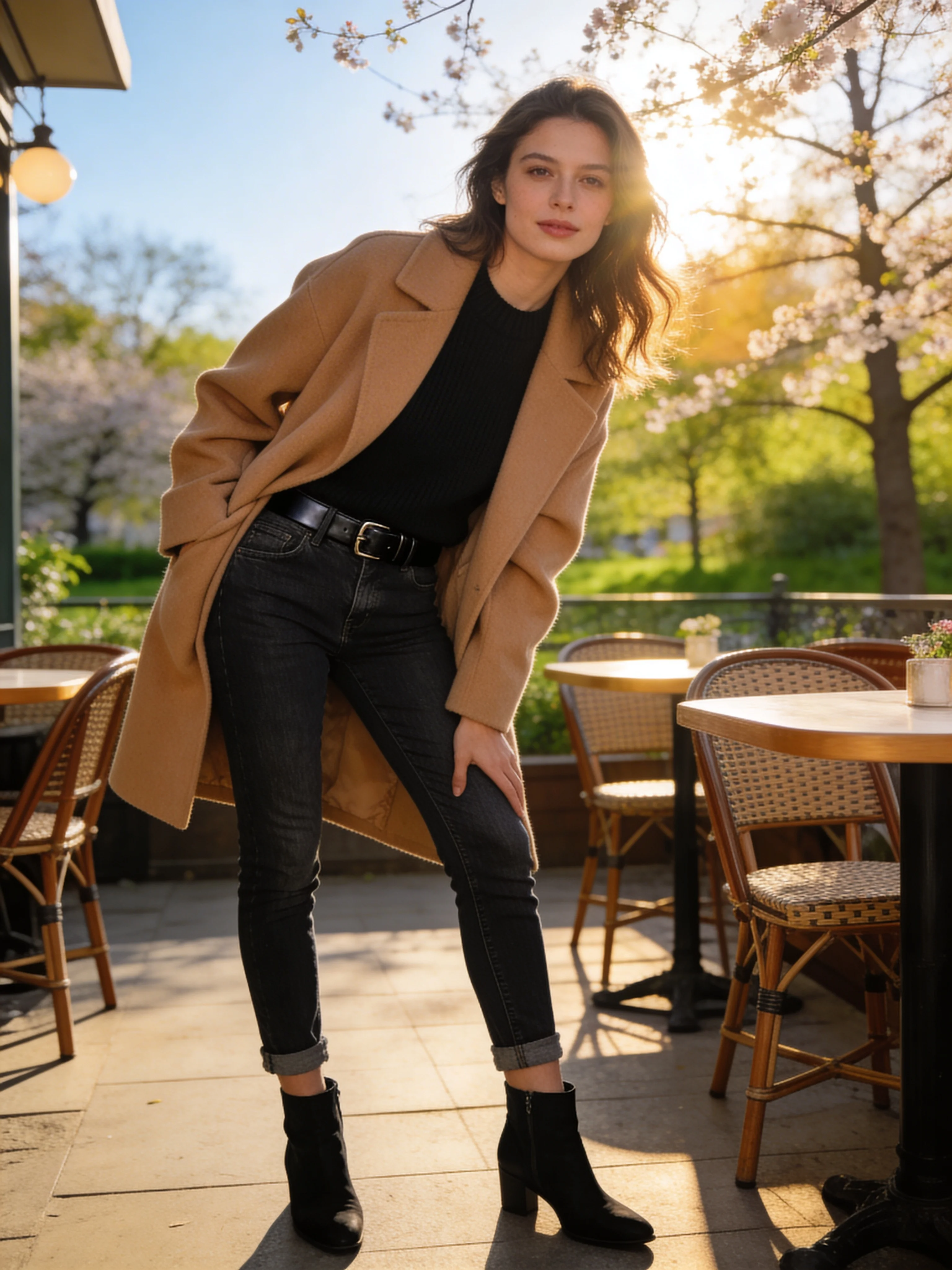
A camel coat over dark indigo jeans cinched with a black leather belt gives structure on a cool clear day. Black ankle boots are the straightforward finish.
A seam-sealed waterproof shell with a hood is essential — 15 days of precipitation in January means sustained outdoor exposure. Layer Merino wool or heavyweight synthetic fleece over moisture-wicking base layers. Waterproof boots with grip soles handle Pike Place Market's wet arcade path, Capitol Hill's steep uneven sidewalks, and the Elliott Bay Waterfront Trail's exposed promenade. Skip umbrellas — Pacific wind gusts make them ineffective. A wool beanie and waterproof gloves cover the coolest days.
Seattle in January is at its most local and culturally rich. Pike Place Market is nearly crowd-free, the Seattle Art Museum's winter exhibitions are outstanding, and the Capitol Hill neighborhood's coffee shops and restaurants are active and welcoming. ZooLights at Woodland Park Zoo runs through early January. The ferry to Bainbridge Island in misty winter conditions is one of the most atmospheric Pacific Northwest experiences available. Hotel rates are at their annual lows.
Waterproof boots are the only practical choice. Seattle's January sidewalks, Pike Place Market's arcade path, and the Capitol Hill and Queen Anne neighborhoods' steep, rain-slicked streets stay continuously wet. Blundstone-style waterproof Chelsea boots handle urban walking with minimal bulk; Danner waterproof hiking boots suit Rattlesnake Ridge or Tiger Mountain trail use. Non-waterproofed leather, canvas, or fabric shoes will be soaked within the first hour of outdoor activity.
Temperatures average 37–47°F — mild in absolute terms but made colder by persistent moisture and the occasional Bay wind. About 15 days bring precipitation, almost entirely as persistent Pacific drizzle and moderate rain. Snow in the city proper is possible but a weather event rather than an expectation; the Cascade Mountain passes (Snoqualmie, Stevens) see heavy snow accumulation that makes I-90 and US-2 mountain driving challenging.
Pack a seam-sealed waterproof shell with hood, Merino wool or synthetic base and mid-layers, waterproof boots, wool socks, and a wool beanie. Leave umbrellas behind — hoods are more effective against Pacific gusts. A waterproof daypack protects electronics during sustained rain. If heading to ski resorts via Snoqualmie Pass, check WSDOT road conditions and ensure winter tires or chains — mountain passes can close regardless of Seattle's weather.
Packing tools
Free calculators — city and month pre-filled when we know them. No account required. Start with how many outfits, sudoku packing, or bag fees.
Trip
Planning a trip to one city?
One city → typical weather for your month, packing counts that fit your bags, and email your plan.
Outfits
How many outfits for this trip?
Trip length, bag size, and climate → exact tops, bottoms, layers, and outfit combinations.
Jacket
Not sure about a jacket?
City + month → base / mid / shell stack and pack-or-skip verdicts for rain jacket, coat, and thermals.
Shoes
Shoes for this climate?
Climate, activities, and bag size → pair count, primary/backup types, and climate-matched picks.
Bags
Will this trip cost bag fees?
Airline + fare bucket + bags you plan to bring → fit verdicts and typical carry-on / checked fee ranges.
Capsule
Try sudoku packing for this climate?
City + month → climate-ready 3 tops / 3 bottoms / 3 layers you can edit — up to 27 mix-and-match outfits.