Cute
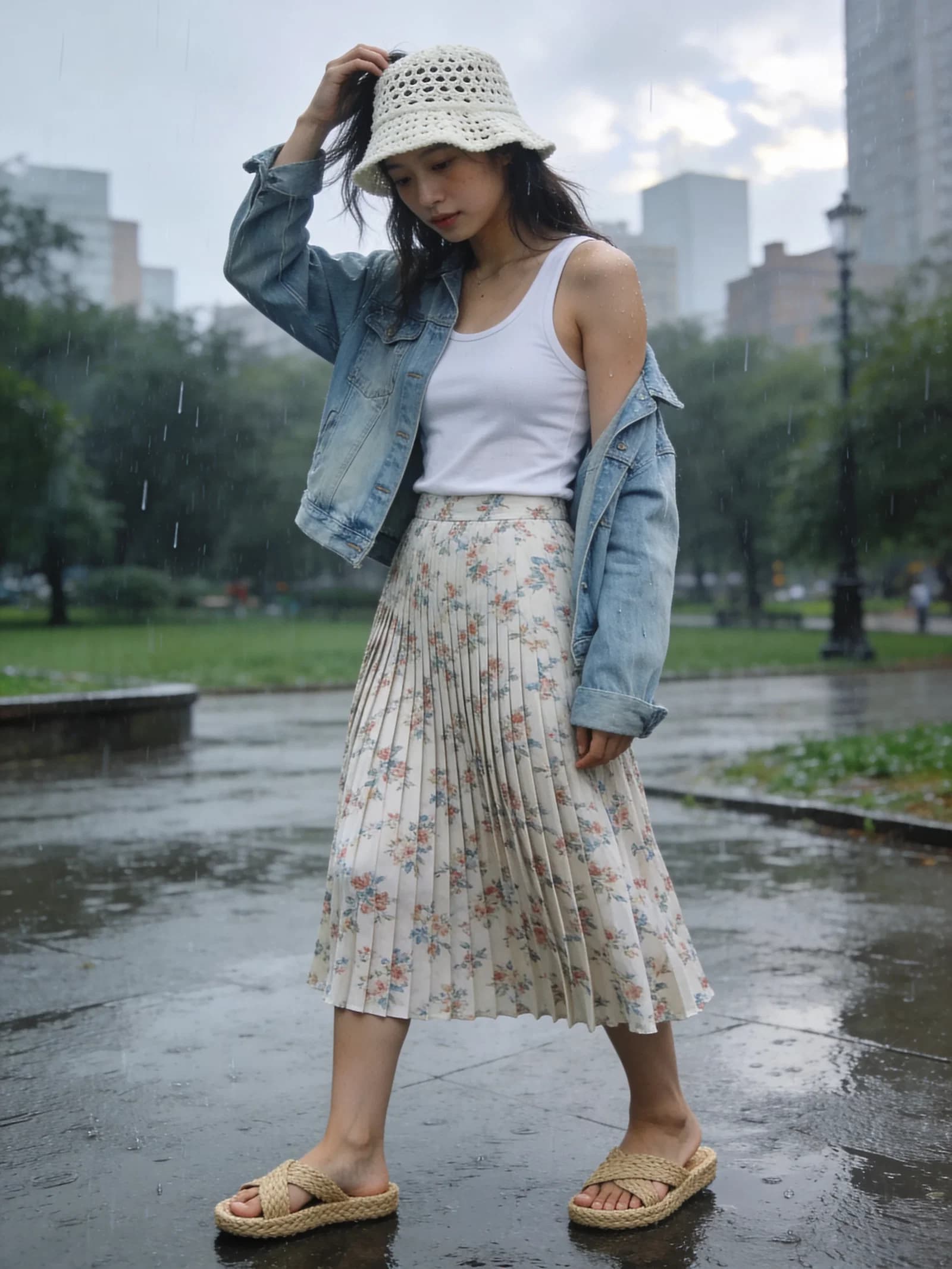
Denim Jacket Floral Rain
A light wash denim jacket over a floral midi skirt handles hot-weather rain without overdressing. Espadrilles underneath keep it warm-weather despite the jacket.

May in Hilo averages 64–81°F with about 14 rainy days — warm, lush, and reliably wet, as the trade winds bring tropical moisture to the windward side of Hawaii Island and the waterfalls at Akaka Falls and Rainbow Falls run at impressive volume. Lightweight quick-drying fabrics, a packable waterproof rain jacket, and waterproof trail sandals or shoes are the practical foundation; the frequent tropical showers rarely prevent outdoor activity but make waterproofing essential for every outing.
Also packing for this trip?
Full May packing list for Hilo →
Checklist of clothes, shoes, and gear — separate from these outfit ideas.
Compare prices across top booking sites for May 1–4.
Powered by Hotellook · prices from Booking.com, Agoda, and more

top / Short-Sleeve Top
classic tee

bottom / Jeans
straight-leg
chinos for a slightly smarter look

footwear / Waterproof Boots
ankle boots
rubber sole for traction — keep feet dry all day
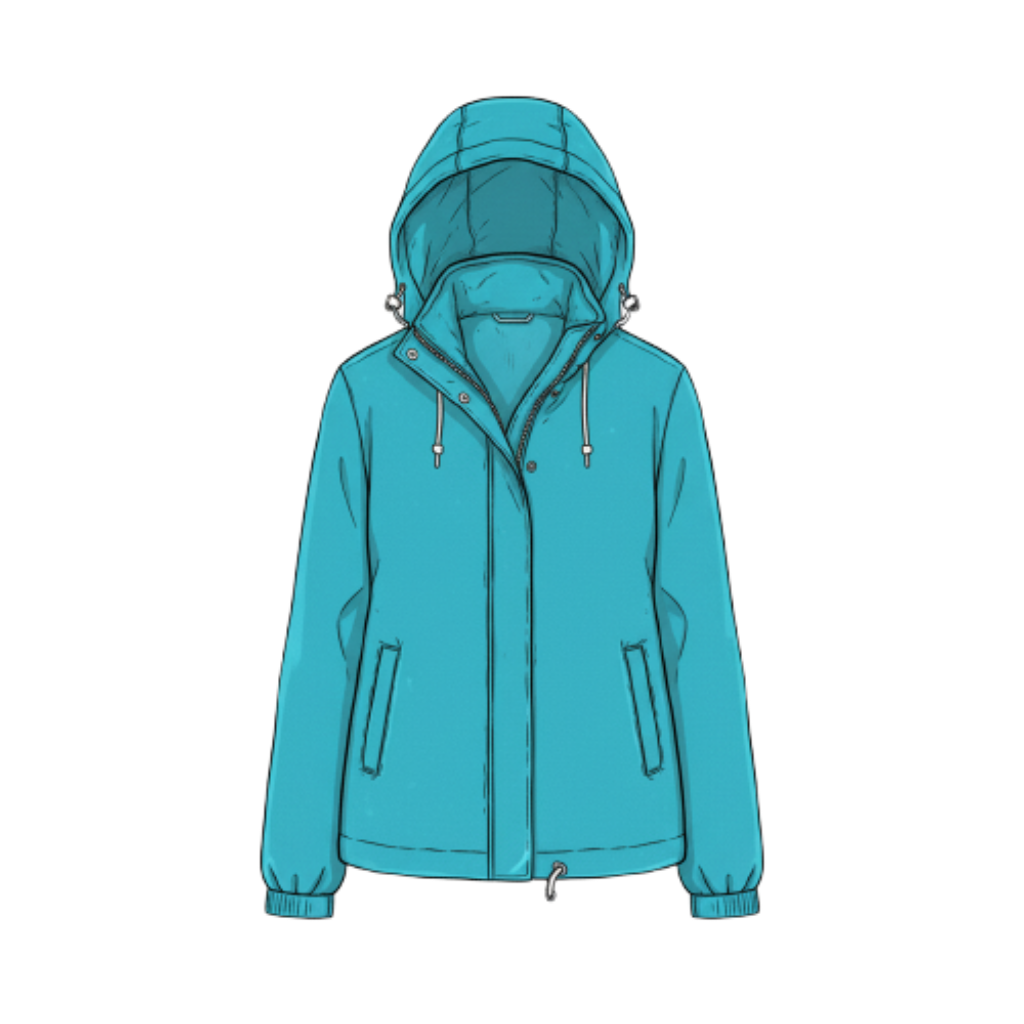
outerwear / Rain Jacket
shell jacket
lightweight
Based on typical May conditions in Hilo. Weather varies year to year — check the live forecast when you're within two weeks of your trip.
Hilo's May is peak tropical lushness — the trade winds deliver consistent moisture to the windward side of Hawaii Island, the Hawaii Tropical Botanical Garden is at its most verdant, Akaka Falls cascades powerfully, and the rainbow-producing conditions at Rainbow Falls State Park are reliable and spectacular. About 14 rainy days bring tropical showers that range from brief afternoon downpours to multi-hour events when trade winds are particularly strong. Temperatures sit near 81°F during the day with lows around 64°F — warm, humid, and consistently comfortable. Hilo's Hawaiian casual, waterproof-ready style finds its natural May expression — quick-drying aloha shirts and light shorts for the warm air, waterproof trail sandals for the perpetually wet botanical garden paths, and a packable rain jacket that fits in a daypack for the frequent showers. The Hilo Farmers Market (Wednesday and Saturday) is at its most abundant with local produce and tropical flowers; the outdoor stalls handle the rain with covered vendor areas that make browsing possible even in active showers.
A light wash denim jacket over a floral midi skirt handles hot-weather rain without overdressing. Espadrilles underneath keep it warm-weather despite the jacket.

A white linen blazer over a matching blouse and linen shorts handles hot rain with full coverage that still reads like summer. A tan straw sun hat makes the argument even in the rain.

A white linen blazer over a matching blouse and wide-leg trousers makes hot rain navigable with full coverage. Espadrilles and aviators ensure it reads as dressed — not overdressed.
Light, quick-drying fabrics are the foundation — technical athletic tops or linen in lightweight polyester blends rather than cotton, which stays wet after showers. A packable waterproof rain jacket in a daypack handles the 14 rainy days. Waterproof trail sandals (Teva, Chaco) or waterproof trail shoes handle the Hawaii Tropical Botanical Garden's perpetually wet paths and Akaka Falls State Park's rain-slicked boardwalk.
May is an excellent month for Hilo's natural wonders — Akaka Falls and Rainbow Falls are at high volume from consistent trade-wind rains, the Hawaii Tropical Botanical Garden is extraordinarily lush, and the Hilo Farmers Market's tropical abundance peaks with late-spring produce. Crowds are lighter than winter peak season. The frequent rain enhances rather than disrupts the experience of Hilo's landscape for visitors who dress appropriately.
Waterproof trail sandals are the most versatile choice — they handle the botanical garden's wet paths, the Wailuku River State Park's mist-slicked overlooks, and the Hilo Farmers Market's often-wet ground without issue. Waterproof trail shoes provide more grip on the slicker boardwalk sections at Akaka Falls. Standard flip-flops lack traction for trail use on wet surfaces; non-waterproofed shoes will be soaked within 30 minutes of outdoor walking.
Temperatures sit near 81°F with lows around 64°F — consistently warm and humid year-round. May brings about 14 days of precipitation, a moderately wet month by Hilo's extraordinary standards. The rain arrives as tropical trade-wind showers that can be intense for 30–90 minutes and then clear. The east-facing orientation of Hilo Bay ensures that trade-wind moisture arrives reliably; the combination creates the lush landscape that makes the area extraordinary.
Pack quick-drying lightweight fabrics (avoid cotton as primary fabric), a packable waterproof rain jacket, waterproof trail sandals or shoes, a dry bag or waterproof daypack liner for electronics, and broad-spectrum reef-safe sunscreen. The UV index can spike between showers at Hawaii's latitude. Insect repellent is useful for the botanical garden's interior sections where mosquitoes shelter in heavy vegetation.
Packing tools
Free calculators — city and month pre-filled when we know them. No account required. Start with how many outfits, sudoku packing, or bag fees.
Trip
Planning a trip to one city?
One city → typical weather for your month, packing counts that fit your bags, and email your plan.
Outfits
How many outfits for this trip?
Trip length, bag size, and climate → exact tops, bottoms, layers, and outfit combinations.
Jacket
Not sure about a jacket?
City + month → base / mid / shell stack and pack-or-skip verdicts for rain jacket, coat, and thermals.
Shoes
Shoes for this climate?
Climate, activities, and bag size → pair count, primary/backup types, and climate-matched picks.
Bags
Will this trip cost bag fees?
Airline + fare bucket + bags you plan to bring → fit verdicts and typical carry-on / checked fee ranges.
Capsule
Try sudoku packing for this climate?
City + month → climate-ready 3 tops / 3 bottoms / 3 layers you can edit — up to 27 mix-and-match outfits.