Cute
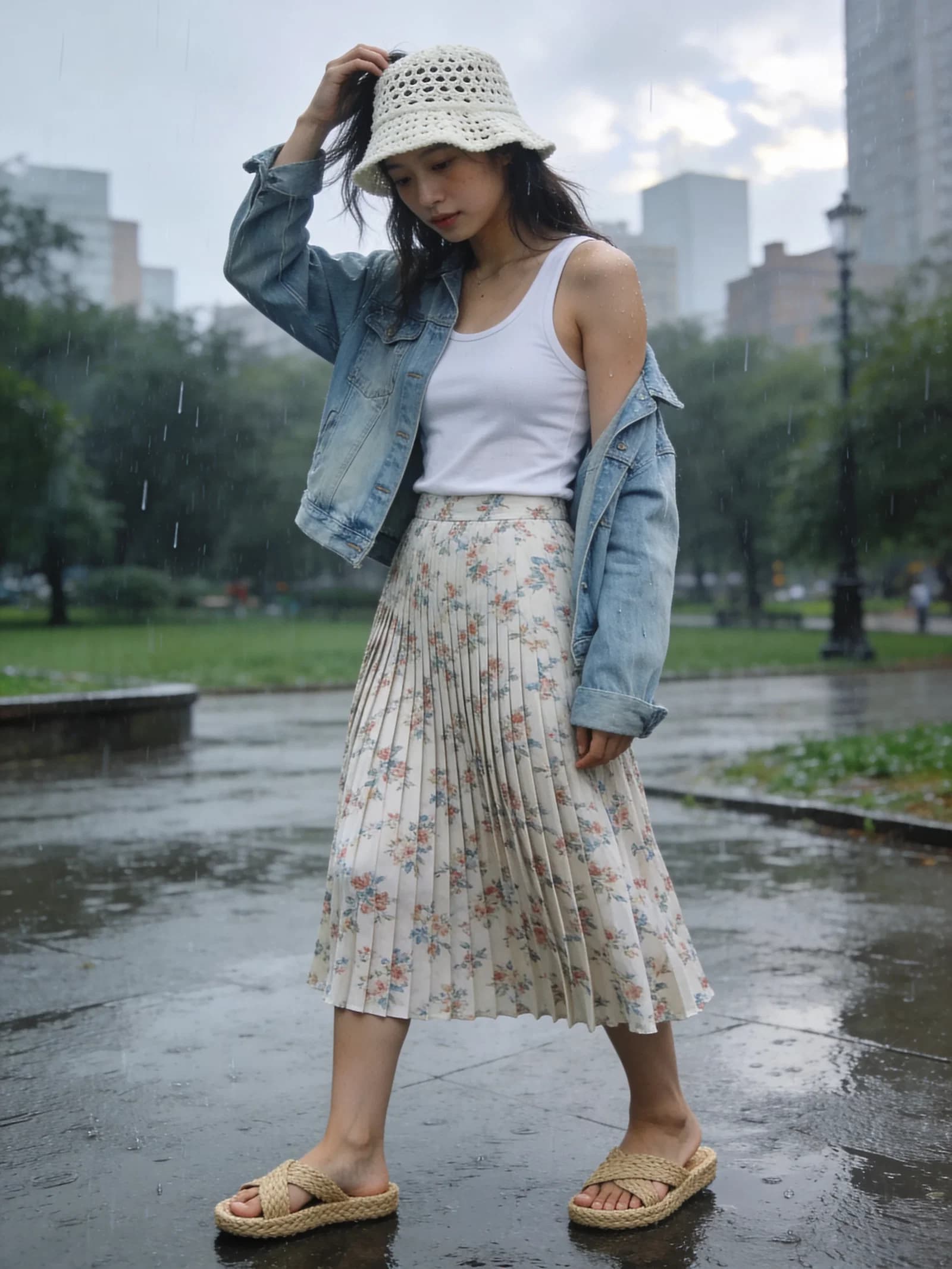
Denim Jacket Floral Rain
A light wash denim jacket over a floral midi skirt handles hot-weather rain without overdressing. Espadrilles underneath keep it warm-weather despite the jacket.

November in Hilo, Hawaii is the island's rainiest month by far, with highs averaging 80°F and lows near 63°F under nearly constant tropical rainfall — expect about 21 wet days out of 30. Quick-dry fabrics, a lightweight waterproof rain jacket, and water-resistant sandals are the practical daily uniform; Hilo's famous lush beauty is literally rain-made, and the Hawaii Volcanoes National Park craters look spectacular in the atmospheric mist. The warmth never leaves, but staying dry becomes the month's central challenge.
Also packing for this trip?
Full November packing list for Hilo →
Checklist of clothes, shoes, and gear — separate from these outfit ideas.
Compare prices across top booking sites for Nov 1–4.
Powered by Hotellook · prices from Booking.com, Agoda, and more

top / Short-Sleeve Top
classic tee

bottom / Jeans
straight-leg
chinos for a slightly smarter look

footwear / Waterproof Boots
ankle boots
rubber sole for traction — keep feet dry all day
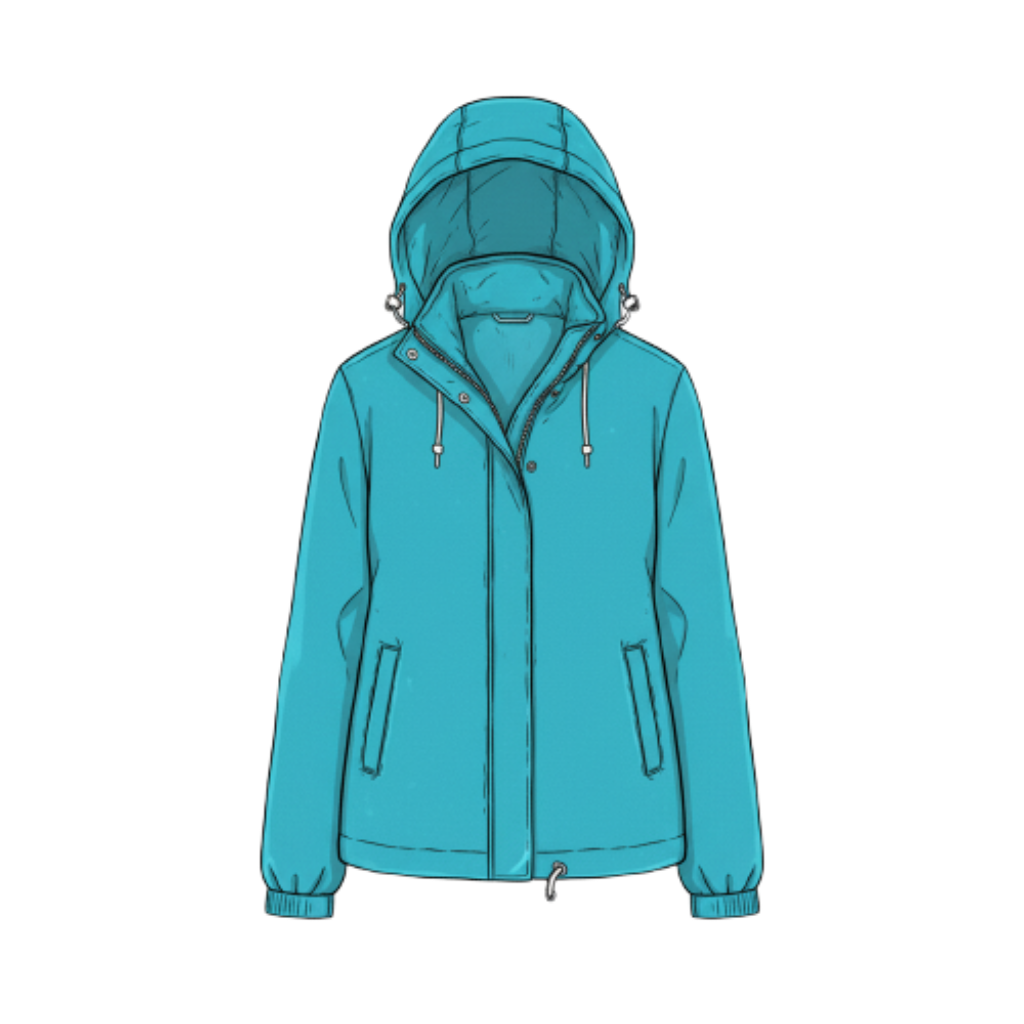
outerwear / Rain Jacket
shell jacket
lightweight
Based on typical November conditions in Hilo. Weather varies year to year — check the live forecast when you're within two weeks of your trip.
November in Hilo is the town at its most characteristically itself — the wettest city in the United States doubles down on its rainfall reputation, and the lush landscape of Akaka Falls State Park, Rainbow Falls, and the surrounding Hamakua Coast reaches its most intensely green, vibrantly overgrown state. The rain comes often and hard, but it rarely lasts all day without breaks, and the periods of warm Hawaiian sunshine between showers make the landscape glow with a tropical intensity that Hilo's drier neighbor cities on the Kona coast never achieve. The visitor reality of November Hilo is that rain is not optional scenery — it's the main event. Twenty-one rain days means you'll see rain every day of a week-long visit, and the question is how well-equipped you are to enjoy it rather than dread it. A lightweight waterproof rain jacket with a hood is the essential item; carrying an umbrella in addition makes sense for extended walks at the Liliuokalani Gardens or along the Hilo Bayfront. Quick-dry fabrics throughout your wardrobe ensure that a rain shower doesn't ruin the rest of the day. Hawaii Volcanoes National Park adds an additional climate layer — the Kilauea caldera area sits at elevation and runs notably cooler and mistier than sea-level Hilo, demanding an extra layer.
A light wash denim jacket over a floral midi skirt handles hot-weather rain without overdressing. Espadrilles underneath keep it warm-weather despite the jacket.

A white linen blazer over a matching blouse and linen shorts handles hot rain with full coverage that still reads like summer. A tan straw sun hat makes the argument even in the rain.

A white linen blazer over a matching blouse and wide-leg trousers makes hot rain navigable with full coverage. Espadrilles and aviators ensure it reads as dressed — not overdressed.
Dress in quick-dry fabrics throughout — standard cotton holds moisture and stays wet for hours after a shower. A lightweight waterproof rain jacket with a hood is essential for the ~21 rainy days. Water-resistant sandals or light trail shoes handle the transitions between wet sidewalks and indoor venues. At Hawaii Volcanoes National Park, add a warm layer for the cooler, misty caldera elevation.
November is Hilo's wettest month — if you embrace the rain, the lush landscape and dramatic waterfalls are at their most spectacular. Hawaii Volcanoes National Park, Akaka Falls, and Rainbow Falls are stunning in the atmospheric mist. If you prefer drier conditions, May–September offers better weather. November's reward is fewer tourists and more dramatic scenery.
Water-resistant sandals or waterproof trail shoes are ideal for Hilo's wet conditions. Trails at Akaka Falls and Hawaii Volcanoes National Park become muddy and slippery in heavy rain — trail shoes with grip are appropriate. Avoid suede or canvas shoes that stay wet for hours; quick-dry materials in footwear make the same practical difference as in clothing.
November highs average around 80°F with overnight lows near 63°F — warm, tropical temperatures despite the constant rain. The wetness is tropical rainfall, not cold drizzle; it feels very different from a rainy November day in the Pacific Northwest. Hawaii Volcanoes National Park's caldera sits at 4,000+ feet and is meaningfully cooler — add a layer for visits there.
Pack quick-dry fabrics throughout — t-shirts, lightweight pants, and shorts that dry fast. A lightweight waterproof rain jacket is the essential item; bring a compact umbrella as backup. Water-resistant sandals and light trail shoes cover most terrain. For Hawaii Volcanoes National Park, add a warm mid-layer for the cooler elevation. Leave anything that can't handle daily moisture exposure at home.
Packing tools
Free calculators — city and month pre-filled when we know them. No account required. Start with how many outfits, sudoku packing, or bag fees.
Trip
Planning a trip to one city?
One city → typical weather for your month, packing counts that fit your bags, and email your plan.
Outfits
How many outfits for this trip?
Trip length, bag size, and climate → exact tops, bottoms, layers, and outfit combinations.
Jacket
Not sure about a jacket?
City + month → base / mid / shell stack and pack-or-skip verdicts for rain jacket, coat, and thermals.
Shoes
Shoes for this climate?
Climate, activities, and bag size → pair count, primary/backup types, and climate-matched picks.
Bags
Will this trip cost bag fees?
Airline + fare bucket + bags you plan to bring → fit verdicts and typical carry-on / checked fee ranges.
Capsule
Try sudoku packing for this climate?
City + month → climate-ready 3 tops / 3 bottoms / 3 layers you can edit — up to 27 mix-and-match outfits.