Casual
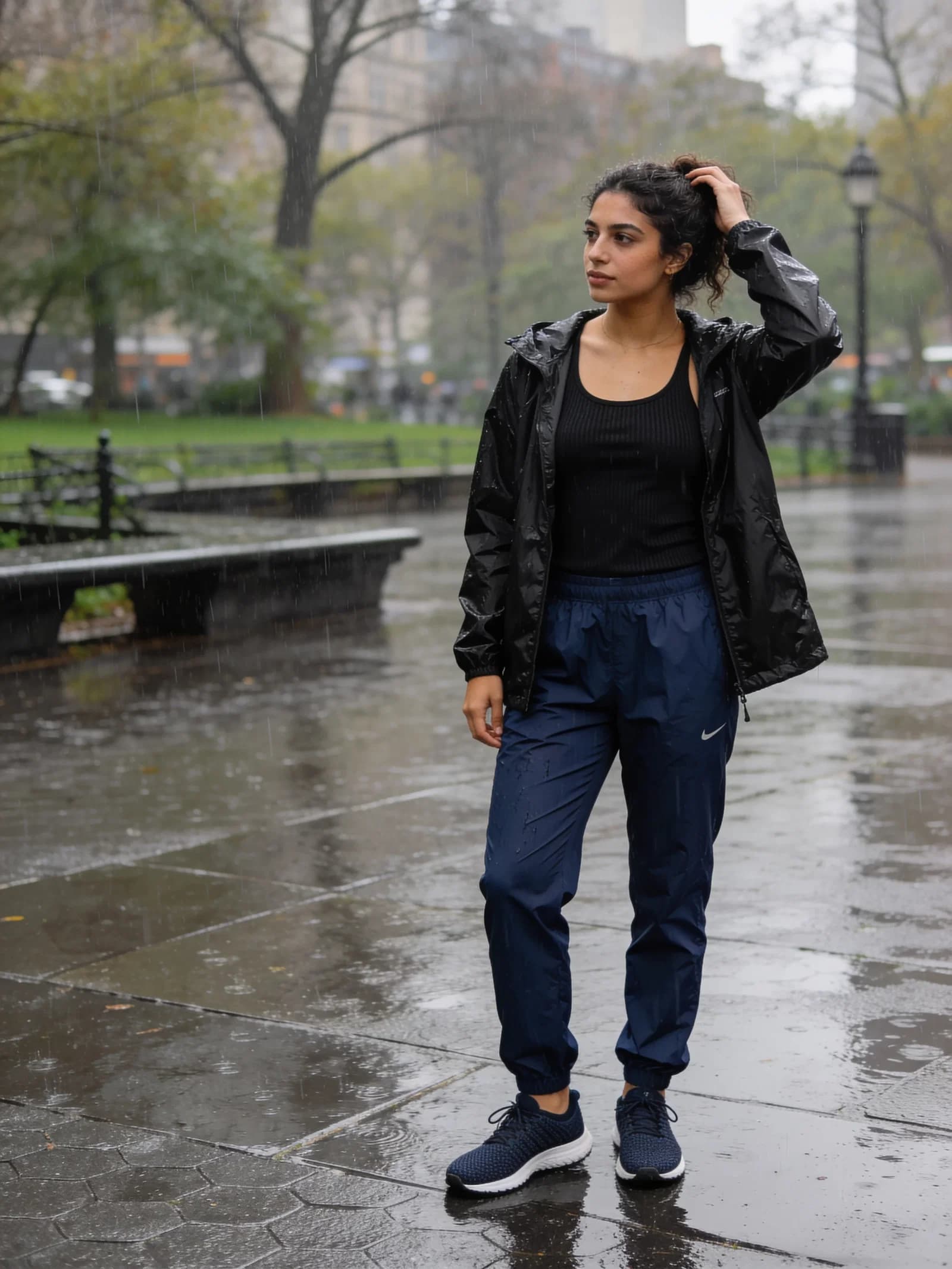
Ribbed Tank Jacket Ease
Hot conditions with heavy rain highlight the Black Ultralight Heatwave Rain Jacket as the hero item. Black ribbed tank top with Navy Heatwave Quick-Dry Light Trousers sustains the relaxed casual mood.

What to Wear in New Orleans
Friday, October 2
New Orleans blends subtropical heat with festival culture — summer months bring humidity that makes 91°F feel like 105°F, while French Quarter cobblestone streets and Bourbon Street flooding during rain make footwear one of the most important packing decisions. January sees highs around 63°F, mild but damp, requiring a real jacket for evening. The city's expressive festival-bold aesthetic encourages color and personality year-round, from Mardi Gras sequins to casual Frenchmen Street linen.
Compare rates across Booking.com, Agoda, Expedia, and Trip.com in one search.
Search hotels in New OrleansBased on 85°F and clear sky

top / Tank & Cami
tank top
breathable — lets heat escape in warm weather

bottom / Shorts
denim shorts
breathable fabric for high-heat days
lightweight linen pants for more coverage

footwear / Waterproof Boots
ankle boots
rubber sole for traction — keep feet dry all day
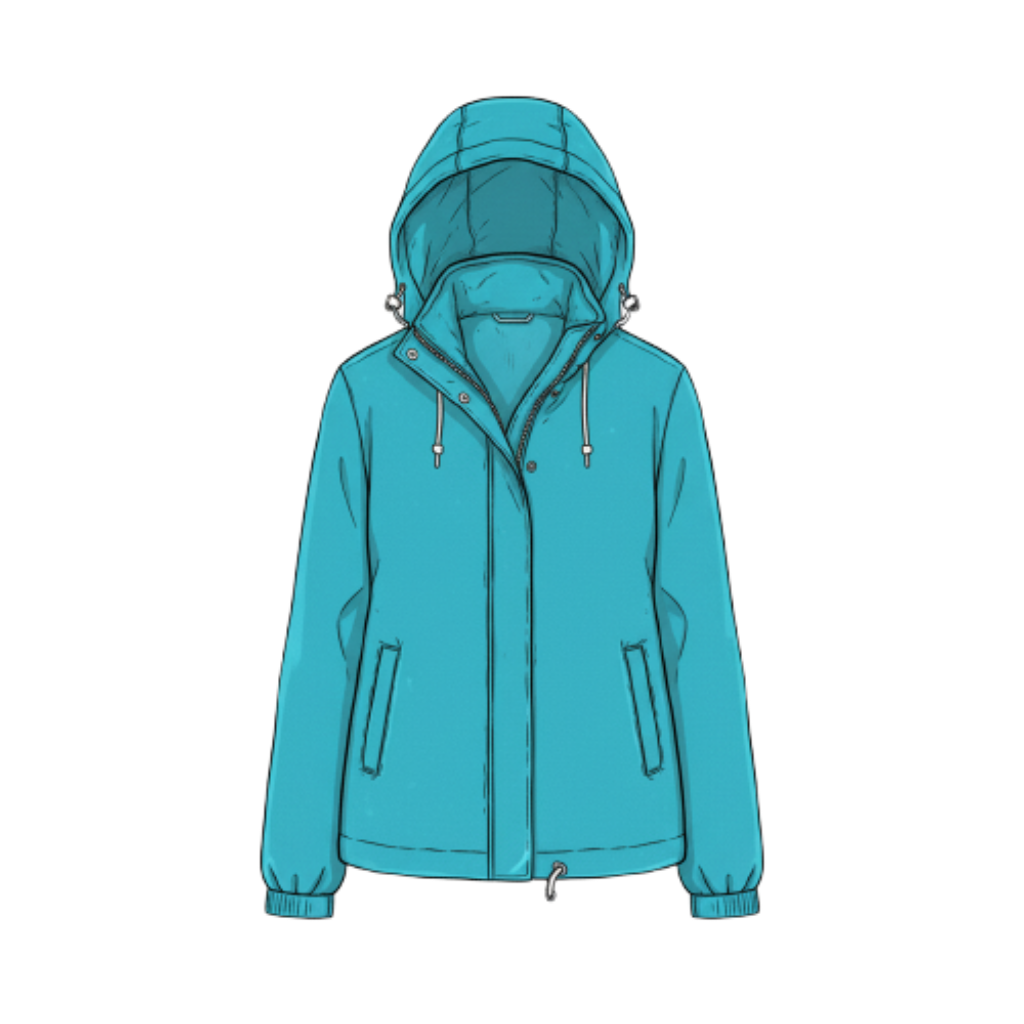
outerwear / Rain Jacket
shell jacket
lightweight
New Orleans boasts a humid subtropical climate, meaning visitors can expect warm to hot temperatures for much of the year, often accompanied by high humidity. Summers are notoriously sweltering and muggy, with daily temperatures frequently in the 90s Fahrenheit and high dew points. Winters are generally mild and brief, though cold snaps can occur, bringing temperatures down to the 40s or occasional freezing nights. Spring and fall offer the most pleasant weather, with warm days and comfortable evenings ideal for exploring. The city's unique style reflects its relaxed, expressive, and culturally rich atmosphere. Practicality is paramount for navigating historic streets, but there's always room for a touch of jazz-inspired elegance or a casual, festive spirit. Think comfortable, breathable fabrics like linen, cotton, and light rayon that can withstand the heat and humidity, often in vibrant colors or with subtle nods to local flair. Comfort and personal expression generally outweigh rigid formality here, whether you're strolling through the Garden District or enjoying live music in the Marigny. Layers are often a smart choice, even for air-conditioned interiors during warmer months.
Hot conditions with heavy rain highlight the Black Ultralight Heatwave Rain Jacket as the hero item. Black ribbed tank top with Navy Heatwave Quick-Dry Light Trousers sustains the relaxed casual mood.
Packing List
What to Pack for New Orleans →
Best shoes
Best shoes for New Orleans — by month →
Climate-matched walking shoes, waterproof boots, and sandals.
See typical weather and outfit ideas for New Orleans in any month of the year.
New Orleans winters are generally mild, with daytime temperatures averaging in the 60s Fahrenheit. Pack layers like light sweaters, long-sleeved shirts, and a medium-weight jacket. Occasionally, cold fronts can drop temperatures into the 30s or 40s, so a warmer coat, scarf, and gloves might be useful, especially for evenings.
Summers in New Orleans are hot and extremely humid, with daily temperatures often in the 90s Fahrenheit. Prioritize lightweight, breathable fabrics such as cotton, linen, and moisture-wicking materials. Loose-fitting shorts, skirts, sundresses, and short-sleeved shirts are ideal, along with comfortable sandals or walking shoes.
New Orleans is generally not considered cold for most of the year. While winter months (December to February) can bring occasional cold snaps with temperatures dipping into the 30s or 40s Fahrenheit, especially at night, extended periods of freezing weather are rare. Most winter days are mild and pleasant.
New Orleans experiences a humid subtropical climate characterized by long, hot, and very humid summers and short, mild winters. Spring and fall offer comfortable, warm weather. Rain showers, often brief but intense, can occur year-round, so a compact umbrella is always a good idea.
Packing tools
Free calculators — city and month pre-filled when we know them. No account required. Start with how many outfits, sudoku packing, or bag fees.
Trip
Planning a trip to one city?
One city → typical weather for your month, packing counts that fit your bags, and email your plan.
Outfits
How many outfits for this trip?
Trip length, bag size, and climate → exact tops, bottoms, layers, and outfit combinations.
Jacket
Not sure about a jacket?
City + month → base / mid / shell stack and pack-or-skip verdicts for rain jacket, coat, and thermals.
Shoes
Shoes for this climate?
Climate, activities, and bag size → pair count, primary/backup types, and climate-matched picks.
Bags
Will this trip cost bag fees?
Airline + fare bucket + bags you plan to bring → fit verdicts and typical carry-on / checked fee ranges.
Capsule
Try sudoku packing for this climate?
City + month → climate-ready 3 tops / 3 bottoms / 3 layers you can edit — up to 27 mix-and-match outfits.