Navy Trench and Shorts
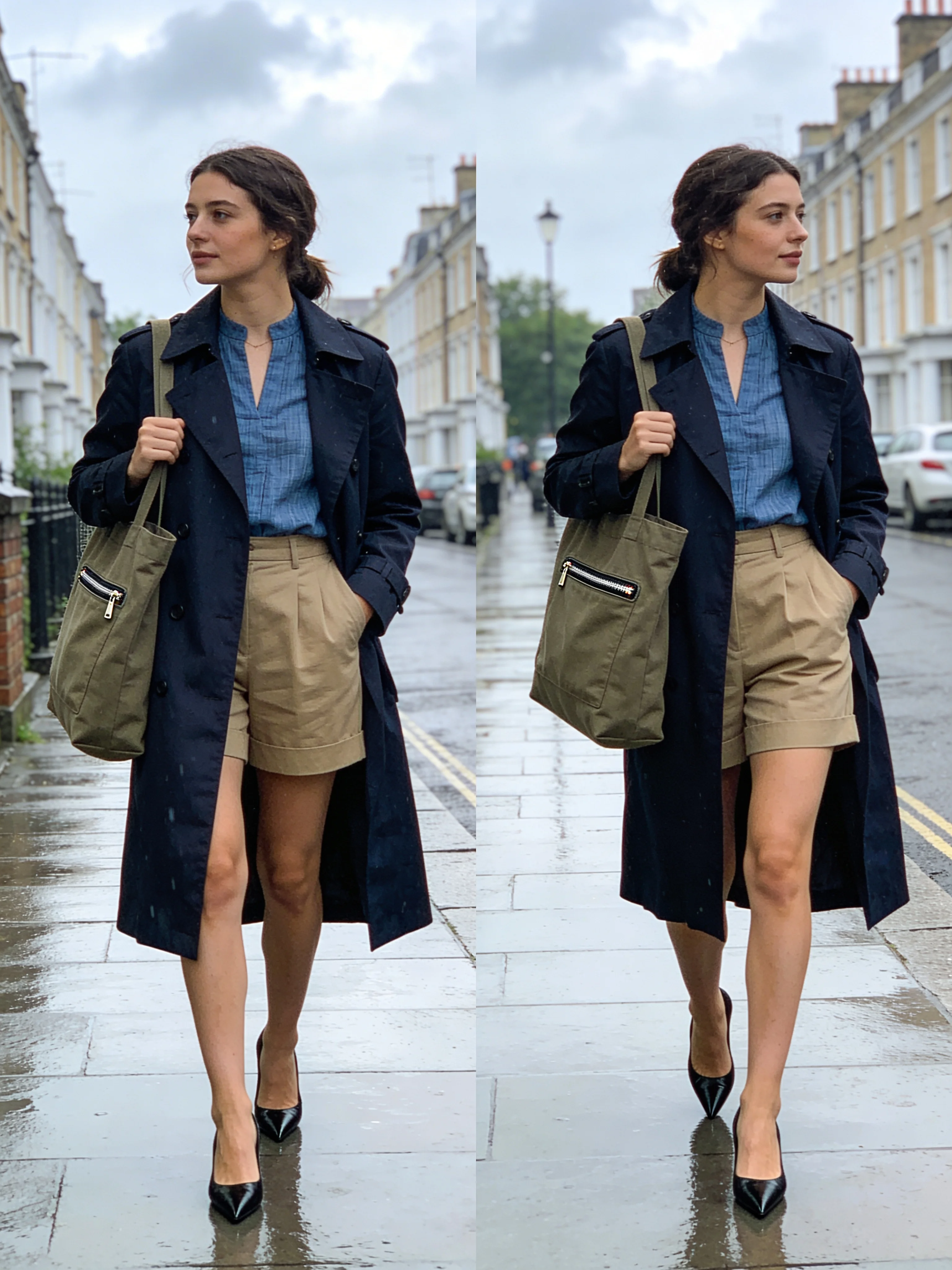
A navy trench coat over khaki bermuda shorts and a blue linen blouse works between seasons on a mild rainy day. Black pointed-toe heels sharpen what could easily be too casual.

January in New Orleans averages 45–63°F with about 10 rainy days — the city's coolest month, calling for a proper mid-weight coat and waterproof layers for the French Quarter's brick streets and Magazine Street's walkable corridor. Cold fronts occasionally push temperatures into the upper 30s, and the Gulf-influenced air carries more moisture than the temperature alone suggests. A waterproof jacket is more practical than a heavy parka on most January days, but the coldest front passages require real layering.
top / Long-Sleeve Top
fitted long-sleeve
lightweight layer for mild temps
bottom / Jeans
straight-leg
chinos for a slightly smarter look
footwear / Waterproof Boots
ankle boots
rubber sole for traction — keep feet dry all day
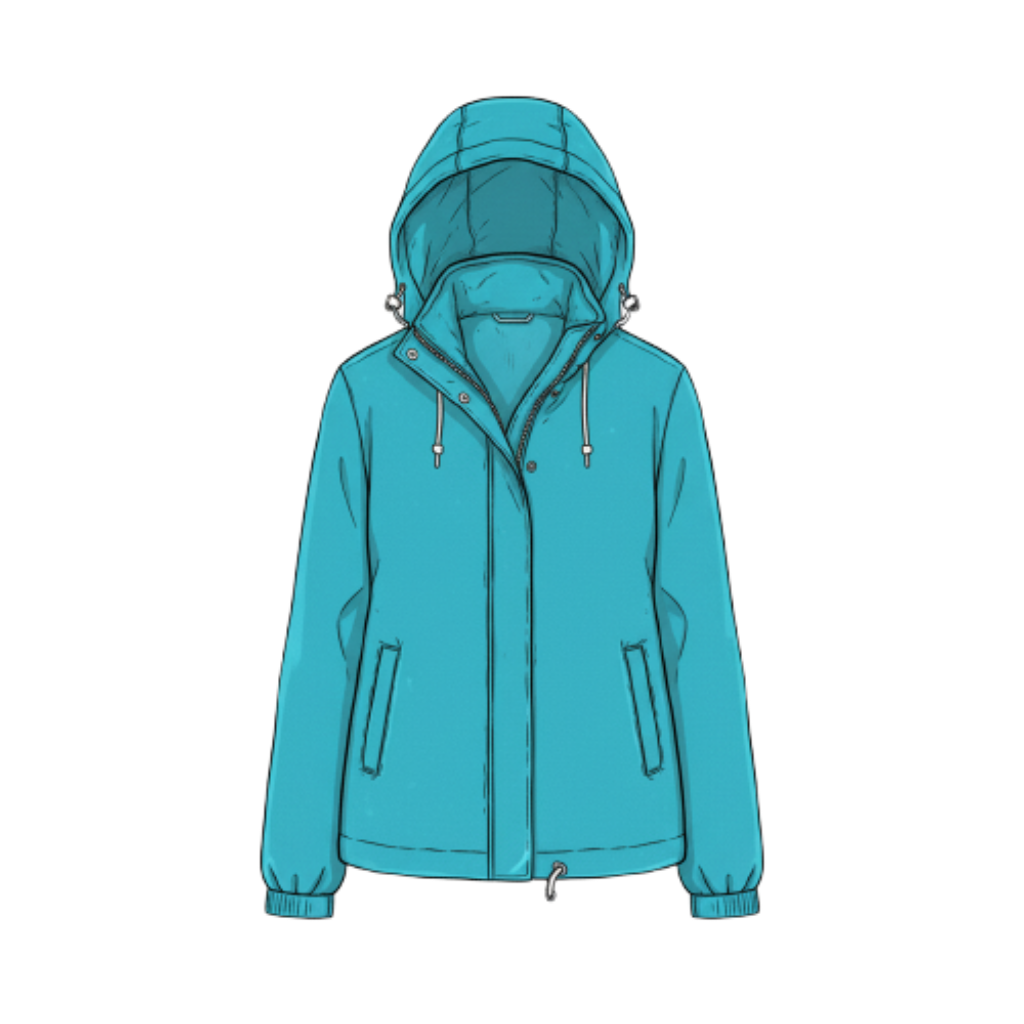
outerwear / Rain Jacket
shell jacket
waterproof or DWR-treated — keep it packable
Based on typical January conditions in New Orleans. Weather varies year to year — check the live forecast when you're within two weeks of your trip.
New Orleans in January is the city stripped of its summer humidity and crowd peaks, revealing something quieter and more characterful — the French Quarter's iron-lace balconies and Jackson Square are accessible without summer's press of bodies, the Garden District's oak-canopied streets are atmospheric under gray winter light, and the local restaurant scene on Magazine Street and in the Warehouse District serves regulars rather than tourists. Average lows sit at 45°F with highs at 63°F, but cold fronts push lows toward 35–40°F for 1–2 day stretches every few weeks. About 10 days bring precipitation, often as sustained Gulf-influenced rain. New Orleans's vibrant, expressive style tendency moderates in January toward actual layering — belted wool coats and structured midi-length coats over fitted sweaters and ankle boots, with a bold scarf or statement bag carrying the city's expressiveness. The French Quarter's brick streets and the cobblestone of the Warehouse District demand waterproof footwear with grip; the frequent rain and the city's legendary street-level flooding make waterproof boots a practical necessity rather than a stylistic choice.

A navy trench coat over khaki bermuda shorts and a blue linen blouse works between seasons on a mild rainy day. Black pointed-toe heels sharpen what could easily be too casual.

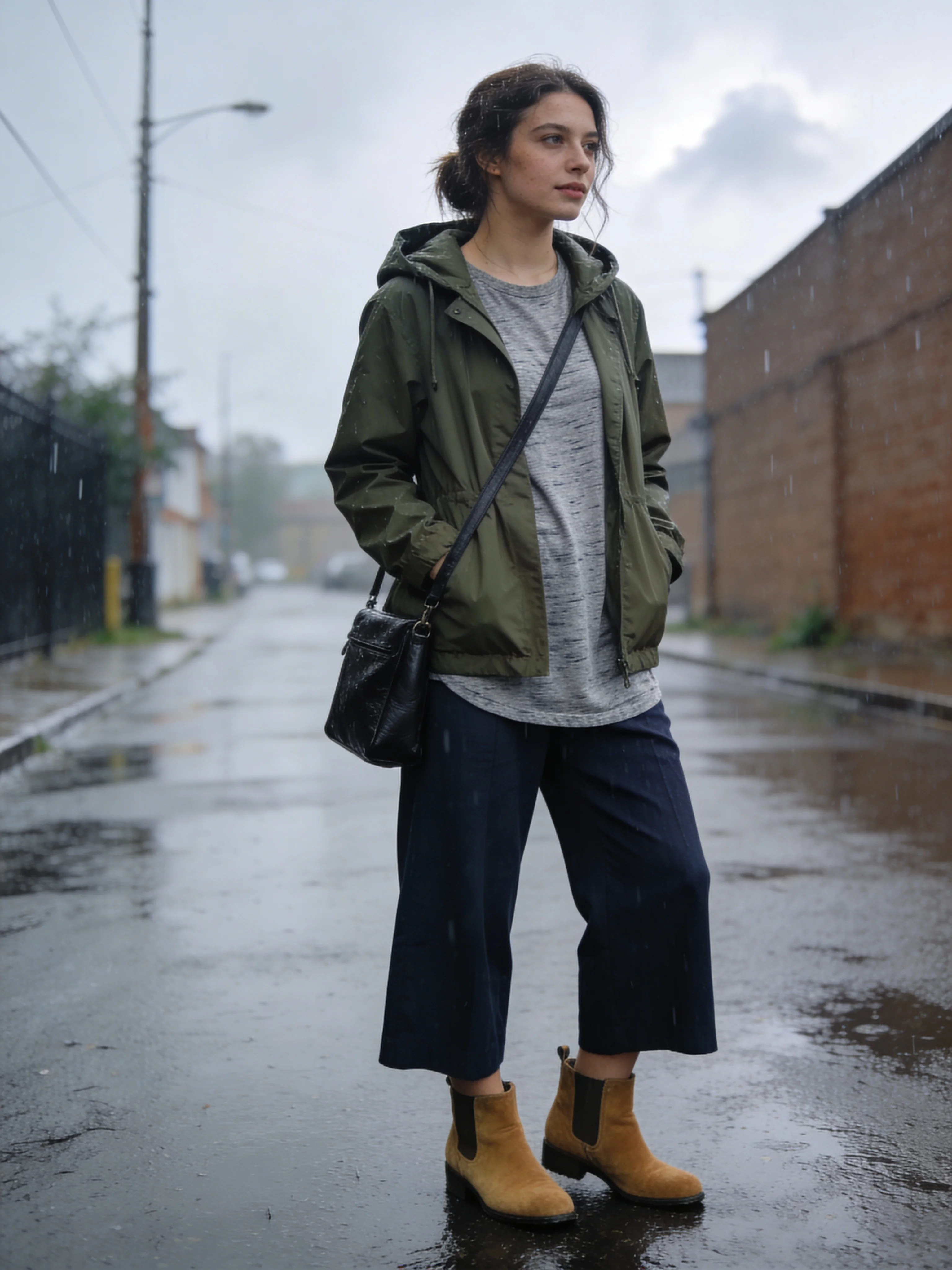
An olive anorak handles mild rain without abandoning the polish of wide-leg navy trousers underneath. The crossbody stays tucked and close.

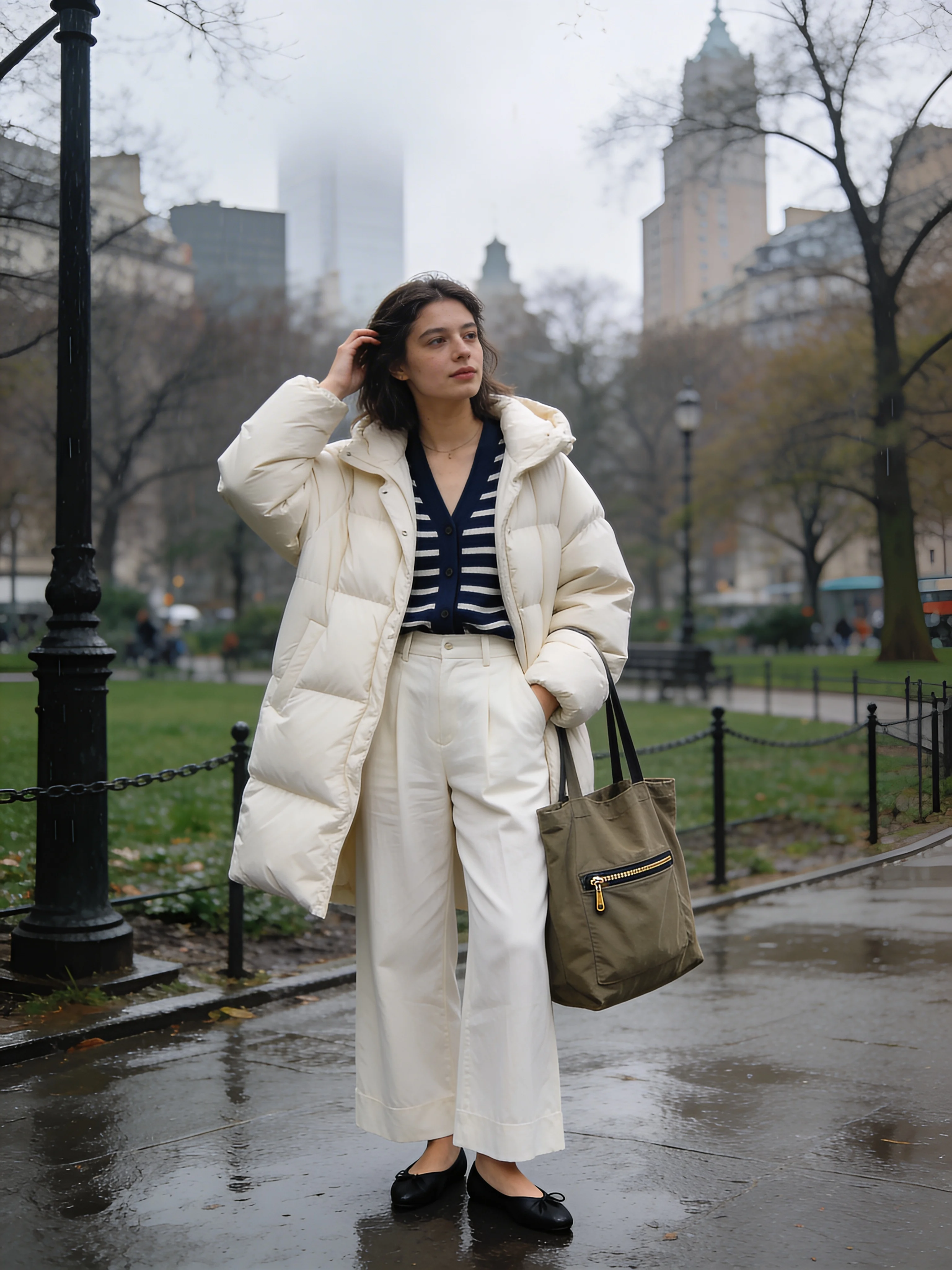
A cream oversized puffer over a navy striped cardigan and wide-leg ivory linen trousers handles mild rain with a considered mix of textures. Black ballet flats are the restrained finish.

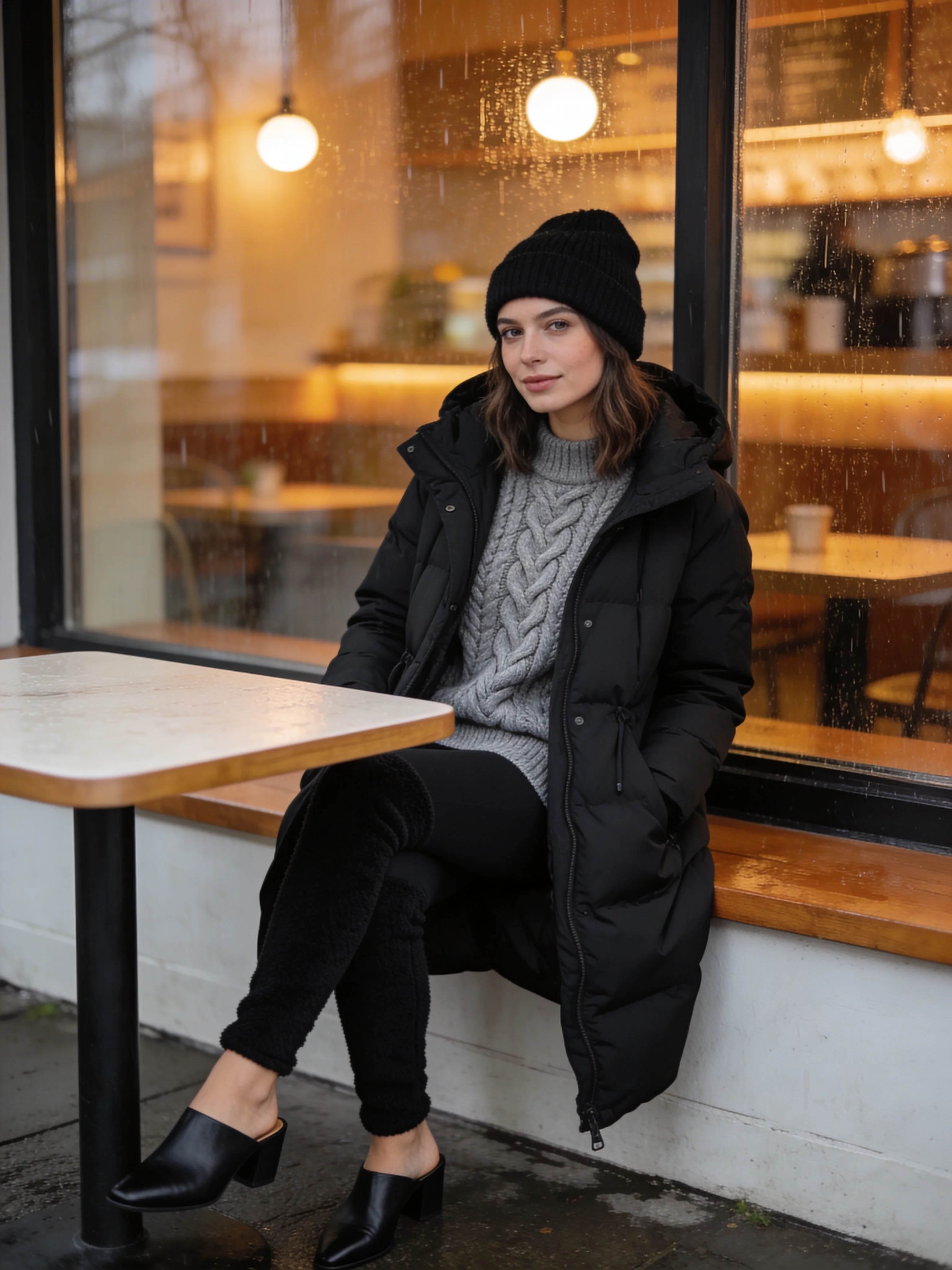
A black longline parka over a cable knit sweater in mild rain keeps warmth without overdressing. Black mule heels under leggings are an unexpected and intentional detail.

A blush cropped jacket over a grey cardigan and black sweater mini skirt handles mild rain with charm. A black bucket bag and ankle boots keep the proportions balanced.

A grey longline coat over an ivory blouse and black wide-leg trousers handles mild rain without losing formal intent. Black Chelsea boots and a mini bag keep it focused.

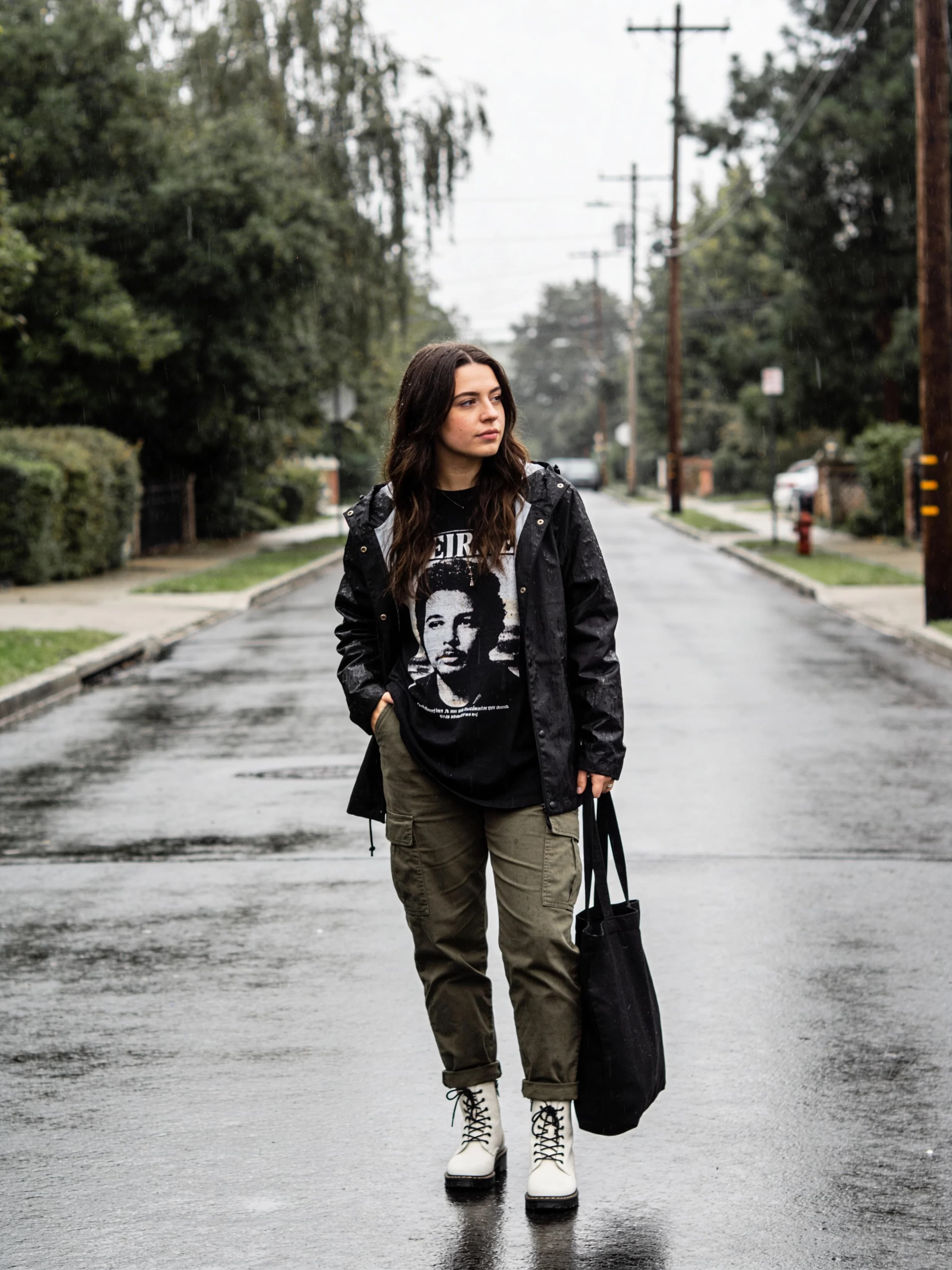
A black rain jacket over an oversized graphic tee and olive cargo trousers handles mild rain practically. White lace-up booties finish the look with enough contrast to lift the palette.

Packing List
What to Pack for New Orleans in January →
A mid-weight coat handles most of New Orleans's January range — the 45–63°F span is manageable without extreme insulation, though cold front passages toward 35–40°F call for a warmer layer underneath. A waterproof outer shell is more practical than a purely fashion-forward wool overcoat given the 10 rainy days. Waterproof ankle boots with grip handle the French Quarter's brick streets and Magazine Street's wet pavement after rain.
January is one of the best months to experience New Orleans at a local pace. The French Quarter and Garden District are significantly less crowded than Mardi Gras season (which builds through late January into February) or Jazz Fest, hotel rates are lower, and the restaurant scene is at its most unhurried. Mardi Gras parades begin in mid-to-late January in some krewes — an atmospheric preview before the full February peak.
Waterproof ankle boots with a grip sole are the most practical choice — the French Quarter's flagstone and brick streets collect rain puddles at low points, and New Orleans's notorious drainage issues mean some street-level flooding after heavy rain regardless of season. Magazine Street's brick pedestrian areas and the Warehouse District's cobblestone blocks stay wet for extended periods after frontal rain systems. Stilettos on wet brick remain the visitor hazard they are year-round.
Average lows sit at 45°F, with cold front passages occasionally dropping overnight temperatures to 35–40°F for 24–48 hours. Daytime highs average 63°F between fronts, which is genuinely pleasant for walking the Garden District and Jackson Square. About 10 days bring precipitation, most commonly as sustained Gulf-influenced rain; these multi-hour rain events are more common in January than summer's brief thunderstorms.
Pack a mid-weight coat, versatile layering pieces (sweaters, a warmer layer for cold front nights), waterproof ankle boots, and a waterproof outer shell or packable rain jacket. An umbrella is useful for the sustained rain days. Mardi Gras season begins to build in late January — if attending early krewe parades, standing outside for parade viewing requires more cold-weather gear than the average temperature suggests, given the standing time involved.