Crewneck and Espadrilles
A black crewneck and fleece leggings with espadrilles in the heat is the statement of someone who runs cold. The knit beanie seals the commitment.

Tuesday, June 9
For Valencia year-round, prepare for a semi-arid Mediterranean climate with hot dry summers (August peaks at 93°F), mild wet winters (January lows of 45°F), and most rainfall concentrated in October and November. Lightweight linens and breathable fabrics dominate most of the year, with a mid-weight jacket needed from December through February. A packable rain layer is essential in autumn — Valencia's DANA storm events can drop significant rainfall within hours. Comfortable walking shoes are a must for the historic Barrio del Carmen's cobblestone streets.
Based on 79°F and partly cloudy
top / Short-Sleeve Top
classic tee
bottom / Jeans
straight-leg
chinos for a slightly smarter look
footwear / Sneakers
white sneakers
cushioned for all-day city walking
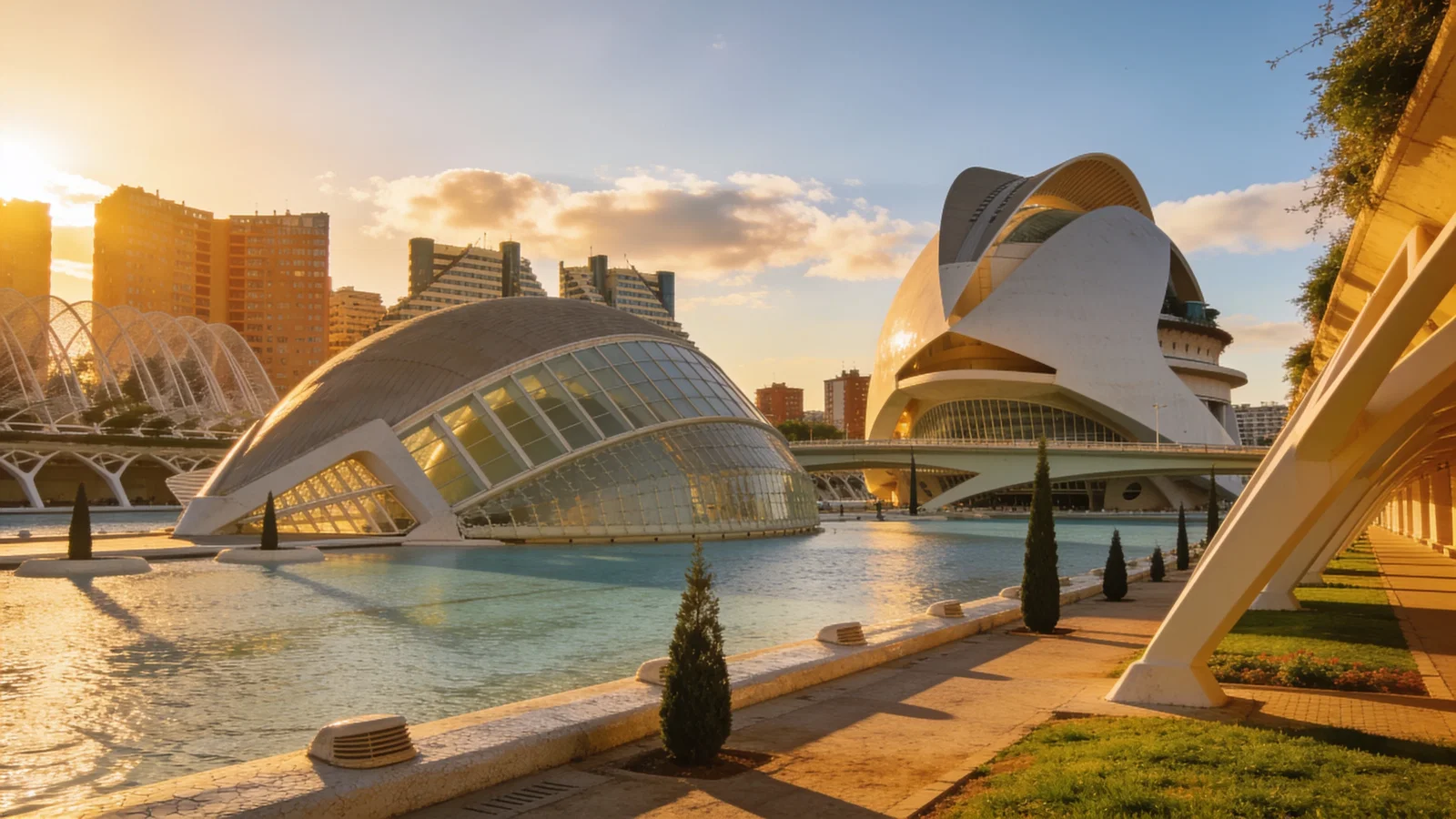
Valencia's Mediterranean climate rewards visitors with over 300 days of sunshine per year — but packing for the full range of conditions separates comfortable visitors from unprepared ones. The city's semi-arid pattern means summer heat peaks at 93°F in August with the Mediterranean humidity making afternoons feel more intense than the thermometer suggests, while the Ciudad de las Artes y las Ciencias complex's white architectural surfaces amplify UV radiation that reaches very-high to extreme levels from June through August. Autumn is Valencia's most weather-unpredictable season: the DANA (cold-air pool) weather events that concentrate the region's rainfall into intense multi-hour downpours can arrive in October and November, and having a packable rain jacket in your bag is the difference between a comfortable autumn visit and being caught in a flash flood situation near the Turia riverbed park. Winters are mild compared to northern Europe but the Mediterranean humidity and occasional Tramontana wind make evenings at the Mercado Central and the waterfront marina feel colder than the January average of 57°F suggests.

A black crewneck and fleece leggings with espadrilles in the heat is the statement of someone who runs cold. The knit beanie seals the commitment.

A blue linen collarless blouse over ivory wide-leg linen trousers in the heat is understated and intentional. Gold-frame aviators are the only thing needed to complete the picture.

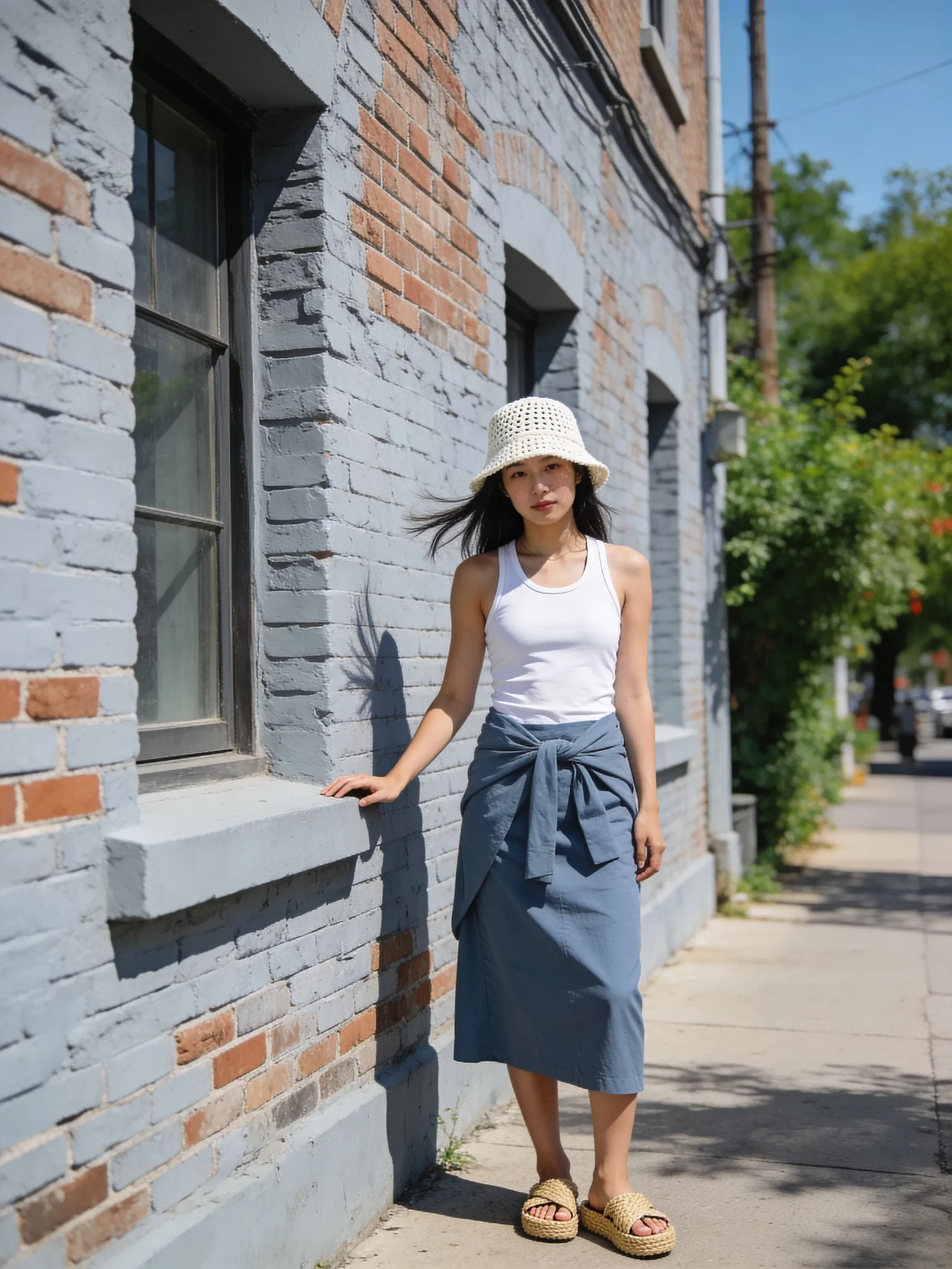
A dusty blue open-knit sweater worn loose over a denim mini skirt is the easy hot-day look. Espadrilles and a crochet hat keep it relaxed and summery.

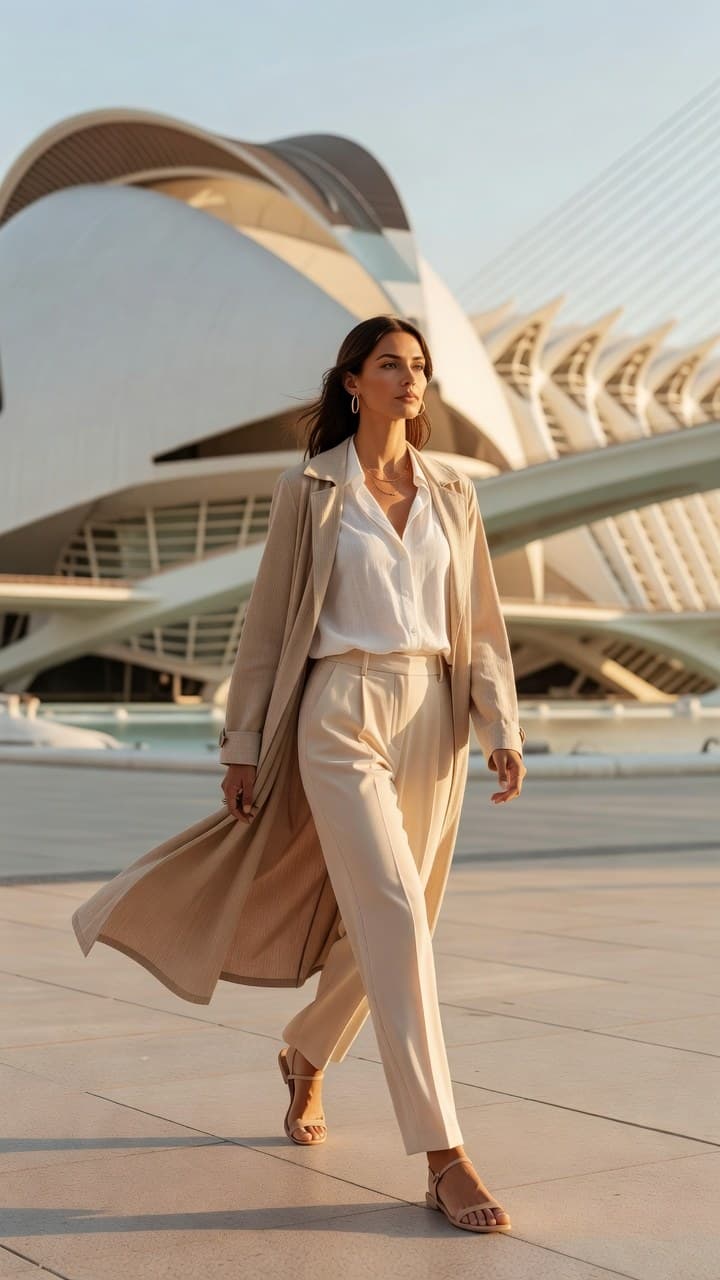
A white linen sleeveless blouse tucked into cream wide-leg linen trousers is the clean hot-weather business-casual answer. Espadrilles and gold aviators are all the styling it needs.

A white athletic tank with black biker shorts and espadrilles is the clean hot-day sporty look. An olive baseball cap is the functional accessory that pulls the palette.

A white sleeveless athletic tank keeps things breathable at 80°F with black biker shorts holding the athletic silhouette. The baseball cap handles the sun.

A white oversized button-down with ivory wide-leg linen trousers is the understated hot-day summer uniform. Espadrilles and a crochet bucket hat finish it without effort.

An ivory silk-look blouse and black pleated maxi skirt in the heat is the formal look that earns its occasion without adding weight. Espadrilles keep it grounded in the season.
Packing List
What to Pack for Valencia →
See typical weather and outfit ideas for Valencia in any month of the year.
For most of Valencia's year, wear lightweight breathable fabrics — linens, light cotton, and moisture-wicking fabrics handle the Mediterranean warmth. Summer (June–September) demands UV protection and heat management at the La Malvarrosa beach and Ciudad de las Artes y las Ciencias. Autumn (October–November) requires a packable rain layer for DANA storm events. Winter (December–February) needs a mid-weight jacket for evenings, as Mediterranean humidity makes 50°F feel colder than inland. Comfortable walking shoes handle the Barrio del Carmen's cobblestones year-round.
Valencia is an excellent city to visit — it offers the extraordinary Ciudad de las Artes y las Ciencias architectural complex, Spain's best paella (the dish originates here, served at beachside restaurants on the La Malvarrosa seafront), the vibrant Mercado Central food market, the Barrio del Carmen medieval quarter's arts and nightlife scene, and the world-famous Fallas festival every March. With over 300 days of sunshine and warm sea temperatures from June through October, it's one of Europe's most rewarding Mediterranean cities.
Comfortable walking shoes or sneakers with good grip are essential for Valencia's Barrio del Carmen neighbourhood, where centuries-old cobblestone streets and Gothic alleyways make high heels and smooth-soled shoes impractical year-round. In summer, sandals work well for the La Malvarrosa beach promenade and the Ciudad de las Artes y las Ciencias walkways. In autumn and winter, waterproof or water-resistant shoes handle Valencia's occasional heavy rainfall.
Valencia has a semi-arid Mediterranean climate (BSk/Csa) with hot dry summers and mild wet winters. Temperatures range from 57°F average highs in January to 93°F in August. Summer (June–September) is dry with only 2–3 rain days per month. Autumn (October–November) concentrates most of the year's rainfall, sometimes in intense DANA storm events. Spring (March–May) is pleasant and dry. Annual sunshine hours exceed 2,700, making Valencia one of Europe's sunniest major cities.
Pack based on your visit month. Year-round essentials: comfortable walking shoes for cobblestones, sunscreen SPF 30+ (SPF 50+ in summer), and a packable layer for evenings. Summer: lightweight linens, breathable fabrics, swimwear for La Malvarrosa beach, and sunscreen SPF 50+. Autumn: add a packable rain jacket for DANA storm events. Winter: include a mid-weight jacket for evenings when Mediterranean humidity makes 50°F feel colder. March visit: expect enormous Fallas festival crowds and pack for celebration atmosphere.