Chic
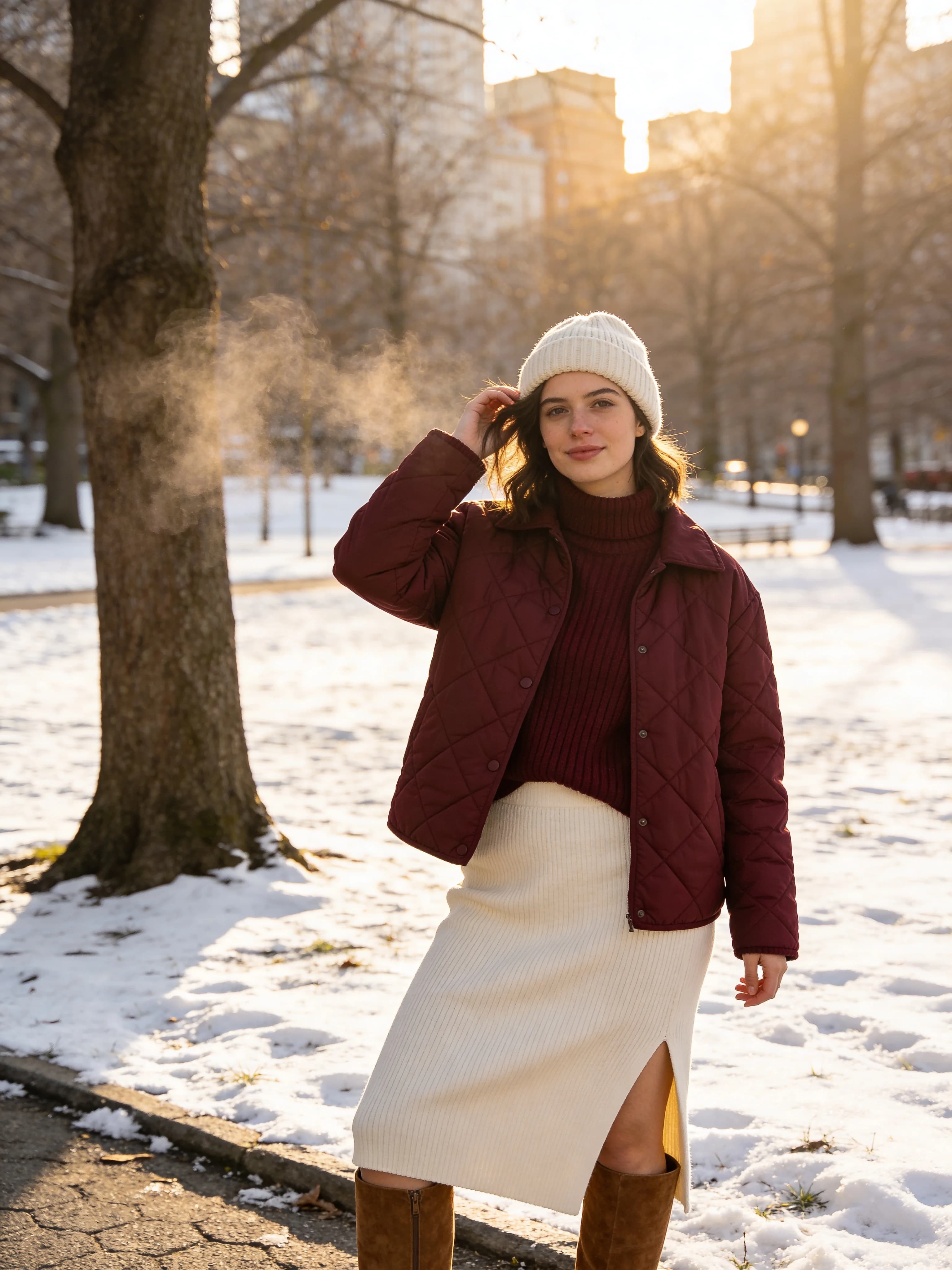
Burgundy and Suede Boots
Flatters smaller busts
A burgundy quilted jacket and matching turtleneck over a cream maxi skirt in light snow is a considered tonal look. Brown suede knee-high boots under the skirt add the textural detail.

December in Milwaukee is genuinely cold, with highs averaging only 32°F and lows dropping to 19°F — well below freezing nearly every day. A heavy insulated parka, thermal base layers, waterproof snow boots, and a hat and gloves are non-negotiable for walking along the Riverwalk or the Third Ward. Snow accumulation is common, so traction and waterproofing matter as much as warmth.
Also packing for this trip?
Full December packing list for Milwaukee →
Checklist of clothes, shoes, and gear — separate from these outfit ideas.
Compare prices across top booking sites for Dec 1–4.
Powered by Hotellook · prices from Booking.com, Agoda, and more

top / Long-Sleeve Top
fitted long-sleeve

bottom / Jeans
straight-leg
chinos for a slightly smarter look

footwear / Waterproof Boots
ankle boots
rubber sole for traction — keep feet dry all day

outerwear / Heavy Coat
puffer coat
insulated for sub-freezing temps

top / Sweater
crew neck
mid-layer warmth between base and outer coat
fleece zip-up if it gets colder
Based on typical December conditions in Milwaukee. Weather varies year to year — check the live forecast when you're within two weeks of your trip.
Milwaukee in December is characterized by genuinely cold winter weather, demanding a strategic approach to dressing. Average high temperatures typically hover in the low 30s°F (-1 to 1°C), while overnight lows frequently dip into the teens or low 20s°F (-7 to -3°C). The proximity to Lake Michigan often intensifies the chill with significant wind, making 'feels like' temperatures considerably lower. Precipitation is common, predominantly falling as snow, with lake-effect snow showers always a possibility, though freezing rain or mixed precipitation isn't out of the question. To comfortably navigate Milwaukee's December climate, layering is non-negotiable. Begin with thermal base layers to retain body heat. Follow with insulating mid-layers such as fleece or wool sweaters. Your outermost layer must be a heavy, waterproof or water-resistant winter coat, ideally insulated with down or synthetic fill, capable of blocking wind. Crucially, invest in insulated, waterproof boots with excellent traction to handle potential snow and ice. Complete your ensemble with a warm hat, thick gloves or mittens, and a substantial scarf to protect all exposed skin from the biting cold and wind.
A burgundy quilted jacket and matching turtleneck over a cream maxi skirt in light snow is a considered tonal look. Brown suede knee-high boots under the skirt add the textural detail.
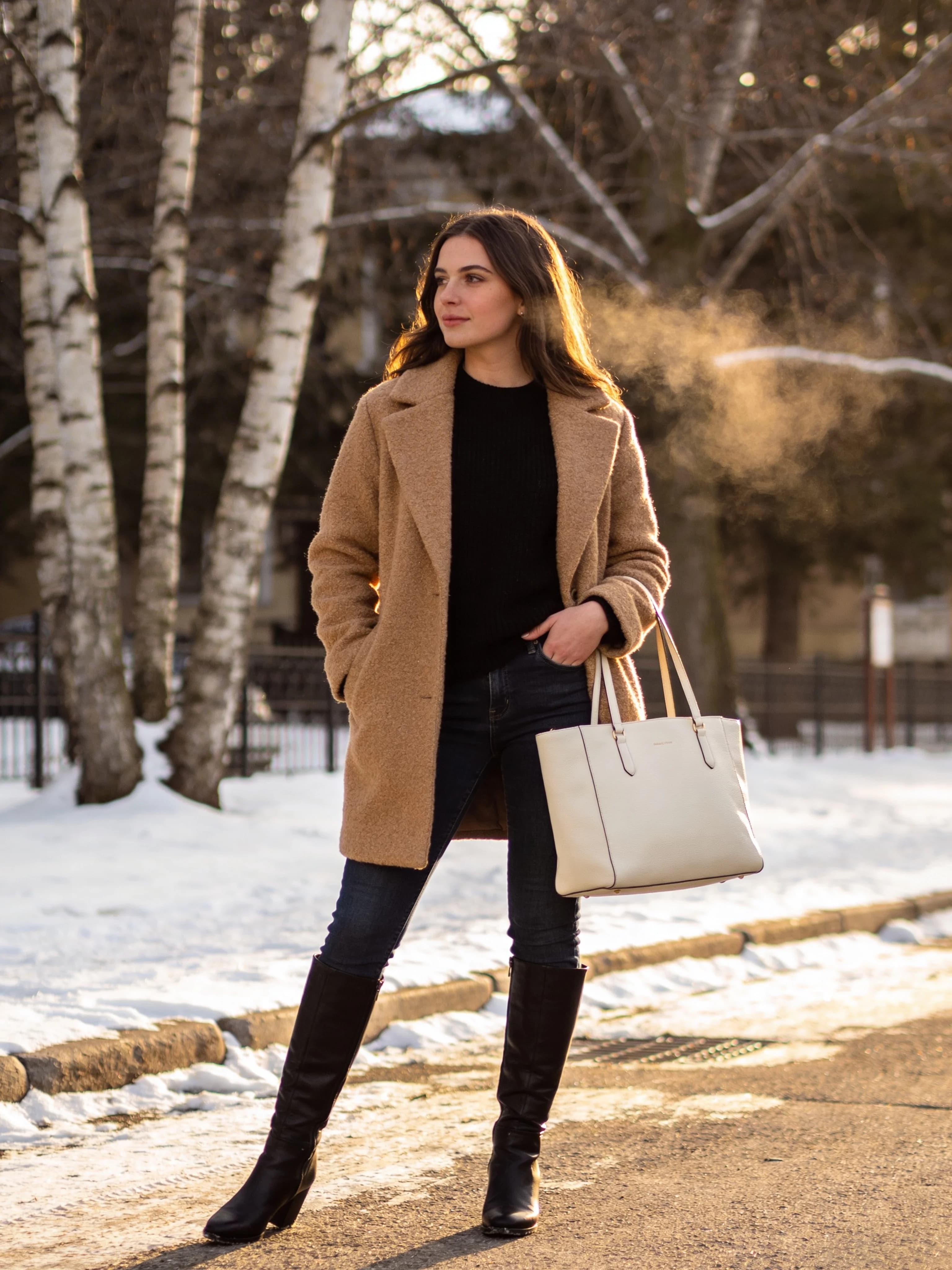
A camel coat over dark indigo ankle jeans with black knee-high boots adds coverage in light snow. The cream leather tote keeps it office-ready.
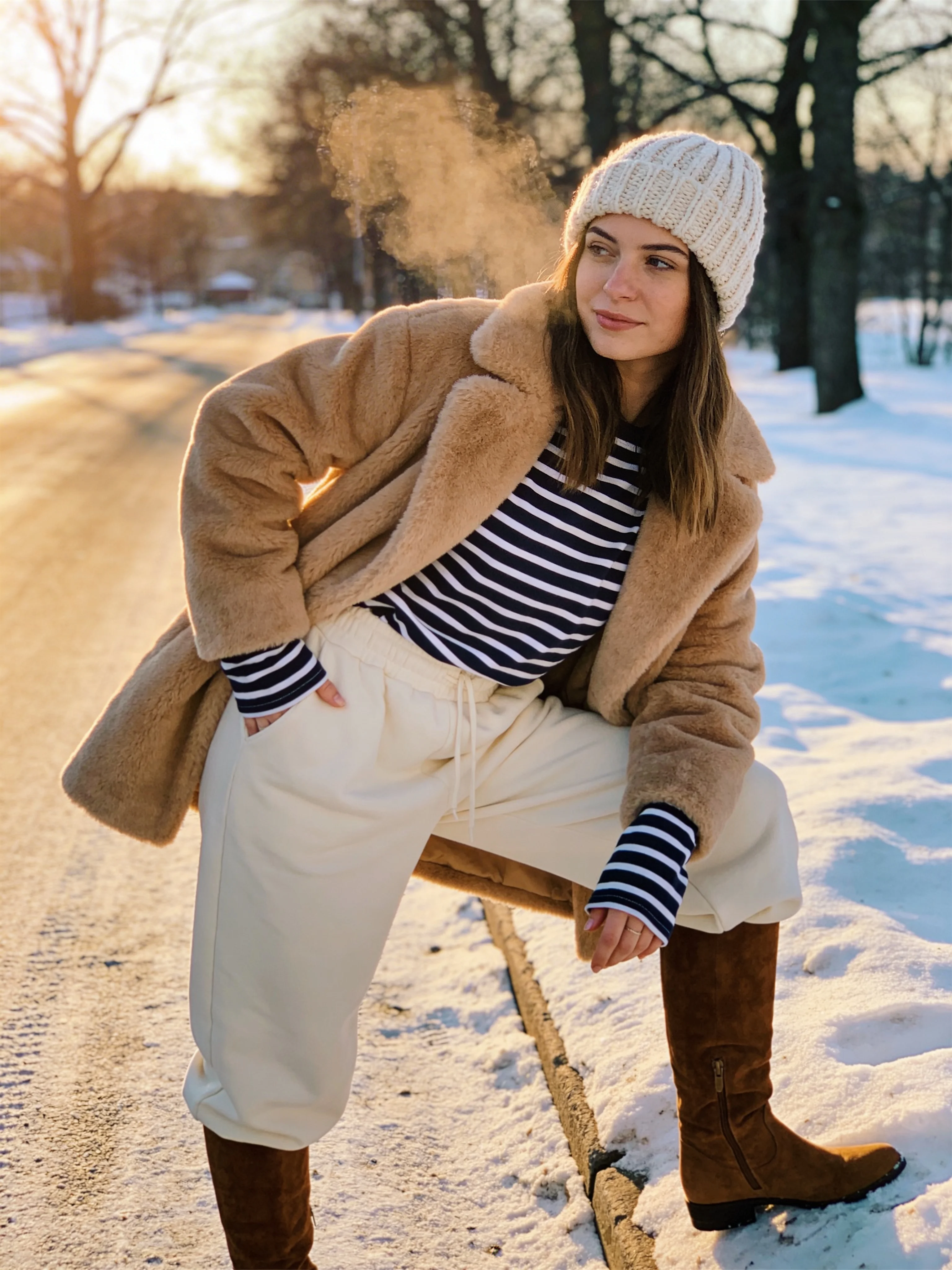
A camel faux fur coat over a striped long-sleeve and cream wide-leg sweatpants makes light snow feel considered. Suede knee-high boots make the casual bottom half look deliberate.
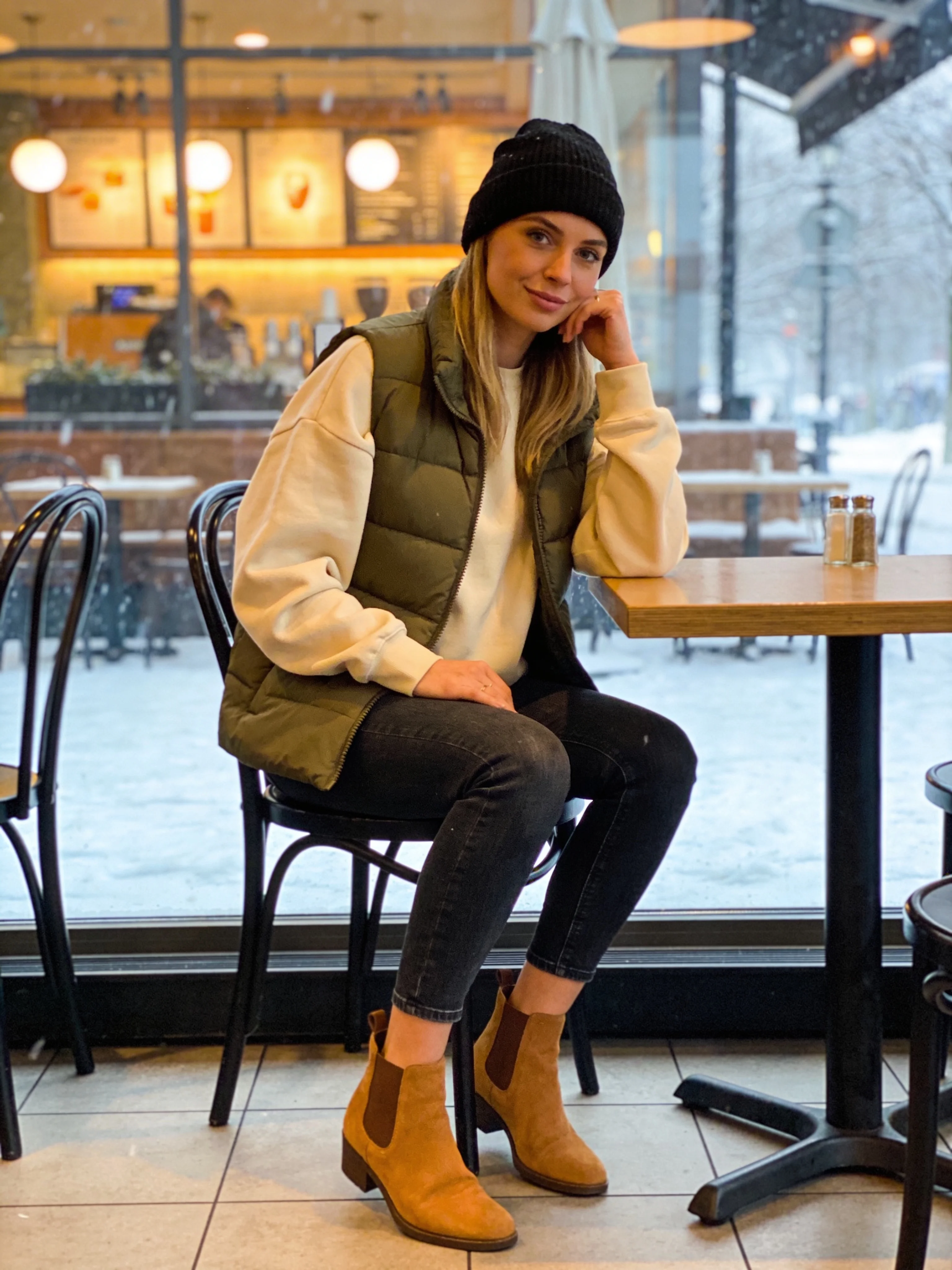
An olive puffer vest over a cream sweatshirt covers light snow with just enough layering. Dark indigo jeans and Chelsea boots keep the bottom half clean.
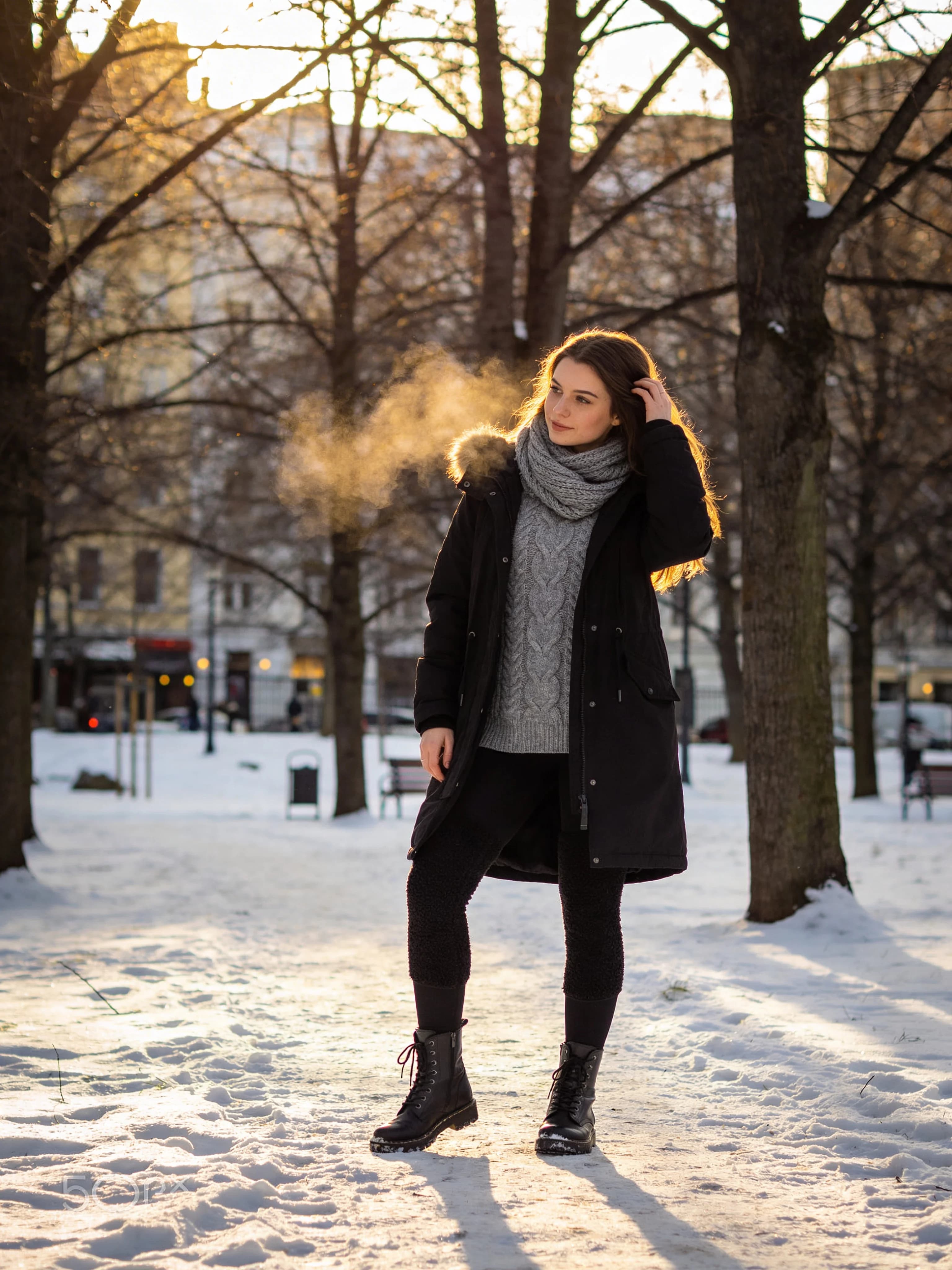
A black longline parka with a grey cable knit sweater for light snow — cozy layering that doesn't look shapeless. Combat boots and a grey scarf are the finishing details.
Wear multiple warm layers, starting with thermal base layers, followed by insulating mid-layers like fleece or wool. A heavy, waterproof and windproof winter coat is essential. Finish your outfit with insulated, waterproof boots with good grip, a warm hat, gloves or mittens, and a thick scarf to protect against the extreme cold and wind.
Absolutely, December in Milwaukee is very cold. Average daily temperatures range from the low 30s°F (around 0°C) for highs to the teens (-7°C) for lows. Significant wind chill, especially near Lake Michigan, often makes the air feel considerably colder than the actual temperature.
While precipitation is common in December, it's far more likely to fall as snow or freezing rain rather than liquid rain due to the consistently cold temperatures. However, mixed precipitation is always a possibility, so waterproof outerwear provides the best protection regardless of the exact form of precipitation.
Pack for extreme winter weather: thermal base layers, wool sweaters, a heavy insulated winter coat (waterproof/windproof is key), and insulated waterproof boots with strong traction. Don't forget warm accessories like a wool hat, thick gloves or mittens, and a scarf. Hand warmers can also be a valuable addition for extended outdoor activities.
Packing tools
Free calculators — city and month pre-filled when we know them. No account required. Start with how many outfits, sudoku packing, or bag fees.
Trip
Planning a trip to one city?
One city → typical weather for your month, packing counts that fit your bags, and email your plan.
Outfits
How many outfits for this trip?
Trip length, bag size, and climate → exact tops, bottoms, layers, and outfit combinations.
Jacket
Not sure about a jacket?
City + month → base / mid / shell stack and pack-or-skip verdicts for rain jacket, coat, and thermals.
Shoes
Shoes for this climate?
Climate, activities, and bag size → pair count, primary/backup types, and climate-matched picks.
Bags
Will this trip cost bag fees?
Airline + fare bucket + bags you plan to bring → fit verdicts and typical carry-on / checked fee ranges.
Capsule
Try sudoku packing for this climate?
City + month → climate-ready 3 tops / 3 bottoms / 3 layers you can edit — up to 27 mix-and-match outfits.